
If you’ve ever looked at your profile in a photo and felt your chin looks a little “set back,” or you’ve been told your upper teeth stick out more than they should, the real cause is often not your teeth at all — it’s the size or position of your jaw.
A small or underdeveloped jaw is one of the most common concerns I see in adult patients, and it’s very treatable at any age.
What Does a Small Jaw Mean?
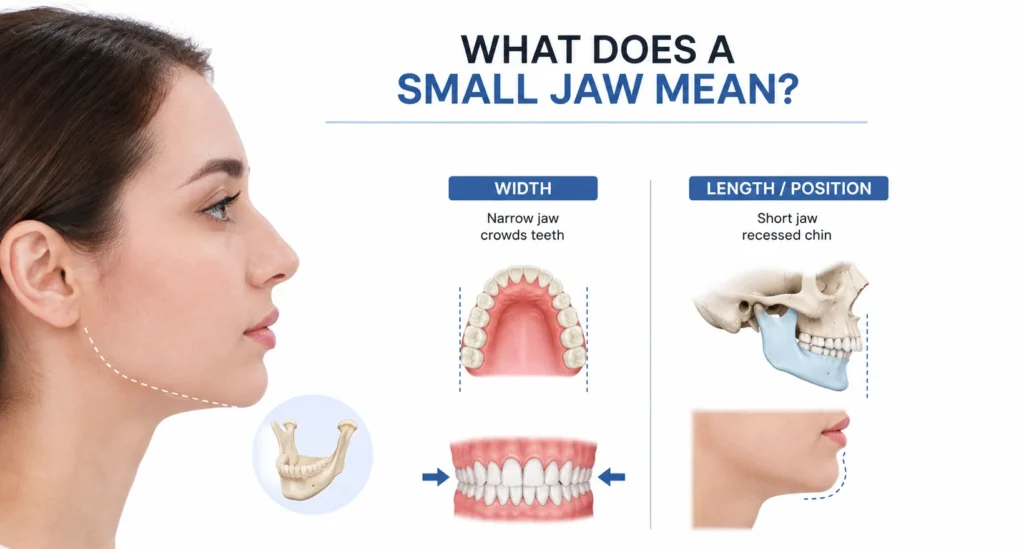
Many patients describe this in a lot of different ways — a short jaw, an undersized jaw, a little jaw, a jaw that “never grew properly.” Clinically, this is usually micrognathia: a jaw (most often the lower jaw) that is smaller or set further back than it should be relative to the rest of your face.
It’s important to separate two different things that both get called a “small jaw”:
- Width — a jaw that’s narrow, which crowds the teeth
- Length or position — a jaw that’s short front-to-back, which makes the chin look recessed and the opposite jaw look like it’s sticking out
Most adults asking about a “small lower jaw” or “underdeveloped jaw” mean the second kind — that’s what this article focuses on.
Small Up per Jaw vs. Small Lower Jaw
Before treatment can even be discussed, it matters which jaw is actually the problem — because the two are corrected very differently.
| Upper jaw (maxilla) | Lower jaw (mandible) | |
|---|---|---|
| Common complaint | “My teeth are crowded / my palate feels narrow” | “My chin looks recessed / my upper teeth look forward” |
| Usually caused by | Narrow width (transverse deficiency) | Jaw set too far back or too small front-to-back |
| Non-surgical option in adults | MARPE (mini-screw assisted expansion) can widen it without surgery | Limited — see below |
If a narrow upper jaw and crowded teeth sound like your situation, my article on narrow upper jaw problems guide go into that specifically. The rest of this article is about the lower jaw.
What Causes an Underdeveloped Lower Jaw?
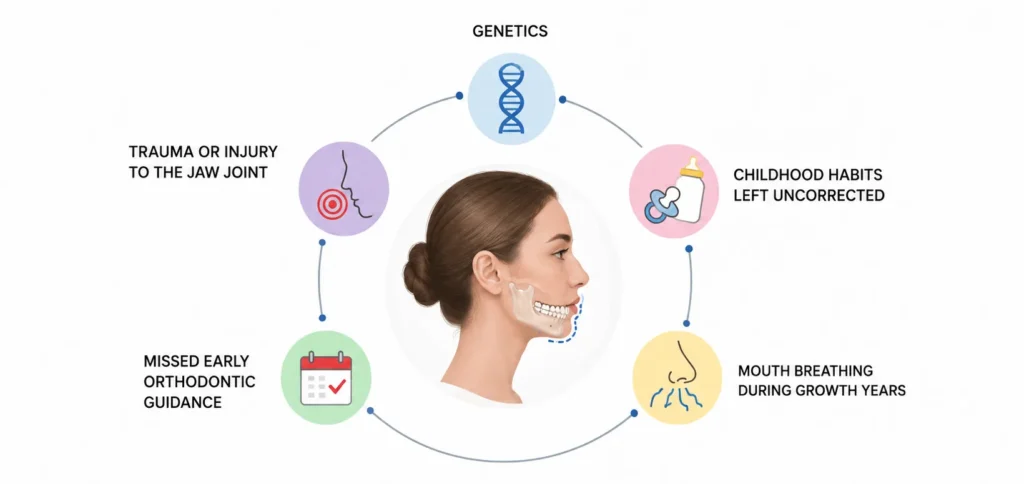
A handful of factors, often combined, explain why an adult ends up with a small lower jaw:
- Genetics — jaw size and growth pattern run in families, the same way height or bite pattern does
- Childhood habits left uncorrected — long-term thumb sucking, prolonged pacifier use, or tongue thrusting can restrict how the jaw grows
- Mouth breathing during growth years — this can change the direction a child’s jaw grows in
- Missed early orthodontic guidance — some jaw growth issues are easiest to influence between ages 7–13; if that window passes, the jaw settles into its adult size
- Trauma or injury to the jaw joint during childhood, which can slow growth on one side
If any of this sounds like it applies to a child in your family rather than to you, I’ve written separately about the early signs of jaw growth problems in children — that’s the stage where the most can be done without surgery.
Signs You May Have a Small Lower Jaw
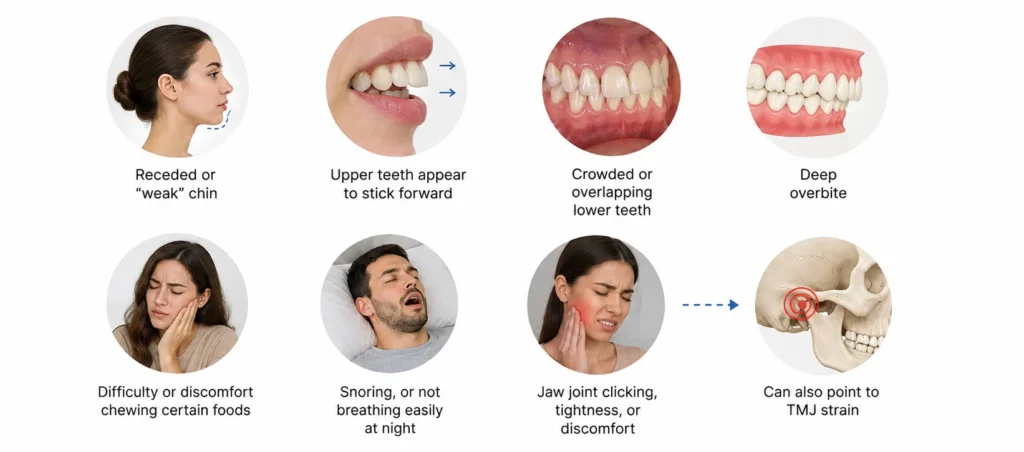
- A receded or “weak” chin in profile
- Upper teeth appear to stick forward, even if they’re actually in a normal position
- Crowded or overlapping lower teeth
- A deep overbite
- Difficulty or discomfort chewing certain foods
- Snoring, or a sense of not breathing easily at night
- Jaw joint clicking, tightness, or discomfort — this can also point to TMJ strain, which is worth ruling out separately
A jaw set too far back reduces the space behind the tongue, and studies on craniofacial morphology have directly linked reduced mandibular size to more severe obstructive sleep apnea.
Can a Small Jaw Be Fixed Without Surgery?
This is the question I get asked most, and the honest answer depends on your age and how significant the discrepancy is.
- In growing children, functional appliances can genuinely guide the jaw to grow forward or catch up in size. Once skeletal growth is complete — generally by the late teens — this window closes.
- For a narrow upper jaw only, MARPE can still widen the jaw without surgery in adults. It does not correct a short or set-back lower jaw, since that’s a different kind of deficiency.
- Braces or Invisalign can often camouflage a mild jaw discrepancy by repositioning the teeth within your existing jaw — this improves the bite and can visually soften the profile, without changing the jaw’s underlying size or position.
- Chin augmentation (genioplasty) can improve facial balance for some patients, but it reshapes the chin itself rather than repositioning the functional bite.
- For a moderate to severe lower jaw deficiency, true correction of the jaw’s size or position in an adult requires surgery — the jaw has already finished growing, so nothing short of surgically repositioning the bone will change that.
Surgical Correction: Orthognathic Jaw Surgery
When the deficiency is significant enough that braces alone can’t compensate, the standard approach is a combination of orthodontics and jaw surgery:
- Pre-surgical orthodontics — braces or aligners first align the teeth within each jaw so they’ll fit together correctly once the jaw is repositioned
- Surgical planning — 3D imaging maps exactly how far and in which direction the jaw needs to move
- The surgery itself — for a small lower jaw, this is typically a mandibular advancement, moving the jaw forward and securing it with small plates and screws
- Recovery — most patients are back to normal activities within a few weeks, though full healing and bone stabilization takes longer
- Post-surgical orthodontics — braces continue for a period after surgery to fine-tune the final bite
This isn’t a decision made lightly, and it’s not the right path for every patient — but for adults with a genuinely small or set-back jaw, it’s the only way to change the jaw itself rather than work around it. Systematic reviews of orthognathic surgery patients consistently report high satisfaction with both function and facial appearance after recovery.
A Patient’s Journey: Correcting a Small Jaw in an Adult
One case that’s stayed with me involved a professional who travelled constantly for work and had lived with a small lower jaw his entire adult life.
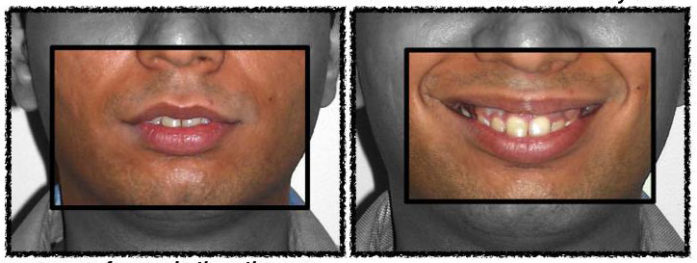
His before photos show exactly the pattern I described above — a small lower jaw makes the upper teeth look far more forward than they actually are. This same jaw position was also contributing to his snoring.
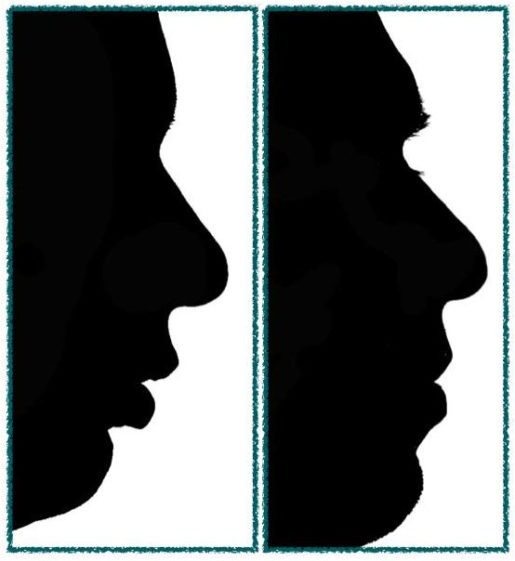
His case was significant enough that resizing the lower jaw surgically was the right option — the profile silhouettes here show the surgical plan: bringing the lower jaw forward into proper alignment with the upper jaw.
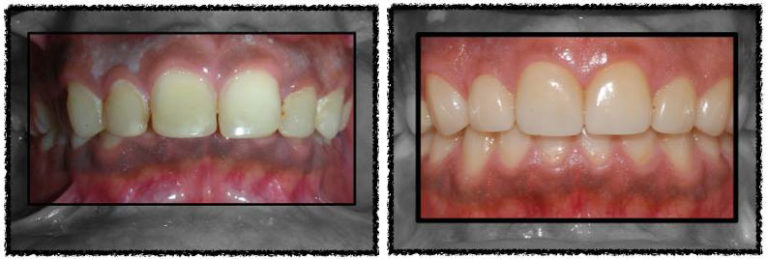
The surgery itself produced a dramatic change. Beyond the visual difference, this kind of correction shifts how the entire bite functions.
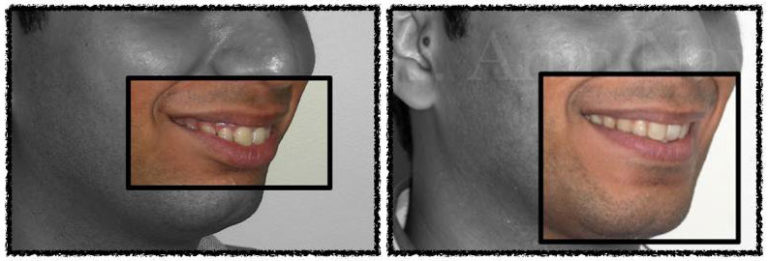
The change isn’t limited to a straight-on smile — his profile view tells the same story, with the chin now properly supporting the lower face.
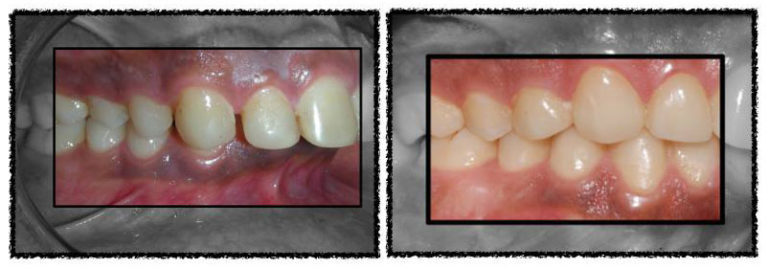
Chewing ability improved significantly too. With the jaws meeting correctly, the back teeth were finally doing the work they’re meant to do.
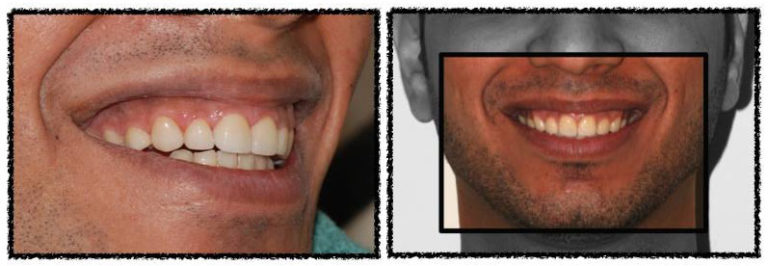
The end result: a more youthful smile and a healthier, better-functioning set of teeth — the kind of outcome that’s possible at any age once growth is no longer a factor.
Small jaws can be corrected at any stage of adult life. The earlier it’s evaluated, the more options are usually on the table.
Get Your Jaw Evaluated
If your profile, bite, or sleep has you wondering whether your jaw is the real issue, an evaluation is the only way to know for certain, and whether your case needs surgery or can be managed with orthodontic treatment alone. Since this is a jaw and bite concern rather than a general dental issue, an orthodontist, not a general dentist, is the right specialist to evaluate it.
At Fort Dental Clinic in Mumbai, Dr Arun Nayak has treated small and underdeveloped jaw cases across every severity level, from simple camouflage orthodontics to full surgical correction. Book a consultation to find out which path fits your jaw.
FAQs
Mild cases can sometimes be camouflaged with braces or Invisalign by repositioning the teeth. But once jaw growth is complete, correcting a moderate-to-severe small or set-back lower jaw requires surgery — no appliance can change the size of an adult jawbone.
Yes — micrognathia is simply the clinical term for a jaw, usually the lower jaw, that’s smaller or set further back than normal.
A combination of genetics and childhood growth patterns, often compounded by habits like thumb sucking, mouth breathing, or missing the early window for orthodontic guidance.
It can. A jaw set too far back can narrow the airway, which is why some patients with a small lower jaw also notice snoring or restless sleep.
Yes — braces or aligners are used both before surgery, to align the teeth for the new bite, and afterwards, to fine-tune the result.

BDS, MDS – Orthodontics & Dentofacial Orthopaedics
Chief Orthodontist, Fort Dental Clinic, Mumbai
Dr. Arun Nayak is a leading orthodontist in Mumbai with 20+ years of experience in braces, aligners, and advanced bite correction. As the founder of Fort Dental Clinic, he is known for delivering personalized, technology-driven orthodontic care with a focus on precision and patient comfort.