
Orthodontic treatment mostly focuses on straightening teeth. But have you ever wondered what the real causes of crowded teeth are? There are many factors that are responsible, but one commonly overlooked cause is a narrow upper jaw, also called transverse maxillary deficiency.
It may lead to crowded teeth, bite issues and breathing problems. For these concerns in adults, jaw correction was traditionally achieved with surgery.
Nowadays, new techniques such as MARPE have been introduced. But what is MARPE, and how is it changing orthodontic treatment for adults? In this guide, we explore what is MARPE, a modern orthodontics solution for adult jaw expansion.
What is MARPE?
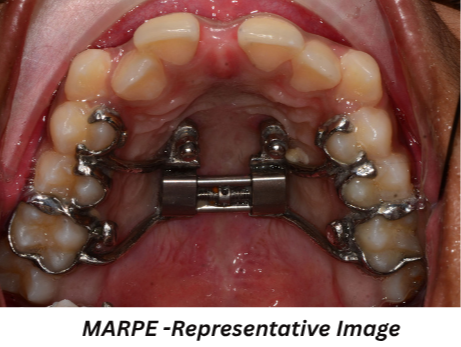
MARPE is referred to as Mini-Screw Assisted Rapid Palatal Expansion. It is a specialized orthodontic expansion procedure for increasing the upper jaw (maxilla) width.
In children, the upper jaw bone is still growing, making it easier to widen the palate with traditional expanders. These appliances can help create jaw expansion during growth, but they mainly rely on the teeth for support.
With age, the tissues that join the two parts of the upper jaw mature and become harder to expand. This makes traditional palatal expanders less effective for adolescents and adults, leading to the development of the MARPE palate expander for adults.
Here is how MARPE differs from traditional expanders.
| Features | MARPE | Traditional expanders |
| Best for | Older teenagers and adults | Children and growing adolescents |
| How it Anchors | Anchors directly to the palate bone using miniscrews. | Pushes entirely against the teeth. |
| Results in adults | More effective | Less effective |
But how does MARPE help widen the jaw without surgery? Let’s look at this.
How Does MARPE Work?
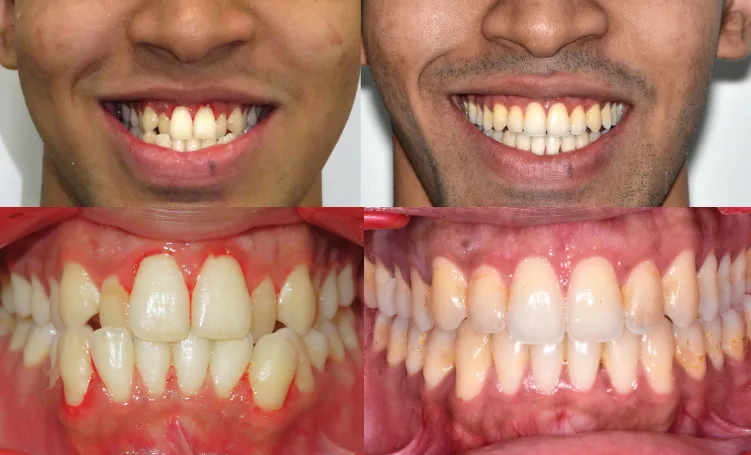
The MARPE device slowly expands your upper jaw through constant pressure. Compared with traditional expanders, which exert pressure on the teeth, the MARPE device is anchored to your jawbone with titanium screws.
With time, as the upper jaw slowly spreads apart, new bone develops in between the spaces created. It leads to an expanded jaw structure and provides you with sufficient space for your teeth to align better.
Signs You May Need MARPE
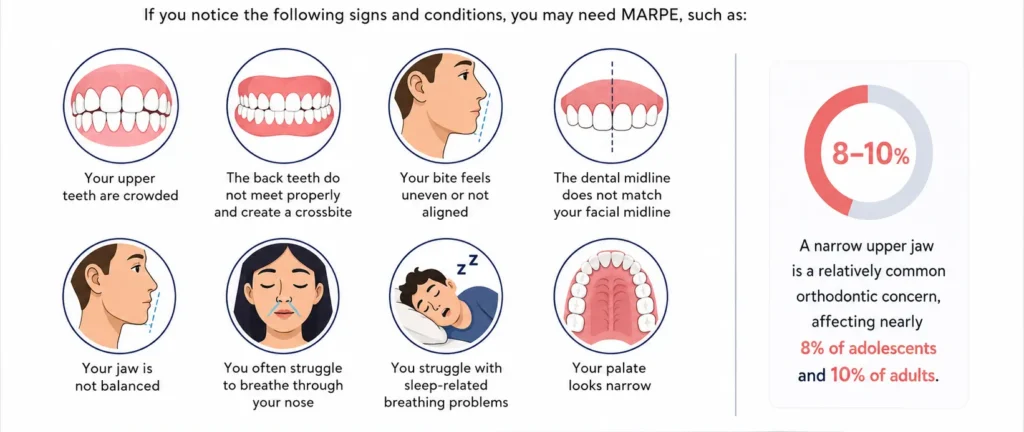
If you notice the following signs and conditions, you may need MARPE, such as:
- Your upper teeth are crowded
- The back teeth do not meet properly and create a crossbite
- Your bite feels uneven or not aligned
- The dental midline does not match your facial midline
- Your jaw is not balanced
- You often struggle to breathe through your nose
- You struggle with sleep‑related breathing problems
- Your palate looks narrow. A narrow upper jaw is a relatively common orthodontic concern, affecting nearly 8% of adolescents and 10% of adults.
Having some of the above signs does not always mean MARPE is right for you. Let’s understand how your orthodontist evaluates whether you need MARPE.
Who is a Good Candidate for MARPE?
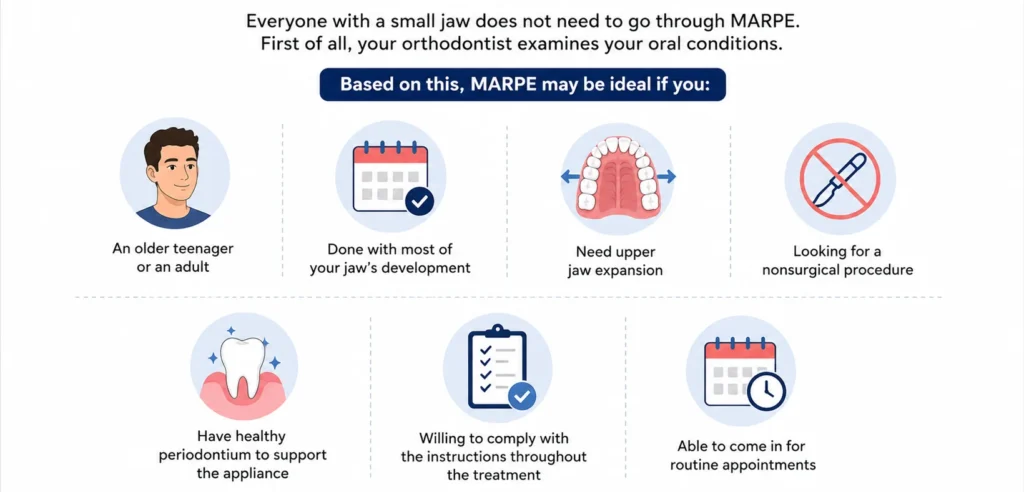
Everyone with a small jaw does not need to go through MARPE. First of all, your orthodontist examines your oral conditions. Based on this, MARPE may be ideal if you:
- An older teenager or an adult
- Done with most of your jaw’s development
- Need upper jaw expansion
- Looking for a nonsurgical procedure
- Have healthy periodontium to support the appliance
- Willing to comply with the instructions throughout the treatment
- Able to come in for routine appointments
Key Benefits of MARPE for Adults
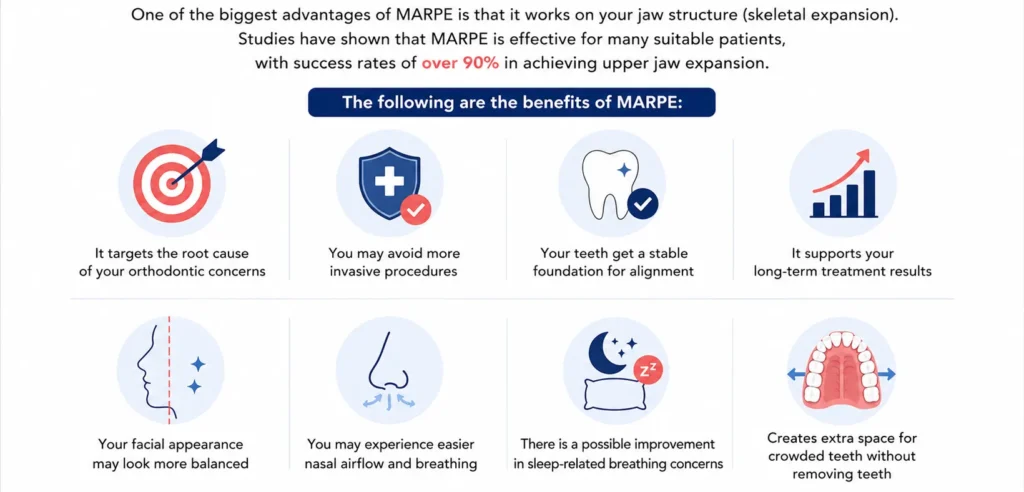
One of the biggest advantages of MARPE is that it works on your jaw structure (skeletal expansion).
Studies have shown that MARPE is effective for many suitable patients, with success rates of over 90% in achieving upper jaw expansion.
The following are the benefits of MARPE:
- It targets the root cause of your orthodontic concerns
- You may avoid more invasive procedures
- Your teeth get a stable foundation for alignment
- It supports your long‑term treatment results
- Your facial appearance may look more balanced
- You may experience easier nasal airflow and breathing
- There is a possible improvement in sleep‑related breathing concerns
- Creates extra space for crowded teeth without removing teeth
Once adequate space has been created, your orthodontist may recommend braces or Invisalign depending on your treatment goals and clinical needs.
MARPE vs SARPE – What is the Difference?
SARPE is referred to as Surgically Assisted Rapid Palatal Expansion. Both MARPE and SARPE widen a narrow upper jaw, but MARPE can provide palatal expansion without surgery in suitable patients, while SARPE requires surgery.
| Feature | MARPE | SARPE |
| Procedure | No surgery involved; involves insertion of small screws in your palate | Surgery involves loosening the bone prior to expansion |
| Invasiveness | Less invasive | More invasive |
| Best Suited For | Narrow arch-Mild to moderate | Narrow arch-Severe |
| Recovery | Fast recovery time | A time-consuming recovery process that may take weeks |
| Cost | Affordable | Expensive |
What to Expect During MARPE Treatment
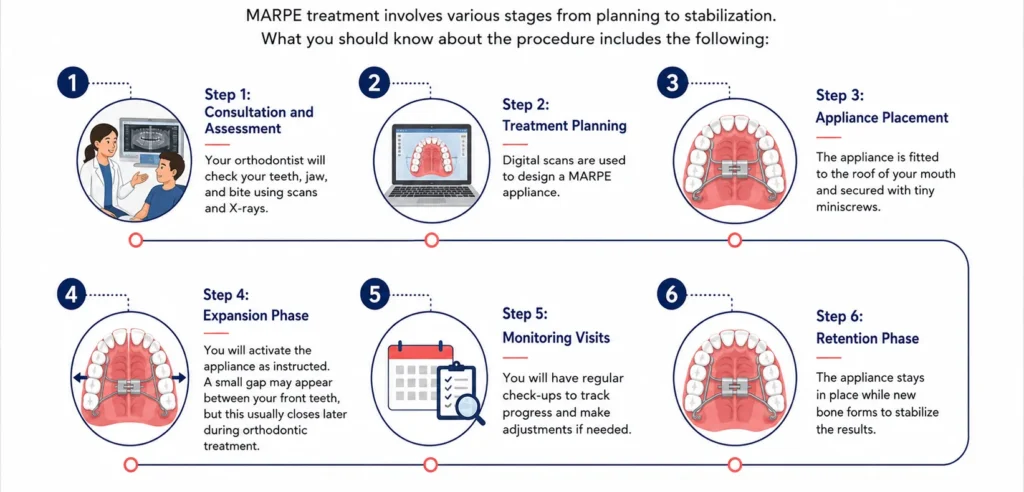
MARPE treatment involves various stages from planning to stabilization. What you should know about the procedure includes the following:
Step 1: Consultation and Assessment
Your orthodontist will check your teeth, jaw, and bite using scans and X‑rays.
Step 2: Treatment Planning
Digital scans are used to design a MARPE appliance.
Step 3: Appliance Placement
The appliance is fitted to the roof of your mouth and secured with tiny miniscrews.
Step 4: Expansion Phase
You will activate the appliance as instructed. A small gap may appear between your front teeth, but this usually closes later during orthodontic treatment.
Step 5: Monitoring Visits
You will have regular check‑ups to track progress and make adjustments if needed.
Step 6: Retention Phase
The appliance stays in place while new bone forms to stabilize the results. After active orthodontic treatment, wearing a retainer after braces or Invisalign helps maintain the corrected tooth positions.
Possible Side Effects and Risks
Some studies have reported minor treatment-related issues in about 1 in 3 patients undergoing MARPE. These are usually temporary and manageable. Most of these improve as you get used to the appliance.
You may notice:
- Mild pressure or discomfort in the first few days, twitching in your nose
- Temporary changes in your speech
- Some difficulty chewing at the beginning
- Minor irritation on the roof of your mouth
- A small gap between your front teeth during expansion (this usually closes later)
Keeping good oral hygiene and attending your regular follow‑up visits helps reduce these issues. Maintaining excellent oral hygiene during orthodontic treatment also helps lower the risk of plaque buildup and gum problems while wearing an appliance.
Why Choose Fort Dental Clinic for MARPE?
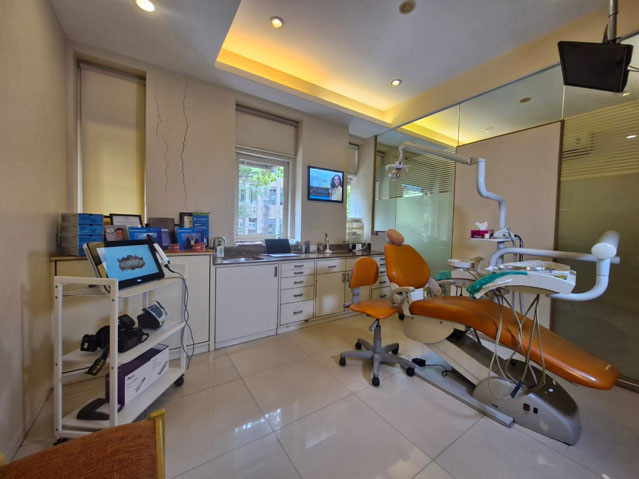
The MARPE procedure at Fort Dental Clinic in Mumbai is performed by experienced orthodontists, Dr Arun Nayak, using advanced technology to deliver effective results. We provide an individualized approach and assess each patient’s oral health and bone structure, along with their specific needs, before planning the procedure.
Final Thoughts
MARPE offers a modern approach to upper jaw expansion for adults who may not be ideal candidates for traditional expanders. Addressing the underlying jaw structure can support better oral function, bite alignment, and long-term orthodontic outcomes.
FAQs
MARPE is generally well tolerated by most adults. You may experience mild pressure or soreness during the first few days after the appliance is placed or after activation. This discomfort is usually temporary and can often be managed with over-the-counter pain relief if recommended by your orthodontist. Most patients adapt to the appliance within a few days.
The active expansion phase usually lasts a few weeks to a few months, depending on the amount of jaw expansion needed. However, the appliance typically remains in place for several additional months to allow new bone to form and stabilize the widened upper jaw. Your orthodontist will determine the exact treatment timeline based on your progress.
Yes. Many adults in their 30s and even older may still be suitable candidates for MARPE. However, eligibility depends more on the condition of the upper jaw and the maturity of the midpalatal suture than age alone. A clinical examination and 3D imaging help your orthodontist determine whether MARPE is appropriate or if another treatment option would be more suitable.
For some patients with a narrow upper jaw, MARPE may increase the width of the nasal cavity, which can make nasal breathing easier. While many patients report improvements in airflow, the results vary depending on the underlying cause of breathing difficulties. MARPE should not be considered a standalone treatment for medical breathing disorders.
During the first few days, you may prefer softer foods while you adjust to the appliance. Once you’re comfortable, most patients can return to a normal diet, although very hard, sticky, or chewy foods should be avoided to prevent damage to the appliance. Your orthodontist will provide specific dietary instructions.

BDS, MDS – Orthodontics & Dentofacial Orthopaedics
Chief Orthodontist, Fort Dental Clinic, Mumbai
Dr. Arun Nayak is a leading orthodontist in Mumbai with 20+ years of experience in braces, aligners, and advanced bite correction. As the founder of Fort Dental Clinic, he is known for delivering personalized, technology-driven orthodontic care with a focus on precision and patient comfort.