
Orthodontists are known for aligning teeth. But did you know they also help with TMJ issues? TMJ refers to problems in your jaw joint that can cause pain, clicking, or stiffness.
An orthodontist for TMJ focuses on identifying factors such as bite alignment, jaw position, and habits that may contribute to TMJ symptoms and improving alignment where needed.
In simple terms, your jaw works like a hinge, and orthodontics may help support in more balanced movement by reducing force on the joint.
In this article, we explore how orthodontic treatment can help you manage TMJ symptoms and support better jaw comfort.
What is TMJ?
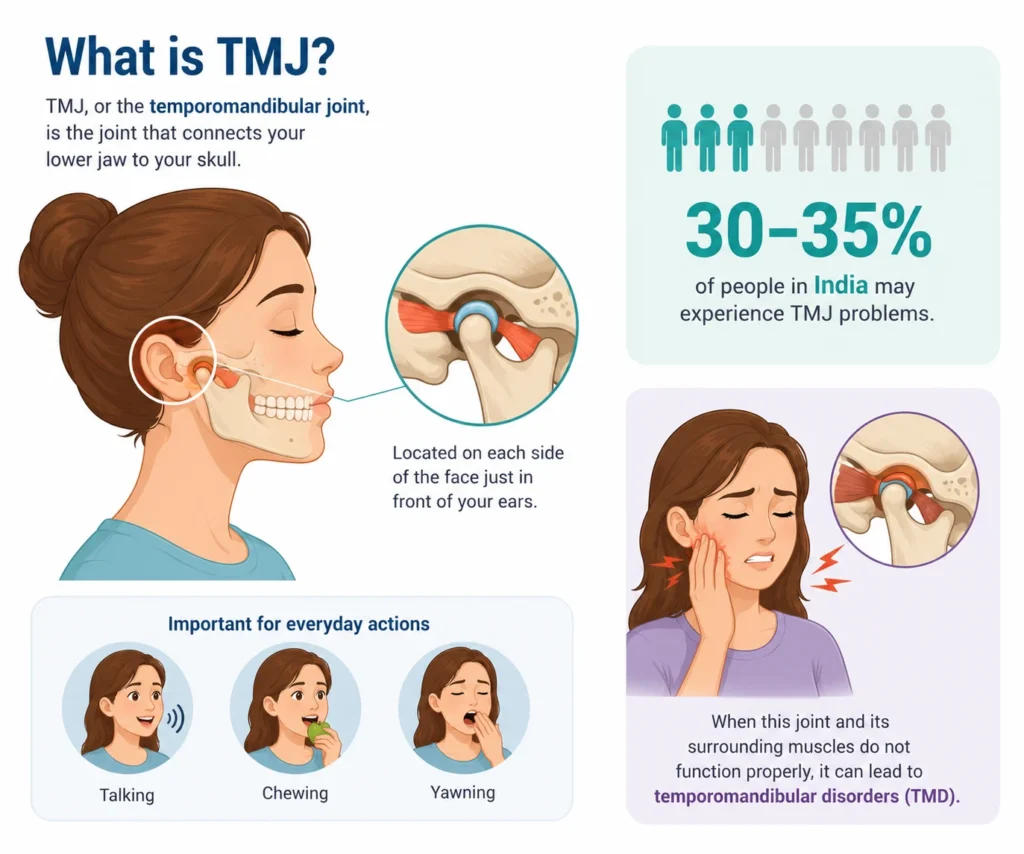
TMJ, or the temporomandibular joint, is the joint that connects your lower jaw to your skull. It is located on each side of the face just in front of your ears. TMJ is important for performing everyday actions such as talking, chewing, and yawning.
Studies in India show that about 30–35% of people may experience TMJ problems.
When this joint and its surrounding muscles do not function properly, it can lead to temporomandibular disorders (TMD).
Common TMJ symptoms you may notice are as follows:
- Pain or tenderness in your jaw joint
- A clicking or popping sound when you open or close your mouth
- Your jaw locking or feeling stiff
- Limited ability to open your mouth fully
- Restriction in how your jaw moves
- Pain or discomfort, such as a headache and an earache
- Difficulty chewing or speaking comfortably
To manage these symptoms effectively, it is important to identify the underlying cause of TMJ disorders.
Causes of TMJ Disorders
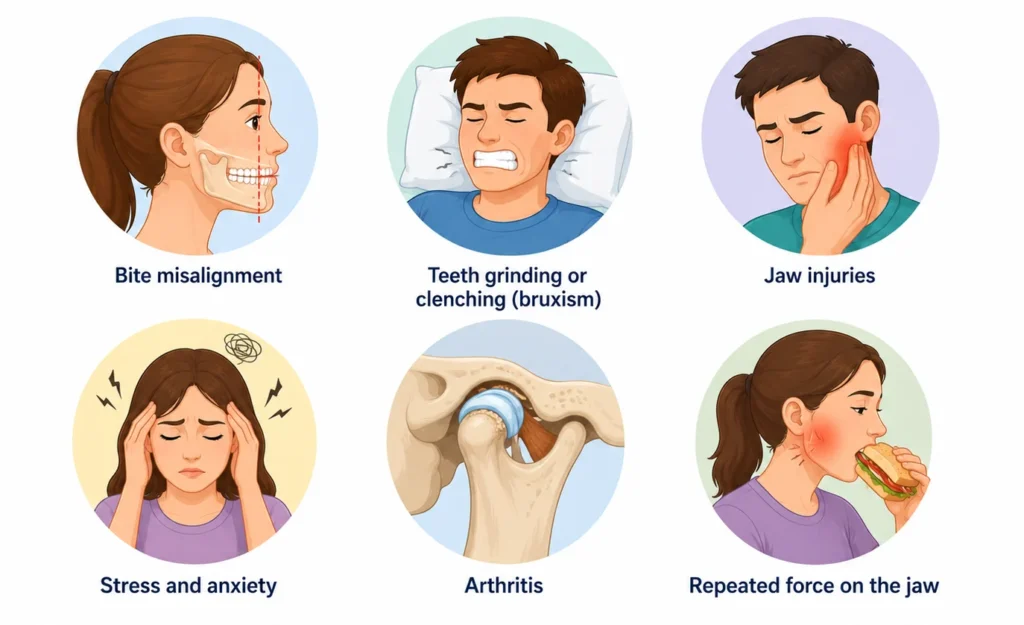
There are various causes of TMJ disorders, all of which develop due to habits and lifestyle factors. Common causes of TMJ disorders are as follows:
- Bite misalignment:
When teeth do not fit together properly, the jaw has to work harder.
About 50% of people with serious bite issues can have TMJ problems, which means your bite can affect your jaw health. Addressing jaw misalignment in children at an early stage can prevent the development of more complex joint problems over time.
- Teeth grinding or clenching (bruxism):
Many people grind their teeth, especially during sleep, which can put extra pressure on the TMJ joint.
- Jaw injuries:
An accident or severe blow to the jaw or dislocation of the jaw can damage TMJ joint function.
- Stress and anxiety:
When stress levels rise, jaw muscle tension can occur, leading to pain and discomfort.
- Arthritis:
Inflammation of a joint from osteoarthritis or rheumatoid arthritis can affect joint movement.
- Repeated force on the jaw:
Habits like chewing gum too much, biting nails, or resting the chin on the hand can add extra pressure to the jaw joint.
But how do you know which of these factors is affecting your jaw? This is where an expert evaluation can give you clear answers.
How an Orthodontist Diagnoses TMJ Issues
Orthodontists specialize in understanding how your teeth, jaw, and facial structures work together, especially jaw alignment and bite function. If you are not sure whether to see an orthodontist or a dentist for jaw pain, understanding their areas of focus can help you take the right first step.
An orthodontist diagnoses TMJ issues with the following methods:
- Bite analysis checks how your jaw aligns and helps in finding any bite problems.
- A functional assessment of how your teeth and jaw work together.
- Gently examine your masticatory muscles to detect pain or stiffness.
- Evaluation of jaw movement to observe if your jaw feels restricted, clicks, or makes joint sounds.
- In some cases, Imaging tests such as X-rays or scans are required to get a clearer look at your jaw joint.
It is important to identify the root cause of TMJ disorder. This helps orthodontists create a personalized treatment plan for your condition.
Role of an Orthodontist in Treating TMJ
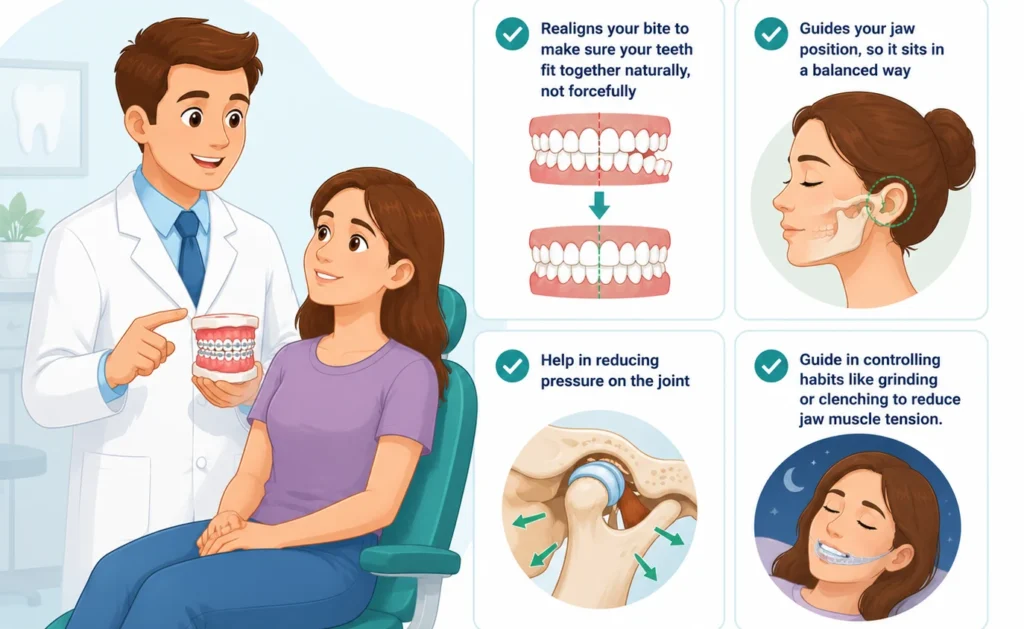
TMJ problems are not just about managing pain, but about improving how your jaw functions.
How an Orthodontist Helps with TMJ
- Realigns your bite to make sure your teeth fit together naturally, not forcefully
- Guides your jaw position, so it sits in a balanced way
- Help in reducing pressure on the joint
- Guide in controlling habits like grinding or clenching to reduce jaw muscle tension.
Treatment options recommended by an orthodontist
- Braces or clear aligners: Slowly move your teeth into the right place for proper dental bite correction.
- Occlusal splint or night guard: A protective device worn at night to protect your jaw while you sleep.
- Jaw exercises and habit tips: Simple guidance to reduce daily force and improve jaw movement.
What improvements can you expect?
- You feel less jaw pain and stiffness
- You notice smoother and easier jaw movement
- Reduce your jaw muscle tension
- You are more comfortable while eating and speaking
Braces, Aligners & Splints: Which TMJ Treatment Works Best?
There is no single best TMJ treatment, because every patient has different symptoms and causes. TMJ treatment is always personalized based on the patient’s needs.
Here are the common TMJ treatment options and when they are required.
| Treatment | When it may be suggested |
| Braces | If your TMJ is linked to bite problems |
| Clear Aligners | When your TMJ needs mild bite correction |
| Splints or Night Guard | If you clench or grind and need quick relief |
According to the American Journal of Orthodontics and Dentofacial Orthopedics, stabilizing the jaw before orthodontic treatment can be beneficial in TMJ treatment, although it does not apply to all patients.
If you are unsure which suits your situation, going through a comparison of braces vs Invisalign can help you understand how each option works for jaw-related concerns.
Can Orthodontic Treatment Cure TMJ?
Orthodontic treatment can play an important role in the treatment of TMJ when it is related to bite issues. But it may not be the right solution for every case.
For example, if you have arthritis, a past injury, or muscle-related problems, orthodontic procedures alone may not fully resolve the discomfort. For this condition, you may need a combination of treatments such as medications, physiotherapy, stress management or other medical care. TMJ disorder is multifactorial.
Signs You May Need an Orthodontist for TMJ
You may need to see an orthodontist for TMJ if you notice:
- Symptoms that keep returning or getting worse
- Your bite does not fit properly
- Jaw discomfort affecting eating or speaking
- You get only temporary relief from treatments
Early consultation with the best orthodontist can help identify the cause and prevent further complications.
Final Thoughts: Making Everyday Moments More Comfortable
Understanding TMJ early can make a big difference in how comfortably your jaw functions over time. An orthodontist helps improve how your teeth and jaw work together, reducing force and discomfort. Managing TMJ starts with understanding your condition and choosing the right care.
At Fort Dental Clinic in Mumbai, treatment is designed to support long-term comfort and better jaw function. Our focus is on helping you feel more comfortable and confident in your daily activities by improving your jaw function.
FAQs
In many cases, yes — especially when the condition is identified early, and the right treatment is applied. Mild to moderate TMJ symptoms, particularly those caused by bite misalignment or teeth grinding, often respond well to orthodontic treatment, splints, or habit correction. Cases involving arthritis or long-standing joint damage may require a combination of treatments for lasting relief.
Invisalign can be helpful for TMJ when mild bite misalignment is a contributing factor. By gradually repositioning the teeth, clear aligners may reduce uneven pressure on the jaw joint. However, Invisalign alone is not a universal solution for all TMJ cases. Your orthodontist will evaluate whether your specific symptoms and causes make it a suitable option.
Braces can help TMJ when bite correction is part of the treatment plan. In some patients, the initial adjustment period may cause temporary discomfort as the bite shifts. However, when treatment is properly planned by an experienced orthodontist with an understanding of jaw function, braces typically reduce, not worsen, long-term TMJ symptoms. This is why a thorough diagnosis before starting treatment is essential.
Most people with TMJ disorder do not require surgery. Non-surgical approaches such as orthodontic treatment, occlusal splints, jaw exercises, and habit correction are effective for the majority of patients, especially when treatment begins early. Surgery is typically considered only in severe cases where other options have not provided adequate relief
Yes, untreated TMJ disorder, especially when linked to teeth grinding or clenching, can cause gradual wear on the tooth surfaces, increased tooth sensitivity, and even fractures over time. Addressing the root cause early helps protect both the jaw joint and the overall health of your teeth.

BDS, MDS – Orthodontics & Dentofacial Orthopaedics
Chief Orthodontist, Fort Dental Clinic, Mumbai
Dr. Arun Nayak is a leading orthodontist in Mumbai with 20+ years of experience in braces, aligners, and advanced bite correction. As the founder of Fort Dental Clinic, he is known for delivering personalized, technology-driven orthodontic care with a focus on precision and patient comfort.