
Almost a every week, I get asked the same question, usually by a patient sitting across from me, holding a printout they found online: “Doctor, I heard Invisalign only tips the teeth. Does it actually move the roots?”
Honestly, it’s one of my favourite questions to answer. Because the short answer is yes, Invisalign root movement is absolutely possible; it often surprises people. But the real answer is more interesting than a simple yes or no. It’s about planning, biomechanics, and the difference between an orthodontist who customises every detail and one who just clicks “approve” on whatever the software suggests.
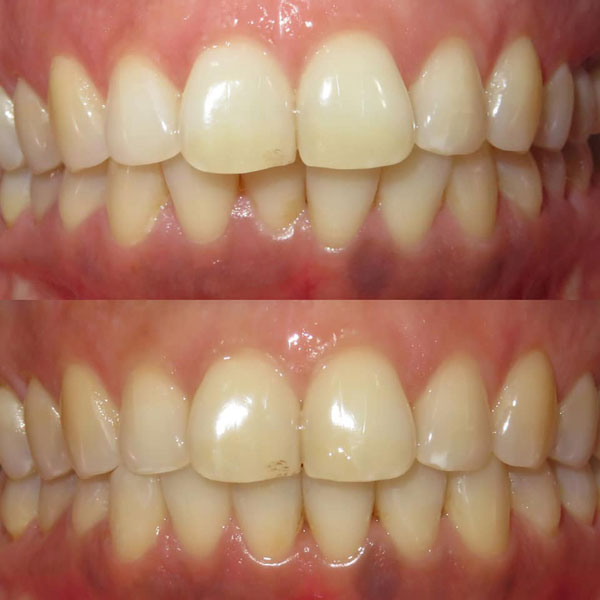
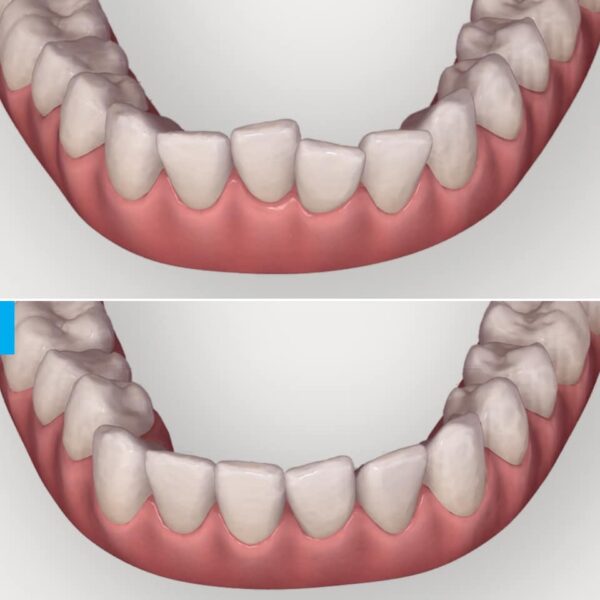
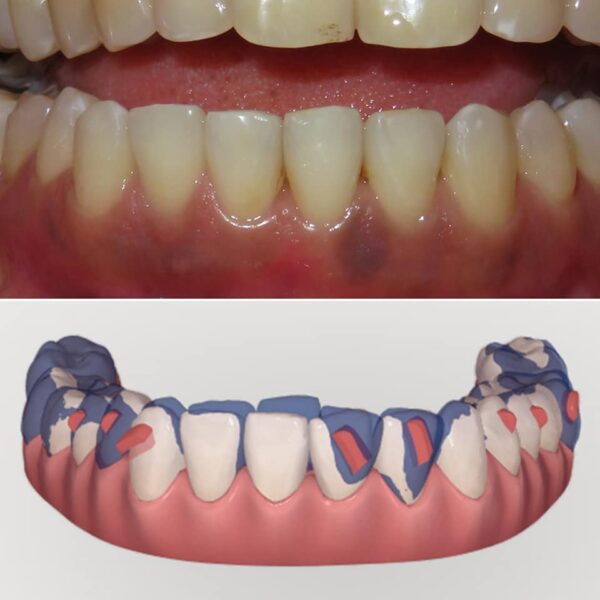
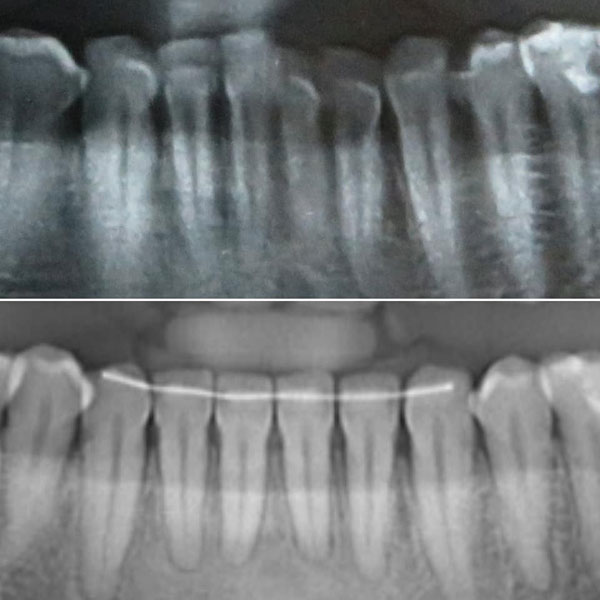
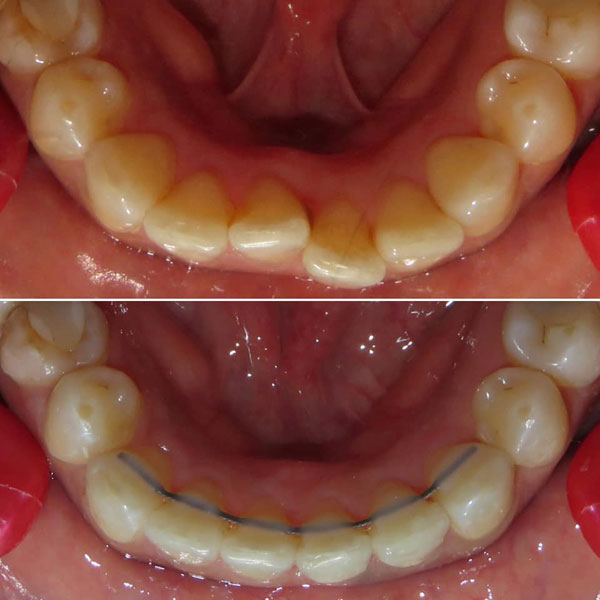
Invisalign can move anterior dental roots quite efficiently with thoughtful planning and meticulous choice and placement of the right attachments. Whether it’s a case of premolar extractions or a simple case that involves merely mesiodistal root movements. This one fell into place in less than 6 months along with the overcorrections with no refinement. The lady with a super smile chose to correct only her lower crowding and got reason enough to smile even more!!!
A Crown Moving Is Not a Root Moving
Here’s something most patients don’t realise until I show them on an X-ray. When a tooth moves, there are two very different things that can happen. The crown, the part you see, can tip, like a fence post leaning in the wind. Or the entire tooth, root and all, can shift as a unit. And then there’s something called root torque, where the root rotates in a specific direction while the crown stays relatively controlled.
Because a tooth that looks perfectly straight on the surface can have a root pointing the wrong way underneath. Over time, that leads to relapse, bone stress, and sometimes gum problems. A well-aligned crown sitting over a poorly positioned root is, honestly, just a time bomb.
The critical movements in anterior teeth are mesiodistal root movement, where roots tip forward or backward between adjacent teeth, and root torque, which rotates the root labially or lingually to correct its inclination. Both of these are central to what good orthodontic finishing looks like. Perfect root paralleling on an X-ray is not just satisfying to look at; it is the biological foundation of a stable result.
Can Invisalign Actually Move Roots?
Yes, but here’s the thing: it does not happen automatically.
There’s a persistent myth, rooted (no pun intended) in Invisalign’s early-2000s reputation, that clear aligners can only manage simple tipping movements and leave the heavy lifting of root control to traditional braces. That reputation is outdated.
Recent research published in peer-reviewed orthodontic journals confirms that auxiliaries, specifically, well-designed attachments, substantially enhance the predictability of anterior root torque and mesiodistal tooth movement.
I think patients deserve honesty. Invisalign does not express 100% of its planned root movement. Studies show that, on average, incisor torque expression can fall anywhere between 42% and 79% of what was planned in ClinCheck, depending on the direction of movement and the case complexity.
Palatal root torque tends to achieve higher accuracy than labial root torque. Posterior root movements in extraction cases are even more challenging to predict. This is not a flaw in the product. It is a biomechanical reality, and experienced clinicians plan around it. That planning is the difference.
Attachments Are the Real Engines Here
This is where I get genuinely excited, because attachment design is something I spend a lot of time on for every single case.
Clear aligners are, at their core, smooth plastic shells. Smooth plastic on a smooth tooth surface generates broad, diffuse pressure. That works well for certain movements. But to move a root? You need to leverage a precisely placed point of force at the right angle. That is what exactly attachments do.
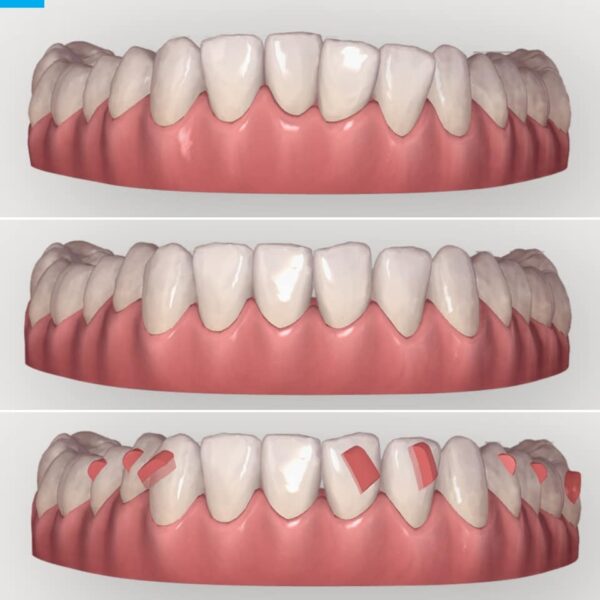
Small composite resin bumps, bonded to specific teeth at specific positions, give the aligner a grip point. Once the aligner engages with an attachment, it can generate a moment of force, the rotational push that moves the root through bone. Without attachments, asking Invisalign to torque a root is a bit like trying to open a bottle cap with a flat palm. You need something to grip.
The shape and placement of the attachment matter enormously. Rectangular vertical attachments placed at the gingival third create the longest lever arm for torque expression. Obliquely placed conventional attachments, which I frequently prefer over the software’s default “optimised” suggestions, give excellent control over mesiodistal root movement and rotation.
In one of my cases involving lower crowding correction, the choice of obliquely placed conventional attachments contributed directly to perfect root paralleling on the post-treatment X-ray, with the whole case resolving in under six months and zero refinements needed.
In extraction cases, root control attachments on canines are non-negotiable; they guide the canine root to upright as the space closes, preventing the dreaded “tipping into the gap” that leads to poor root angulation and eventual relapse.
If you’d like to see how root control attachments work in an actual extraction case, with before and after X-rays, I’ve documented one in detail as a premolar extraction case report.
The Overcorrection Strategy: Why I Plan Beyond the Goal
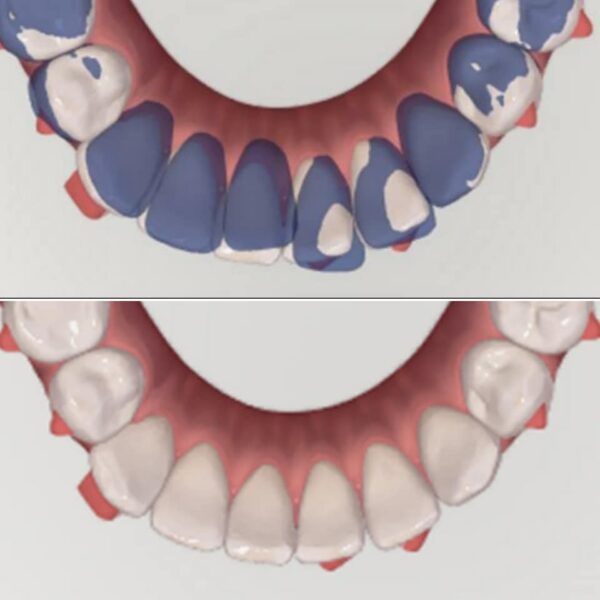
Here is something patients sometimes find puzzling when they first look at their ClinCheck simulation: some teeth appear to move further than they ultimately need to. That’s intentional.
Because aligners express a percentage of planned movement, not 100% experienced clinicians build in overcorrection. We plan rotations and root uprighting slightly beyond the target, knowing that the plastic will not express every degree of movement we programmed.
When done right, the “undershoot” lands exactly on the goal. A study by Progress in Orthodontics confirmed that overcorrection as part of treatment design directly improves predictability of tooth movement outcomes, particularly for rotations and torque.
How I actually build these overcorrections into a case from the very first tray is something I’ve walked through in a separate post on Invisalign treatment planning.
The patient in the case I mentioned earlier had her lower crowding corrected with planned overcorrections in rotation and uprighting from day one. No refinements. Midlines were spot on. The root paralleling on the final X-ray was, frankly, beautiful. That is not luck, it is methodology.
What About Short Roots? Is All This Root Movement Actually Safe?
A genuine concern, and one I address head-on at every consultation.
Root resorption, the shortening of root tips during orthodontic treatment, can occur with any orthodontic force system. But the good news is that Invisalign’s lighter, more continuous forces are generally considered gentler on root structure than the heavier intermittent forces from archwires.
Patients with naturally short roots need to be identified before treatment begins, through a proper X-ray assessment. Treating short roots without this knowledge is simply a bad practice.
For patients who ask specifically about short roots and Invisalign, yes, treatment is often still possible, but it requires more conservative root movement goals and more frequent radiographic monitoring. The force levels can be adjusted in treatment planning. The key is that nothing about root movement should be left to assumption.
Root resorption risk is real but manageable. Fear of it should not stop you from getting the perfect smile, but it should motivate you to find the right orthodontist.
What Types of Anterior Root Movements Can Invisalign Reliably Achieve?
Let me break this down practically, because not all root movements are created equal.
Mesiodistal root movement
Tipping roots forward or backward to achieve parallelism is where Invisalign performs strongly, especially with appropriate attachments. This is the movement most relevant to crowding correction and space closure cases.
Root torque
Rotating the root labially or palatally is achievable, with palatal root torque showing better accuracy (studies report around 78–79% mean accuracy for in-standing lateral incisors). Labial torque is more variable and typically requires greater overcorrection in the plan.
Root uprighting
After rotation is reliably achievable with oblique or conventional attachments and careful staging.
Full bodily movement
Moving the crown and root as one unit is the most demanding. It is possible with Invisalign but requires the most deliberate planning, significant overcorrection, and sometimes adjuncts like power ridges or auxiliaries.
This article is focused on anterior teeth for molar distalization, which is a separate and equally fascinating topic; I’ve written about that elsewhere on this site.
The Right Question to Ask Before You Start
If you are considering Invisalign and your case involves significant crowding, rotated teeth, or space closure after extractions, root movement is almost certainly part of your treatment.
The question is not whether your aligner can do it. The question is whether your treatment plan has been designed to achieve it deliberately.
Ask your orthodontist: “Does my ClinCheck include overcorrection for rotations and root control? What attachment design are you using for root torque?” If they can answer those questions clearly, you’re in good hands.
If you’re trying to understand what that kind of planning looks like in practice, you can read more about the Invisalign treatment we offer at Fort Dental.
Root movement with Invisalign is not a bonus feature. In complex cases, it is the whole point. And in my experience, when it is planned right from the start, with the right attachments, the right overcorrections, and proper monitoring, the results speak for themselves, beautifully, on an X-ray.
FAQs
Yes, as with any orthodontic treatment, but the risk is generally lower with aligners than heavy archwire forces. Patients with naturally short roots need extra care, conservative goals, and periodic X-ray monitoring. A proper pre-treatment assessment is non-negotiable.
Molars, by a wide margin their size and deep roots make them most resistant. For anterior teeth, labial root torque is the trickiest movement, as studies show it achieves lower accuracy than palatal torque. Difficulty doesn’t mean impossible; it means the plan needs to account for it upfront.
Technically, yes but a lighter, continuous force is actually gentler on roots and bone. It means you can’t rely on force magnitude alone; you have to be smarter about biomechanics through attachments and overcorrection. In the right hands, that’s a feature, not a limitation.
Yes, as with any orthodontic treatment, but the risk is generally lower with aligners than heavy archwire forces. Patients with naturally short roots need extra care, conservative goals, and periodic X-ray monitoring. A proper pre-treatment assessment is non-negotiable.
Some have legitimate reasons, complex skeletal cases or compliance concerns. Others, honestly, are simply more comfortable with braces and default to what they know. Invisalign’s capabilities have changed dramatically over the last decade; dismissing it as “only for simple cases” reflects an outdated understanding of the system.
No, the aligners don’t damage gum tissue. Recession can occur if teeth are moved too aggressively beyond the bone envelope, or if existing gum disease goes undetected during treatment. A periodontal assessment before starting, combined with diligent oral hygiene throughout, is the best protection.

BDS, MDS – Orthodontics & Dentofacial Orthopaedics
Chief Orthodontist, Fort Dental Clinic, Mumbai
Dr. Arun Nayak is a leading orthodontist in Mumbai with 20+ years of experience in braces, aligners, and advanced bite correction. As the founder of Fort Dental Clinic, he is known for delivering personalized, technology-driven orthodontic care with a focus on precision and patient comfort.