
Are you one of those people who feel your breath smells unpleasant even after brushing your teeth? Most people think that bad breath occurs due to improper brushing, which is not entirely correct, as it may also occur due to several other reasons.
But how to get rid of bad breath?
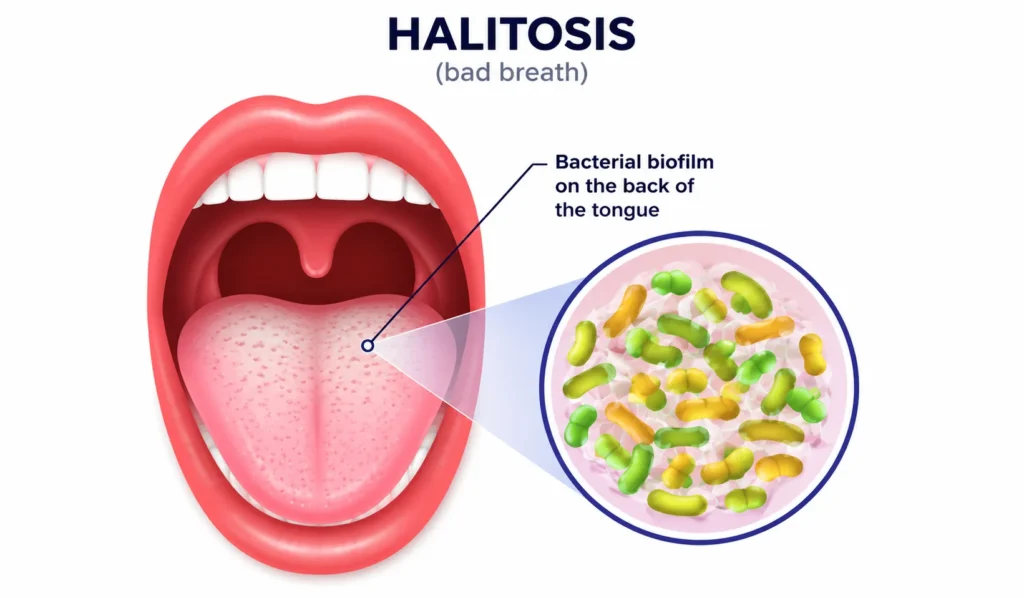
A proper cure is based on what causes the bad breath. If you have occasional bad breath, this can be managed with good oral hygiene. But if you continue to have bad breath after brushing, it may be a sign that something more than poor oral hygiene is causing the problem.
In this guide, we will help you understand what causes bad breath, how to manage it and when it is time to take professional care.
What Causes Bad Breath?
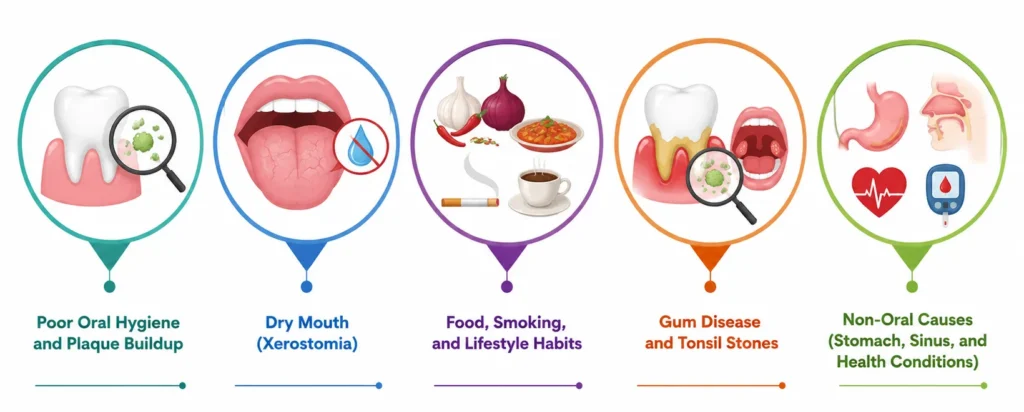
Bad breath is also called halitosis. Here are some factors that can cause bad breath:
Poor Oral Hygiene and Plaque Buildup
If you are unable to clean your tongue and teeth effectively, then the food particles remain in your mouth. Food particles, together with bacteria, form dental plaque inside your mouth. These bacteria break down the food particles and produce foul-smelling sulfur compounds that give rise to bad breath.
Dry Mouth (Xerostomia)
Saliva naturally washes food particles and bacteria out of your mouth. However, when there is insufficient saliva production, it results in dry mouth. So your mouth becomes more prone to bacteria, which can cause bad breath.
Food, Smoking, and Lifestyle Habits
Certain types of food like garlic, onions and spicy foods may produce bad odour. Smoking, consuming tobacco products and drinks with caffeine and alcohol may result in bad breath.
Gum Disease and Tonsil Stones
Bad breath can sometimes be a sign of gum problems such as gingivitis and periodontal disease. Advanced gum infections may require specialised periodontics treatment to protect the supporting structures of your teeth. Tonsil stones are another common cause. These small, hard deposits trapped in the tonsils often produce a strong, unpleasant odour.
Non-Oral Causes (Stomach, Sinus, and Health Conditions)
Studies suggest that only about 10-20% of bad breath is linked to non-oral problems, including gastroesophageal reflux disease, sinusitis, diabetes, respiratory infections, and kidney or liver disorders.
How to Get Rid of Bad Breath: Effective Home Remedies
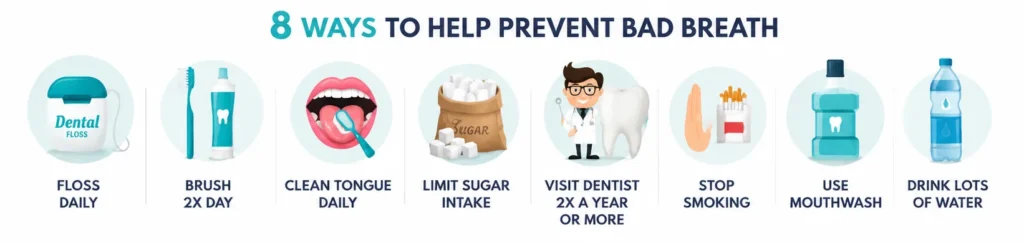
Home remedies can be useful for dealing with halitosis, especially if it is caused by your routine practices.
The following bad breath home remedies may help improve temporary bad breath:
Upgrade Your Daily Oral Hygiene Routine
Follow these oral hygiene habits every day:
- Brushing the teeth twice daily with fluoride/Non-fluoride toothpaste
- Floss your teeth every day
- Use a scraper or a toothbrush to clean the coating on your tongue
- Change your toothbrush every three to four months or earlier if you notice wear in your bristles
Choose the Right Mouthwash
Different mouthwashes work in different ways:
| Mouthwash Type | When It May Help |
| Alcohol-free antibacterial | Helps reduce odour-causing bacteria without drying the mouth |
| Fluoride mouthwash | Supports cavity prevention while freshening breath |
| Herbal mouthwash | A mouthwash with natural extracts such as neem or mint could help you freshen up |
Natural Remedies That Actually Help
You can also try following natural remedies for bad breath:
- Chew some fennel seeds (saunf) after your meal to help freshen your breath.
- Eat cloves occasionally; they can help you freshen your breath because of their antibacterial quality.
- Do oil pulling using coconut oil or sesame oil by keeping it in your mouth for 10-15 minutes, then spit it out.
Hydration and Dietary Adjustments
The following are some simple changes you can make in your lifestyle:
- Take 8-10 glasses of water per day to ensure that your mouth is moist and bacteria-free.
- Take fresh fruits and vegetables every day.
- Include cardamom, ginger, or cinnamon in your diet or herbal tea to improve your breath.
- Take less sugar because it increases bacterial activity.
- Take minimal alcohol and quit smoking, and also limit garlic or onions.
How to Cure Bad Breath Permanently: Professional Treatments
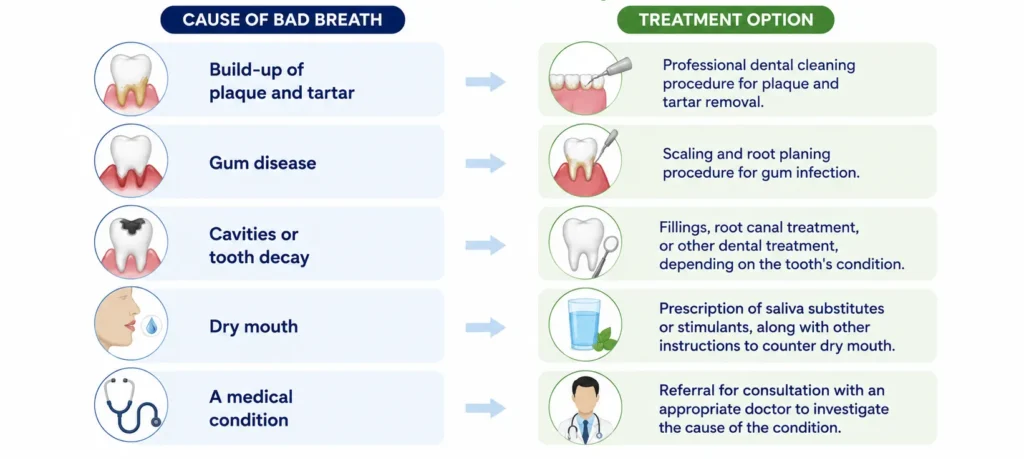
If you are wondering how to cure bad breath permanently, it is important to identify the root cause. For this, you have to seek professional care.
Based on the cause, your dentist may suggest the following treatment:
| Cause of Bad Breath | Treatment Option |
| Build-up of plaque and tartar | Professional dental cleaning procedure for plaque and tartar removal. |
| Gum disease | Scaling and root planing procedure for gum infection. |
| Cavities or tooth decay | Fillings, root canal treatment, or other dental treatment, depending on the tooth’s condition. |
| Dry mouth | Prescription of saliva substitutes or stimulants, along with other instructions to counter dry mouth. |
| A medical condition | Referral for consultation with an appropriate doctor to investigate the cause of the condition. |
Regular professional dental cleaning helps remove plaque and tartar that cannot be removed by brushing alone.
When to See a Dentist for Bad Breath
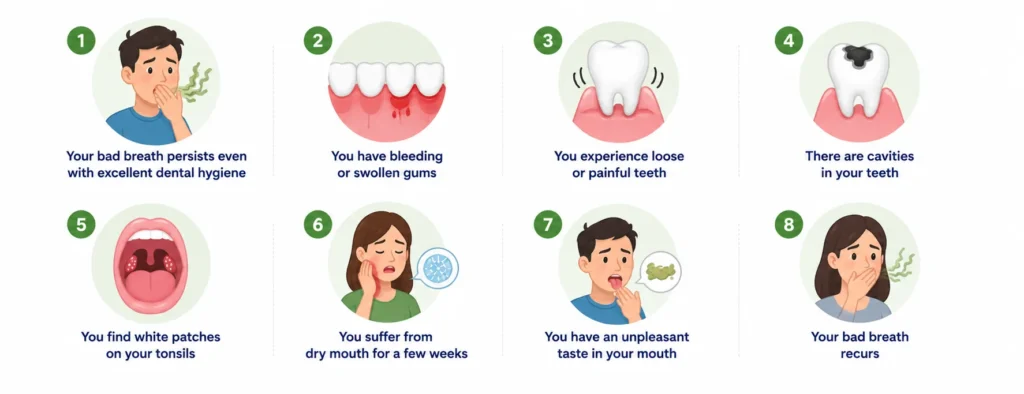
If you have any of these signs of bad breath, don’t take it lightly and see your dentist:
- Your bad breath persists even with excellent dental hygiene
- You have bleeding or swollen gums
- You experience loose or painful teeth
- There are cavities in your teeth
- You find white patches on your tonsils
- You suffer from dry mouth for a few weeks
- You have an unpleasant taste in your mouth
- Your bad breath recurs
Bleeding gums when brushing may be an early sign of gum disease and should not be ignored. Persistent tooth pain is not always caused by cavities and may sometimes be related to wisdom tooth pain.
Final Thoughts: Fresh Breath Starts with the Right Care

Bad breath is common, but it doesn’t have to become a long-term problem. Good oral hygiene can help, but persistent bad breath should always be checked by a dentist. Maintaining healthy teeth and gums also supports the long-term benefits of cosmetic dentistry.
At Fort Dental Clinic, Dr Arun Nayak and our team is here to help you achieve fresher breath, better oral health, and greater confidence.
FAQs
Yes. In many cases, bad breath can be cured permanently by identifying and treating its root cause. This may involve improving oral hygiene, treating gum disease or cavities, managing dry mouth, or addressing an underlying medical condition.
It can be difficult to smell your own breath because your brain becomes accustomed to familiar odours. You can ask someone you trust, smell dental floss after cleaning between your teeth, or gently scrape the back of your tongue with a clean spoon and check for any unpleasant odour.
Yes, but it is less common than oral causes. Conditions such as acid reflux (GERD), stomach infections, or certain digestive disorders may contribute to bad breath. If your dentist finds no dental cause, your doctor may recommend further evaluation.
Simple natural remedies include drinking enough water, cleaning your tongue daily, chewing fennel seeds or cloves occasionally, eating crunchy fruits and vegetables, and reducing tobacco and alcohol use. These remedies can help improve temporary bad breath but should not replace proper dental care.
Bad breath is a general term for unpleasant mouth odour. Halitosis is the medical term used when bad breath becomes persistent or recurrent and often requires professional evaluation to identify the underlying cause.
No. Mouthwash can temporarily reduce odour by lowering the number of bacteria in your mouth, but it does not permanently cure bad breath. Lasting improvement depends on treating the underlying cause.

BDS, MDS – Orthodontics & Dentofacial Orthopaedics
Chief Orthodontist, Fort Dental Clinic, Mumbai
Dr. Arun Nayak is a leading orthodontist in Mumbai with 20+ years of experience in braces, aligners, and advanced bite correction. As the founder of Fort Dental Clinic, he is known for delivering personalized, technology-driven orthodontic care with a focus on precision and patient comfort.