
Tongue thrust is the habit of pushing your tongue against your teeth. As a result, you may notice altered speech, difficulty eating and changes in facial structure. To correct these concerns, your orthodontist may suggest basic tongue thrust exercises.
But have you been practising tongue-thrust exercises and still not seen any improvement? You are not alone. Some patients may have good outcomes, but others still have problems with tongue movements or swallowing.
So, many patients have questions: why does this happen? In this guide, we look at when exercises are not enough and how advanced myofunctional therapy works, and its role in managing orofacial myofunctional disorders (OMDs) associated with tongue thrust.
When Basic Tongue Thrust Exercises Aren’t Enough
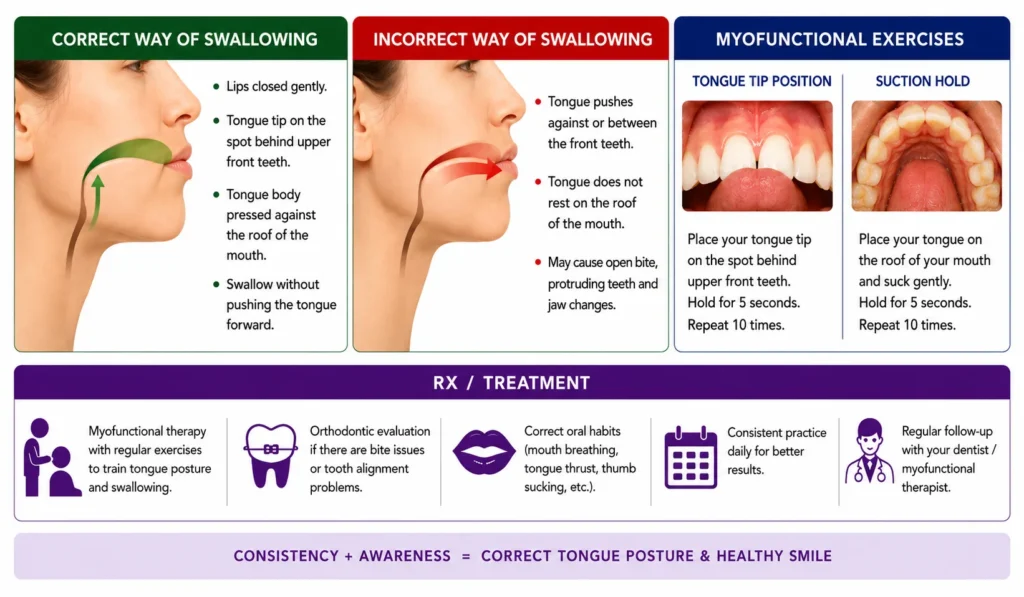
Basic tongue thrust exercises may not be enough if an underlying condition affects the function of your tongue and mouth muscles.
This can happen because:
- You have the habit for a long time
- You have a tongue-tie or breathe through your mouth
- Your tongue and oral muscles need more specialised training
Persistent mouth breathing may also be associated with sleep-disordered breathing, which can influence tongue posture and oral muscle function.
Because the habit is often well established, tongue thrust in adults may require more advanced treatment than simple exercises alone.
The type of treatment depends on your underlying cause and may include specific myofunctional treatment, orthodontic devices, and management of conditions such as tongue-tie and mouth breathing.
The Structured Myofunctional Therapy Program
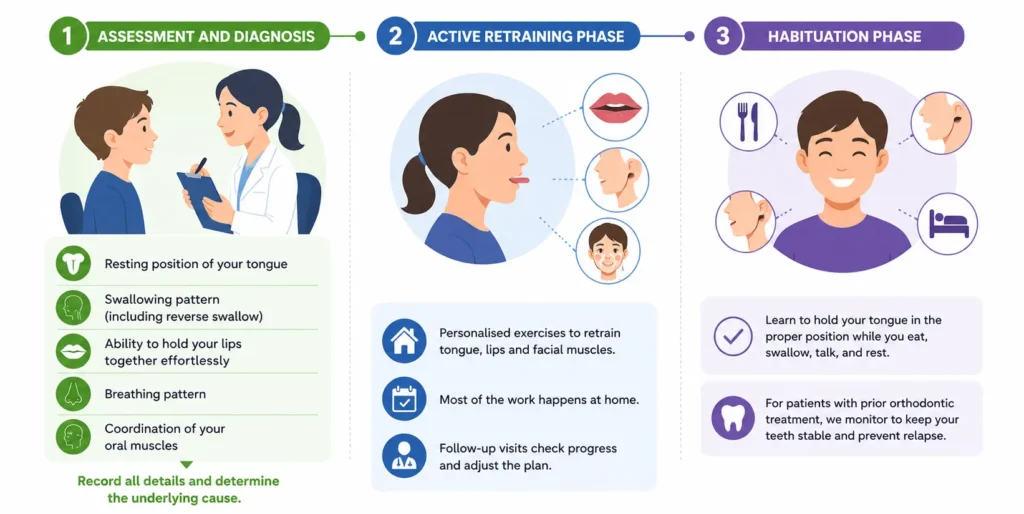
Advanced myofunctional therapy works in stages. This structured myofunctional therapy program begins with a detailed assessment before moving on to personalised muscle retraining.
Let’s understand all steps in a simple way:
Assessment and Diagnosis
Your treatment begins with a full check‑up, not just a quick confirmation that you had tongue thrust.
First, the orthodontist checks:
- The resting position of your tongue
- Your swallowing pattern, including signs of a reverse swallow
- Your ability to hold your lips together effortlessly
- Your breathing pattern
- Coordination of your oral muscles
From this, we record all the details and determine the underlying cause.
Active Retraining Phase
Once the assessment is complete, you move into the retraining phase. You are advised on personalised myofunctional therapy exercises that match your condition. These help your tongue, lips, and facial muscles learn to work properly.
Most of the work happens at home, while follow‑up visits check your progress and adjust the plan.
Habituation Phase
As your ability to control your muscles gets better, our focus shifts to making these new movements feel natural. You are taught how to hold your tongue in the proper position while you eat, swallow, talk, and rest.
In cases where you have already undergone orthodontic treatment, we monitor to help keep your teeth stable and reduce the risk of the habit returning.
Correcting tongue posture is also important for reducing the risk of orthodontic relapse after braces. If tooth alignment still requires correction, your orthodontist may discuss whether braces vs Invisalign is more appropriate for your situation.
When Tongue-Tie Complicates Tongue Thrust Therapy
A tongue‑tie (ankyloglossia) can limit how your tongue moves, making it harder to get the right tongue position and swallowing pattern. In such cases, treating the tongue-tie first may be recommended. Because of this, your treatment plan may be different from someone without a tongue‑tie.
When a frenectomy is needed, myofunctional therapy plays an important role both before and after the procedure.
| Myofunctional Therapy | Purpose |
| Before a frenectomy | Prepares your tongue muscles, improves tongue movement, and helps you get ready for the procedure. |
| After a frenectomy | Helps you use your improved tongue movement correctly and prevents old tongue thrust habits from returning. |
This way, therapy supports both the release and the long‑term success of your treatment.
Myofunctional Therapy vs. Tongue Crib: Combining Approaches
Sometimes, myofunctional therapy alone is insufficient to treat tongue thrust. For such situations, we recommend oral appliance therapy such as a tongue crib along with myofunctional therapy. Since both work differently, using them together can improve results.
How a Tongue Crib Helps
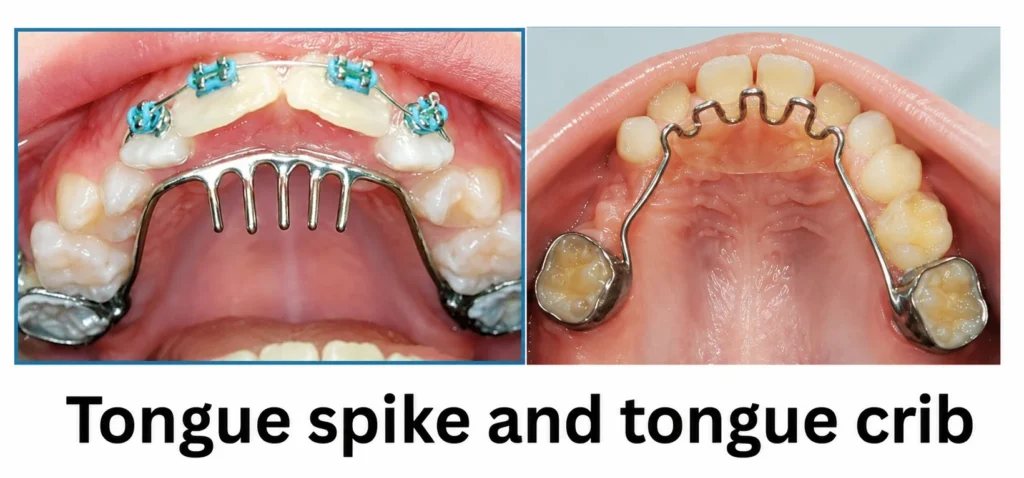
A tongue crib is an orthodontic device that helps manage the tongue thrust habit.
It can:
- Stop your tongue from pushing against your upper front teeth
- Help your tongue to attain proper placement when at rest and chewing
- Decrease pressure exerted on the upper front teeth
- Improve the efficiency of myofunctional therapy through proper tongue movements
When Combination Treatment Works Best
An Orthodontist may recommend both therapy in the following conditions:
- You have a persistent open bite caused by tongue thrust
- Your teeth have started shifting again after braces
- You have bite problems
- You have long-standing (chronic) tongue thrust
- You need both an orthodontic treatment appliance and muscle retraining
In some patients, persistent tongue thrust may also contribute to jaw misalignment in children when the habit develops early. If braces are part of your treatment plan, maintaining good oral hygiene throughout treatment remains important.
The Multidisciplinary Team Behind Successful Treatment
Treating tongue thrust is often a team effort. Many patients also wonder about the difference between an orthodontist vs dentist when seeking treatment for bite and tongue posture problems.
By working together, specialists can provide you with more comprehensive and effective care. Here is how each specialist supports your treatment:
| Specialist | Role in Your Treatment |
| Orthodontist /Myofunctional Therapist | 1. Assists in managing your bite and teeth alignment 2. Assists in improving the function of your tongue and mouth muscles |
| Speech-language pathologist (SLP) | Helps improve speech and, if needed, teaches the correct swallowing pattern |
| ENT specialist | Evaluates and treats your airflow and breathing problems, if applicable |
Timeline and Success Rates for Advanced Cases
Advanced tongue thrust treatment requires much time and varies from one individual to another. When tongue thrust is recognised early, early orthodontic treatment may help guide proper oral development.
The speed of the recovery process can be influenced by factors such as the severity of the problem, your age and adherence to the treatment program.
- One clinical study found that 82.5% of children with tongue thrust showed improved swallowing after six months of treatment with a myofunctional appliance.
- Another study showed that almost 75% of patients maintained their results for at least 5 years after completing myofunctional therapy. It highlights that maintaining treatment consistency helps achieve lasting improvement.
Why Choose Fort Dental Clinic for Advanced Myofunctional Therapy?
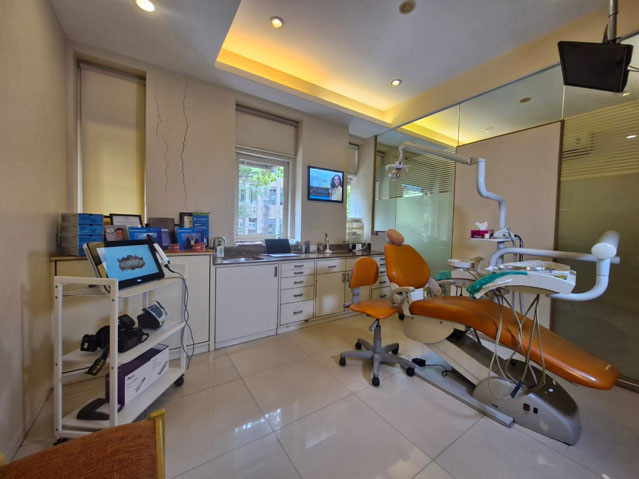
At Fort Dental Clinic, Dr Arun Nayak believes that every patient needs a personalised approach. Your treatment begins with a thorough assessment of your tongue function, swallowing pattern, and bite before creating a customised rehabilitation plan. When needed, our team works closely with other specialists to provide comprehensive care.
Conclusion
Advanced myofunctional therapy does more than correct tongue thrust. It helps improve the way your tongue and oral muscles work together during everyday activities such as swallowing, speaking, and resting. With the right treatment and consistent practice, these functional improvements can support better oral health and lasting treatment outcomes.
FAQs
Yes. Tongue thrust can be successfully treated in adults through a personalised combination of myofunctional therapy, habit retraining, and orthodontic treatment when required. Although treatment may take longer than in children, consistent practice can lead to significant improvement.
You may benefit from myofunctional therapy if you have tongue thrust, mouth breathing, difficulty swallowing, speech changes, recurring orthodontic relapse, or improper tongue posture. An orthodontist or trained myofunctional therapist can perform a detailed assessment to determine whether therapy is appropriate.
If left untreated, tongue thrust may contribute to open bite, protruding front teeth, orthodontic relapse, speech difficulties, swallowing problems, and persistent mouth breathing. Early diagnosis and treatment can help minimise these complications.
A tongue crib is a fixed orthodontic appliance placed behind the upper front teeth. It acts as a reminder that discourages the tongue from pushing against the teeth during swallowing or at rest. It is commonly recommended for persistent tongue thrust or when muscle retraining alone is not sufficient.
Yes. A tongue-tie can restrict normal tongue movement and contribute to an abnormal swallowing pattern or tongue posture. When a tongue-tie is present, it may need to be treated alongside myofunctional therapy to achieve the best outcome.
Yes. Chronic mouth breathing often causes the tongue to rest in a lower position, making proper swallowing more difficult and increasing the likelihood of persistent tongue thrust. Treating mouth breathing is often an important part of comprehensive therapy.

BDS, MDS – Orthodontics & Dentofacial Orthopaedics
Chief Orthodontist, Fort Dental Clinic, Mumbai
Dr. Arun Nayak is a leading orthodontist in Mumbai with 20+ years of experience in braces, aligners, and advanced bite correction. As the founder of Fort Dental Clinic, he is known for delivering personalized, technology-driven orthodontic care with a focus on precision and patient comfort.