
Do you spot blood on your gums while brushing and ignore it as normal? But bleeding gums when brushing is not a minor problem. It signals that your oral health needs help.
In India, rushed days and stress often sideline dental care. Understanding why this occurs can prevent serious oral diseases. In this guide, we look at common causes, when it is important to seek help, and practical ways to manage the condition effectively.
Is It Normal for Gums to Bleed When Brushing?
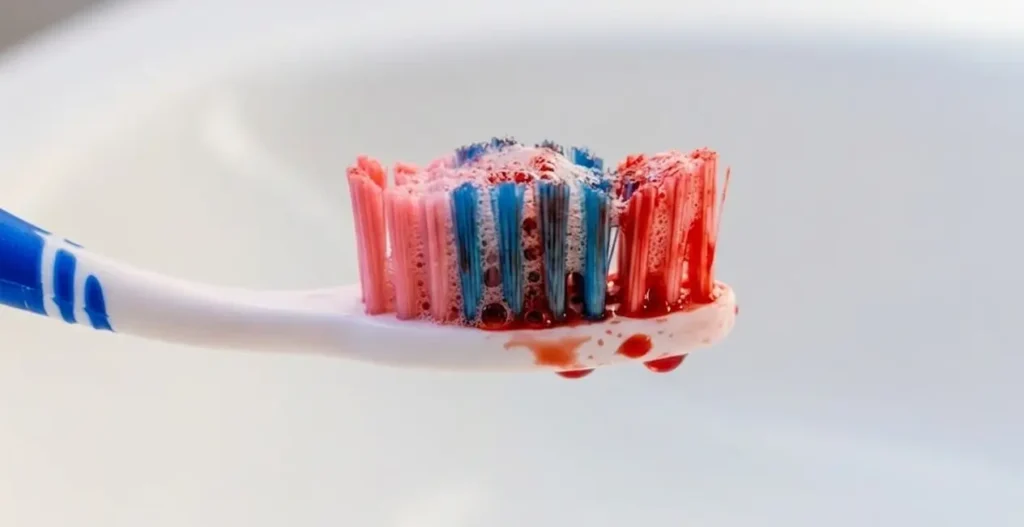
It is not normal to have bleeding gums when brushing. If your gums are healthy, they will not bleed. Healthy gums have a firm, tough structure that is attached to bone and teeth. This creates a strong barrier that handles the pressure of a toothbrush.
A recent study claimed that around 8.4% of individuals experience bleeding every time they brush.
Minor gum bleeding during brushing may result from brushing too hard or using a hard toothbrush. This would be a normal condition. However, if you notice frequent gum bleeding, there is a chance of an underlying issue.
Did you know bleeding gums are the first sign of gingivitis? This is often linked to gum disease and its early signs, which can worsen if not addressed early. Not only gingivitis, but other factors are also responsible for gum bleeding.
Common Bleeding Gums Causes When Brushing
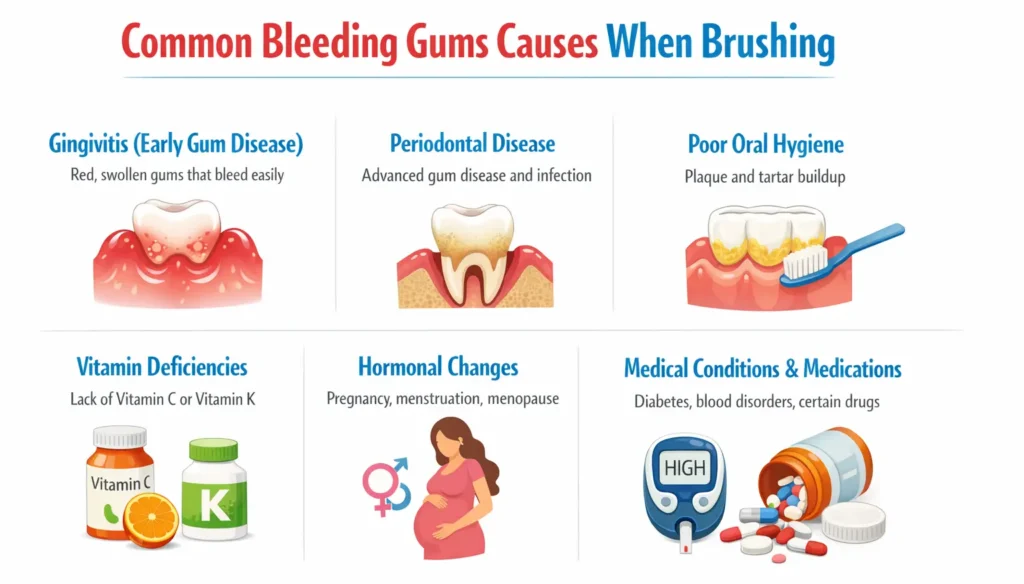
Many patients have questions such as “Why are my gums bleeding?” Let’s find out the answer. Bleeding gums causes are as follows:
Gingivitis (Early Gum Disease):
Gingival inflammation is called gingivitis. When food particles are not washed out properly and communicate with oral bacteria. As a result, this produces acids and toxins that convert into “Biofilm”, called plaque. Plaque is a thin, sticky layer of bacteria around the gumline.
Gums become red, swollen, and prone to bleeding, especially during brushing or flossing, due to gingivitis.
Periodontal Disease:
Untreated gingivitis causes advanced gum disease called periodontitis. In such cases, understanding advanced gum treatment options becomes important to prevent further complications.
The World Health Organization (WHO) claimed that untreated plaque and gum swelling can lead to serious gum disease and tooth loss.
Poor Oral Hygiene:
Improper toothbrushing and flossing can lead to plaque accumulation and tartar formation. Tartar is a hard form of plaque that irritates the gums and causes bleeding. Maintaining proper dental hygiene and prevention care helps reduce plaque buildup and protect gum health.
Vitamin Deficiencies:
Gum health can be affected by not consuming essential vitamins.
Vitamin C deficiency: It may develop scurvy, an illness that leads to swollen and bleeding gums as well as an increased risk of infection in the gums.
Vitamin K deficiency: It may also cause bleeding because it is essential for proper blood clotting.
Hormonal Changes:
Hormonal changes, most commonly during pregnancy, the menstrual cycle, or menopause, can alter gum health. Pregnant women experience swollen and bleeding gums, called pregnancy gingivitis.
Medical Condition:
Medical conditions such as diabetes, leukaemia, haemophilia, and HIV also cause gum bleeding.
Medications:
As per the American Dental Association, drugs such as steroids, anti-seizure medication, certain calcium channel blockers, and birth control pills can cause gum disease.
Signs That Bleeding Gums May Indicate Gum Disease
The following are warning signs that bleeding gums may indicate gum disease:
- You often experience bleeding from your gums when brushing or flossing.
- Swollen or puffy gums that do not look normal.
- You feel bad breath from your gums that does not go away.
- You feel gum tenderness or gum soreness when touched.
- You might see receding gums, making your teeth longer.
- You feel pain while chewing food or while brushing.
How to Stop Bleeding Gums Naturally
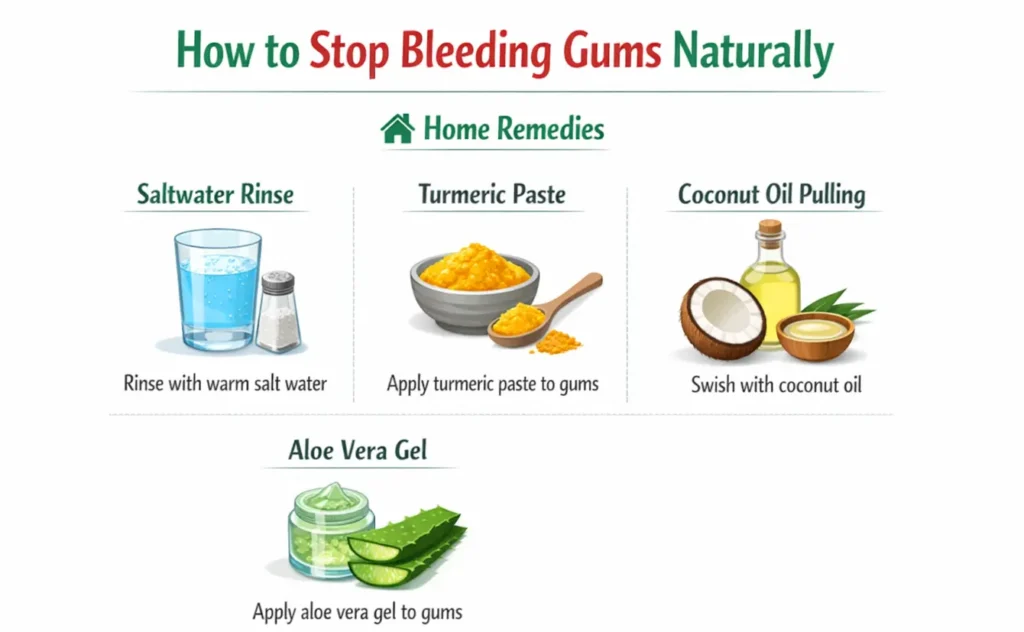
You can naturally protect your gums by using home remedies and lifestyle modifications.
Home remedies:
- Saltwater rinse: Use a teaspoon of salt with warm water and rinse your mouth to help reduce gum inflammation.
- Topical turmeric paste: Apply a turmeric paste prepared by mixing turmeric powder with water to bleeding gums, then rinse after a few minutes. These pastes reduce oral bacteria and gum inflammation.
- Coconut Oil Pulling: Oil pulling is a method where you rinse your mouth with oil to help keep it clean. Coconut oil pulling for a few minutes and rinsing your mouth improves oral health and removes oral toxins.
Aloe vera gel: Apply aloe vera gel directly to the gums to reduce swelling and irritation.
Lifestyle changes:
- Use a soft toothbrush. It cleans teeth gently and protects your gums.
- Improve oral care by brushing twice daily and flossing to remove plaque from between teeth. This also highlights the importance of maintaining good oral health through consistent daily habits.v
- Eat balanced meals with Vitamin C foods like amla, oranges, and citrus fruits.
- Stay hydrated naturally, as water helps wash away food particles and keeps your mouth moist.
How to Stop Bleeding Gums with Treatment
The above tips for reducing gum bleeding are effective for minor conditions but can not replace professional dental care. If you experience frequent bleeding and symptoms worsen, consulting a dentist is essential for the treatment of gum disease.
Professional teeth cleaning: Professional teeth cleaning by a dentist gently removes plaque and tartar that build up on the gum line.
Scaling & root planing: It is also called “Deep cleaning”, where your dentist cleans below the gum line. These procedures help remove hidden plaque and tartar and smooth the roots to facilitate healing of the gums.
Medical treatment: To reduce gum infection and inflammation, dentists may provide antibacterial mouth rinses or gels or prescribe antibiotics to fight infection and reduce gum bleeding. In some cases, advanced methods like laser treatment for gum tissues may also be used to manage infection.
Gum Surgery: For advanced periodontal disease, the dentist recommends flap surgery to restore periodontal health.
Managing Underlying Causes: Bleeding gums may be associated with medical conditions. Managing diabetes, adjusting certain medications, or addressing other conditions can naturally reduce gum problems.
When Should You See a Dentist?

If you notice gum bleeding for more than 2 weeks, it is a signal that your gums require professional care. You follow home remedies and lifestyle changes, but if they do not offer temporary relief, it is time to see a dentist. Frequent bleeding, painful or swollen gums not treated at the right time, can lead to severe gum disease and tooth loss.
At Fort Dental Clinic, Mumbai, we believe in treating problems before they grow. Regular check‑ups and timely care help prevent complications like gum recession, loose teeth, or persistent infection.
Final Thoughts: Early Care Today, Confident Smile Tomorrow
Bleeding gums are an early warning sign of gum inflammation. The good news is that with proper oral hygiene and regular dental visits, problems can be reversible in the early stages. Help in keeping your smile healthy and confident for years to come.
FAQs
With proper oral care, mild bleeding gums usually improve within 1 to 2 weeks. If you have just started flossing, bleeding may stop within a few days. However, if bleeding continues for more than two weeks, it is important to consult a dentist.
Early gingivitis appears as red, swollen, or puffy gums that bleed easily during brushing or flossing. The gums may look shiny and feel tender, but there is usually no pain in the early stage. This condition is reversible with proper care.
Ignoring bleeding gums can lead to periodontitis (advanced gum disease). Over time, this can damage the tissues and bone supporting your teeth, causing gum recession, loose teeth, and even tooth loss. It may also increase the risk of other health problems.
Avoid brushing too hard, using hard-bristled toothbrushes, smoking, and consuming excessive sugary foods. These habits can irritate the gums and worsen bleeding.
Mild gum bleeding caused by irritation or poor oral hygiene can improve with proper brushing, flossing, and care. However, if gum disease is present, professional treatment is required for complete healing.
Gingivitis is the early stage of gum disease and affects only the gums, causing redness and bleeding. Periodontitis is an advanced stage where the infection spreads to supporting tissues and bone, potentially leading to tooth loss.

BDS, MDS – Orthodontics & Dentofacial Orthopaedics
Chief Orthodontist, Fort Dental Clinic, Mumbai
Dr. Arun Nayak is a leading orthodontist in Mumbai with 20+ years of experience in braces, aligners, and advanced bite correction. As the founder of Fort Dental Clinic, he is known for delivering personalized, technology-driven orthodontic care with a focus on precision and patient comfort.