After braces, teeth are not “fixed forever.” The bone and gums are soft. They remember old
positions. So, teeth shifting after braces happens. This is called orthodontic relapse. A retainer
holds teeth steady while bone becomes strong. Without it, teeth move back. At Fort Dental
Clinic, Mumbai, we stop teeth relapse after braces early because proper retainers save your smile.
Orthodontic Relapse After Braces vs Invisalign – How It Happens
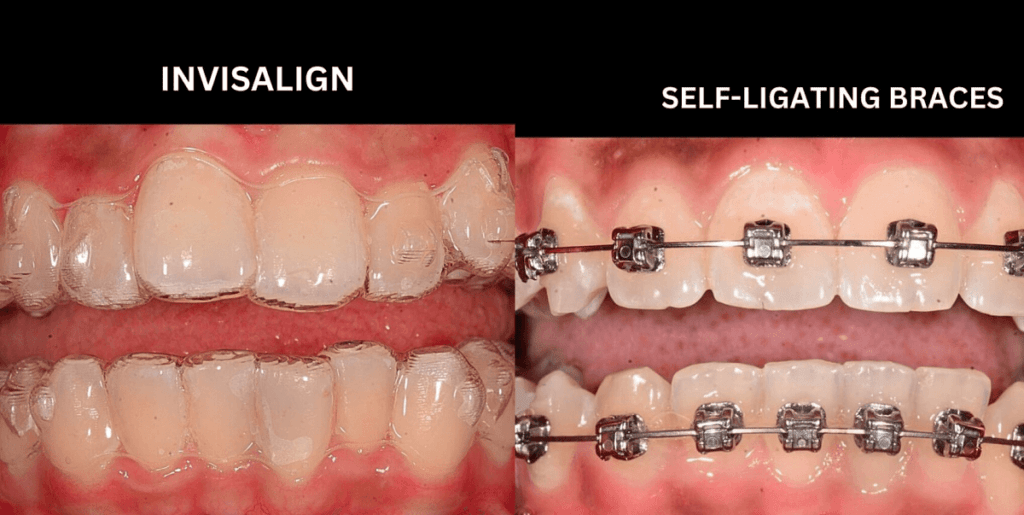
When braces or Invisalign come off, many people think treatment is “done.” That’s where the real problem starts. Orthodontic relapse means your teeth slowly try to go back to their old position. This is teeth shifting after braces. It happens because gums and bones need time to settle. People ask why teeth move after braces? Simple answer: no retainer or irregular use.
Whether it’s braces or Invisalign, retention and relapse in orthodontics are closely linked. Without proper retainers, alignment won’t last. The good news? How to fix shifted teeth after braces is easy if caught early via custom retainers, timely correction and expert monitoring.
Does Invisalign Have a Higher Relapse Risk Than Braces?
Not inherently, no. Both braces and Invisalign move teeth to a corrected position — relapse risk depends on what happens after, not which appliance got you there.
The one real difference: Invisalign cases often finish with a Vivera retainer already fitted from the aligner records, so the transition into retention is seamless. With braces, the retainer is a separate step, which is where compliance sometimes slips. So the appliance isn’t the risk factor. Retainer compliance is.
Early Warning Signs Patients Must Not Ignore
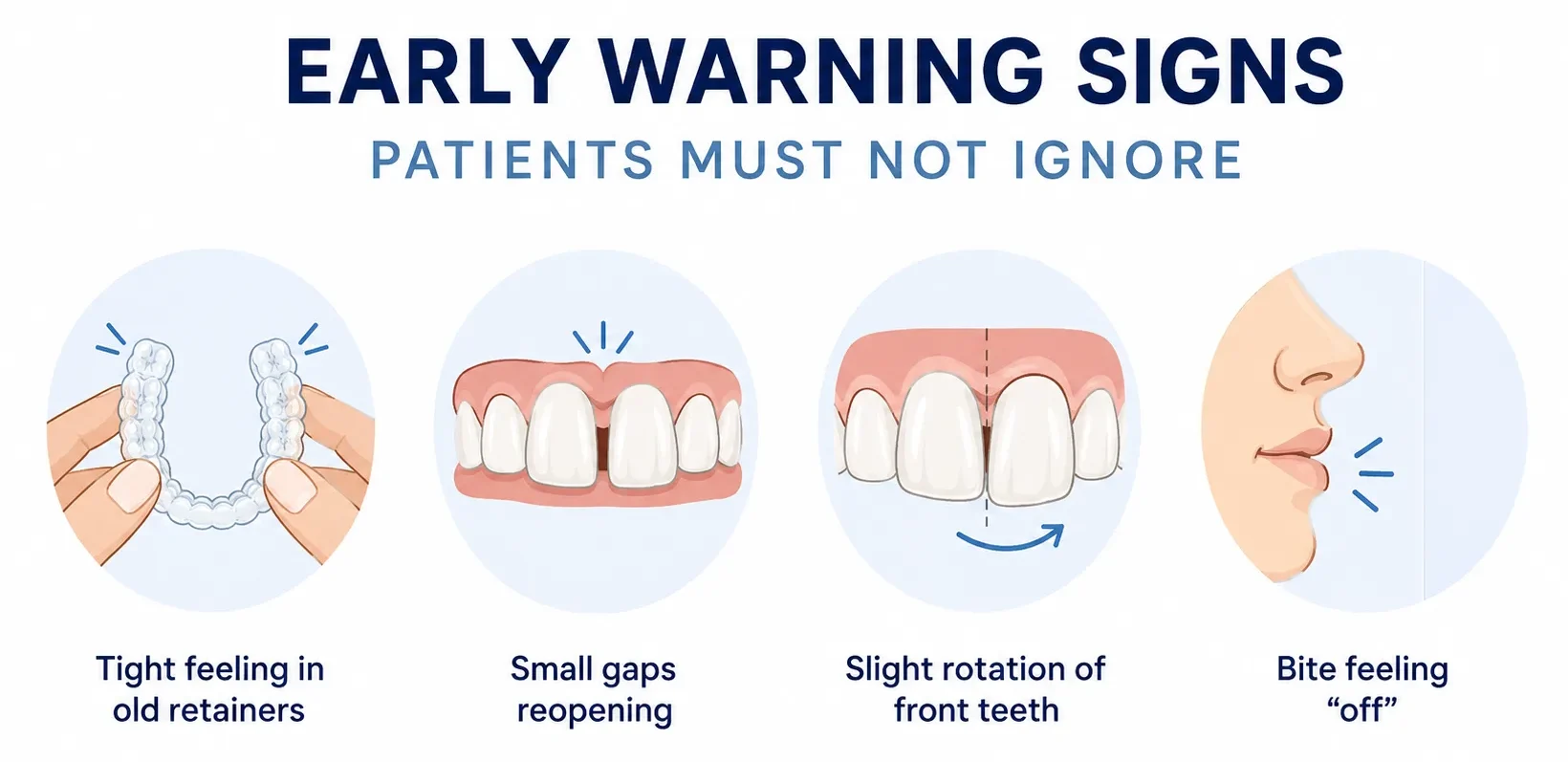
As an Orthodontist, we see this daily. Retainers are prevention, not optional.
- Tight feeling in old retainers
- Small gaps reopening
- Slight rotation of front teeth
- Bite feeling “off”
The Critical Link Between Retention and Relapse in Orthodontics
Most patients believe orthodontic treatment ends the day braces come off. Clinically, that is the most vulnerable phase. In dentistry, retention and orthodontic relapse in orthodontics are inseparable.
Once teeth are moved, the surrounding bone and fibres need time to reorganize itself. This time could be of several months to 1-3 years, to fully stabilize. Until that happens, teeth are biologically programmed to drift back toward their original positions.
This is why orthodontists worldwide consider retention a long-term commitment, not a short follow-up. At Fort Dental Clinic, Mumbai, patients are counselled upfront that retainers are not optional accessories.
Rather, these are the only proven ways to protect the results already achieved. Ignoring retention is the single biggest reason patients experience teeth relapse after braces, even after excellent orthodontic treatment.
Can Retainer Shift Teeth Back From Moving
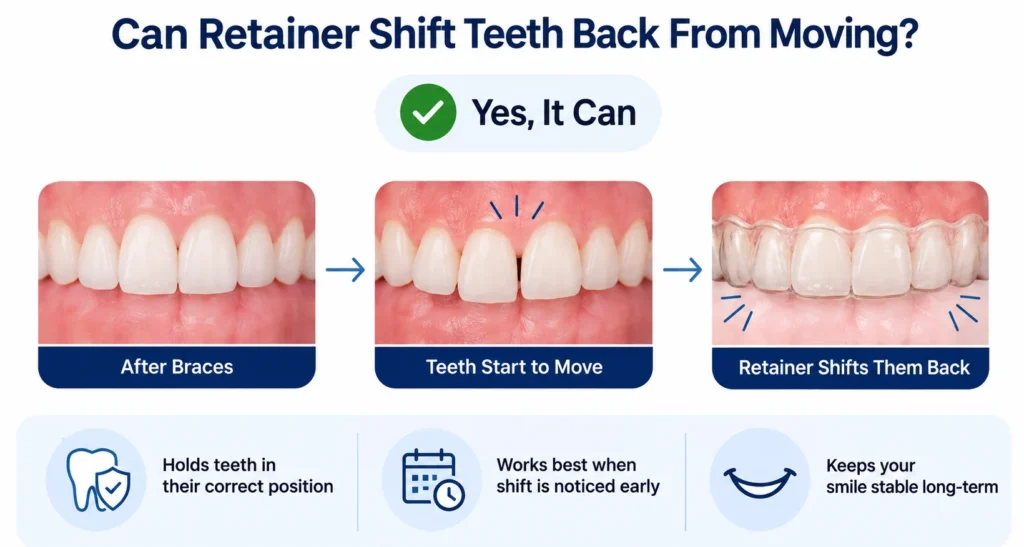
Short Answer is yes, retainer shift teeth back. Retainers counter normal, everyday forces – chewing pressure, tongue movement, clenching and even normal ageing. Without a retainer, these forces gradually undo years of orthodontic correction.
Retainers do not “push” teeth aggressively like braces. Their role is far more strategic. They hold teeth gently but consistently in their corrected position while bone remodeling completes itself. This stabilization process is slow and silent, which is why retainer shift teeth back after braces often goes unnoticed until visible changes appear.
Timing matters here. A shift you notice at your 3-month or 6-month check is usually just the retainer catching up, a few extra hours of wear a day fixes it. A shift that’s been sitting for a year or more is a different story; the bone has settled around the new position, so the retainer alone may not move it back, and you’ll need a modified retainer or short aligner refinement.
This is why we don’t wait for patients to notice on their own — regular retainer checks catch the 3-month version before it becomes the 3-year version.
We design teeth back retainers using precise digital scans. This assures good dental fit, comfort and effectiveness. Also makes long-term wear realistic rather than frustrating.
Why Teeth Move Even Years Later and Why Retainers Still Matter
The answer lies in biology. Teeth never become “fixed” like cemented structures. They respond to pressure for life. Jaw growth, gum health changes, missing teeth or altered bite forces can all trigger movement long after treatment.
Retainers act as insurance against these lifelong variables. At Fort Dental Clinic Mumbai, retention plans are designed with this long-term perspective.
Who Should Get a Retainer Check Immediately
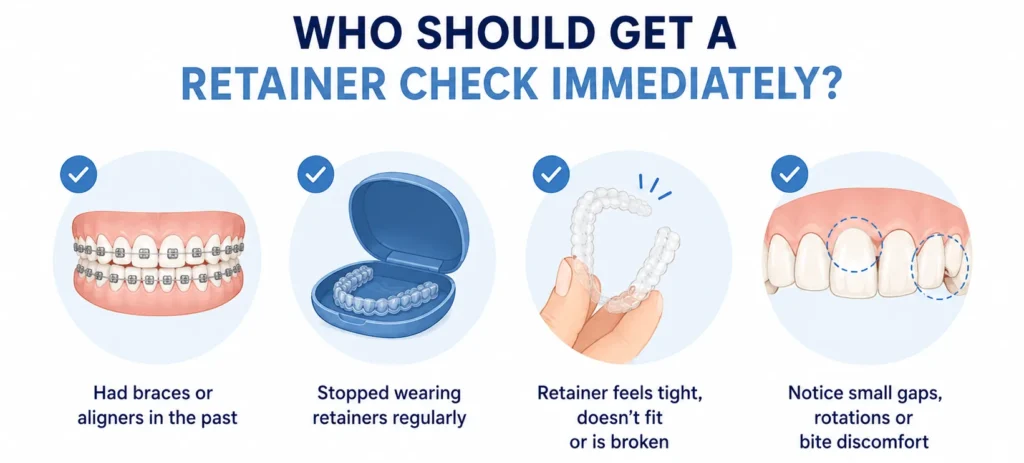
A retainer check is strongly recommended if:
- You had braces or aligners in the past
- You stopped wearing retainers regularly
- Your old retainer feels tight or doesn’t fit or if its broken
- You notice small gaps, rotations or bite discomfort
Fort Dental Clinic Fixes Teeth Shifting After Braces, Without Starting Over!
One of the most common patient fears is that orthodontic relapse means repeating full braces treatment. Clinically, that is rarely true if addressed early. Knowing how to fix shifted teeth after braces can save time, money and stress. This is why we strongly encourage patients to seek evaluation at the first sign of change. Early action keeps solutions simple.
- Minor shifts can often be corrected using modified retainers or short-term aligner refinement or small round of braces
- Moderate changes may require limited orthodontic intervention, far simpler than original treatment.
However, ignoring early teeth shifting after braces allows teeth to lock into new positions, making correction longer and more complex.
Once relapse progresses, the orthodontic treatment journey often becomes longer and more complex than early preventive correction.
Types of Retainers Available at Fort Dental Mumbai
Not all retainers work the same for every patient. The right retainer depends on bite pattern, age, treatment history and orthodontic relapse risk. With us you get a proper retainer planning that is personalized and not generic. As per your individual needs, we provide you with:
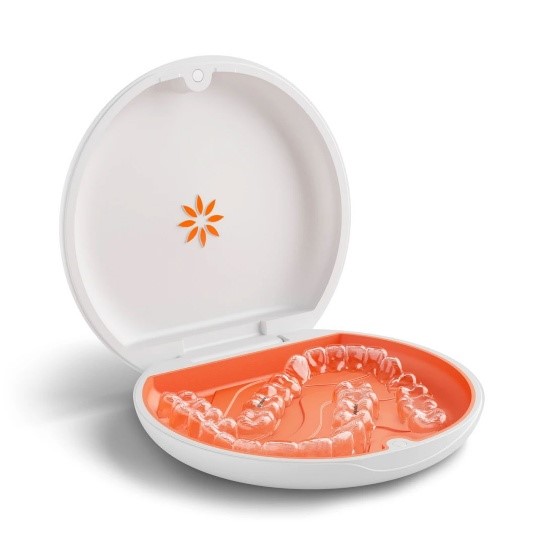
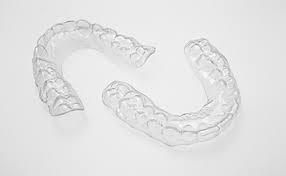
- Clear removable retainers for discreet daily or night wear: A) Vivera or B) Essix retainers
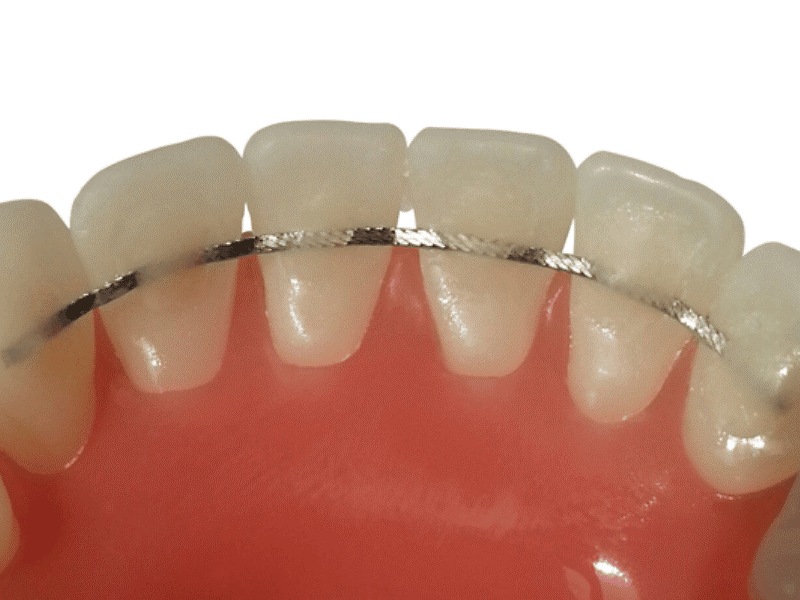
- Fixed (bonded) retainers for high-risk relapse cases
- Combination retention for enhanced long-term stability
Does relapse risk depend on who treats you?
Yes, more than most patients realise. Retention planning isn’t a one-size-fits-all step — it depends on your original bite problem, how your teeth were moved, and how closely you’re monitored afterward.
This is a specialist judgment call, not a generic prescription. At Fort Dental Clinic, every retention plan is built around your individual relapse risk, not a standard retainer handed out at the end of treatment.
Why Fort Dental Clinic Mumbai Is the Right Place for Retainer Care
We prevent orthodontic relapse before it becomes costly. Why come to us whether you want a retainer for braces or Invisalign? Because Dr Arun Nayak, the Founder of Fort Dental, is a Diamond Elite Preferred Invisalign Provider from 2024! You deserve the best and you get it here…
- Specialist orthodontic supervision
- Digital scans for precision retainers
- Follow-up protocols
- Focus on long-term stability, not just straight teeth
Protect the Smile You Already Earned
Straight teeth are not temporary achievements; they are investments. Losing them due to lack of retention is entirely avoidable. Retainers are simpler, faster and far more affordable than re-treatment. The real risk lies in waiting. Book a retainer evaluation at Fort Dental Clinic Mumbai before small shifts become permanent.
FAQs
Yes. In most cases, orthodontic relapse can be corrected, and it usually takes much less time than the original treatment. Minor relapse may be managed with adjusted or renewed retainer use, while moderate cases often respond well to short-term aligners or limited braces.
Relapse can happen at different times:
– Short-term relapse: within the first year after treatment
– Long-term relapse: years later, often due to ageing or stopped retainer use
The first 3–6 months after braces are the most critical.
Studies suggest that 20–50% of patients may experience some degree of orthodontic relapse over time. The risk varies depending on the original bite problem, retainer compliance, and individual biology.
If you notice shifting:
– Do not ignore it
– Avoid forcing an old or broken retainer
– Get a retainer or bite check early
Early intervention keeps correction simpler and shorter.
No. Full retreatment is not always necessary. Many cases can be managed with:
– Retainer adjustments
– Short-term aligners
– Limited orthodontic correction
Delaying care is what usually makes retreatment more complex.
Teeth are not fixed structures. They respond to pressure throughout life. Factors like jaw growth, tooth grinding, missing teeth, or changes in bite can trigger movement years later, which is why long-term retention matters.
Not usually, no — not if you catch it early. Teeth drift toward their old position; they don’t snap back to it overnight. That’s the biology working slowly, day by day, which is also why it’s fixable if you act fast. Left alone for years, though, the drift can get close enough to the original crowding or gap to feel like you never had treatment at all.
Prevention is simpler than most patients expect:
– Wear your retainer exactly as prescribed — full-time at first, then nights, without gaps
– Don’t skip retainer checks, even years after braces come off
– Replace a lost or cracked retainer immediately, not “next month”
– Flag any tightness, gaps, or bite changes at your next visit instead of waiting
None of this is complicated. It’s just consistency, which is the one thing patients underestimate.

BDS, MDS – Orthodontics & Dentofacial Orthopaedics
Chief Orthodontist, Fort Dental Clinic, Mumbai
Dr. Arun Nayak is a leading orthodontist in Mumbai with 20+ years of experience in braces, aligners, and advanced bite correction. As the founder of Fort Dental Clinic, he is known for delivering personalized, technology-driven orthodontic care with a focus on precision and patient comfort.