
“Every smile has a story.” And in bustling dental clinics of India, the conversation often begins with types of braces for teeth – especially the classic metal braces vs ceramic braces. So let’s discuss which one you should choose for your teeth!
Types of Fixed Braces:
Fixed braces, available in both metal and ceramic options, have been a reliable and time-tested solution in orthodontics for many years. When properly cared for, they deliver consistent and effective results.
Success with fixed braces depends on the patient maintaining good oral hygiene, avoiding breakages, and keeping up with regular orthodontic appointments.
Neglecting these responsibilities can lead to more frequent visits, extended treatment time, and less optimal outcomes. A popular feature among younger patients is the option to personalize their braces with coloured bands, adding a fun and stylish touch to their treatment.
During the orthodontic treatment, there are several types of braces for teeth that help with smile makeover-dental alignment and bite correction. Each type has its own look, feel and cost.
1. Metal Braces:
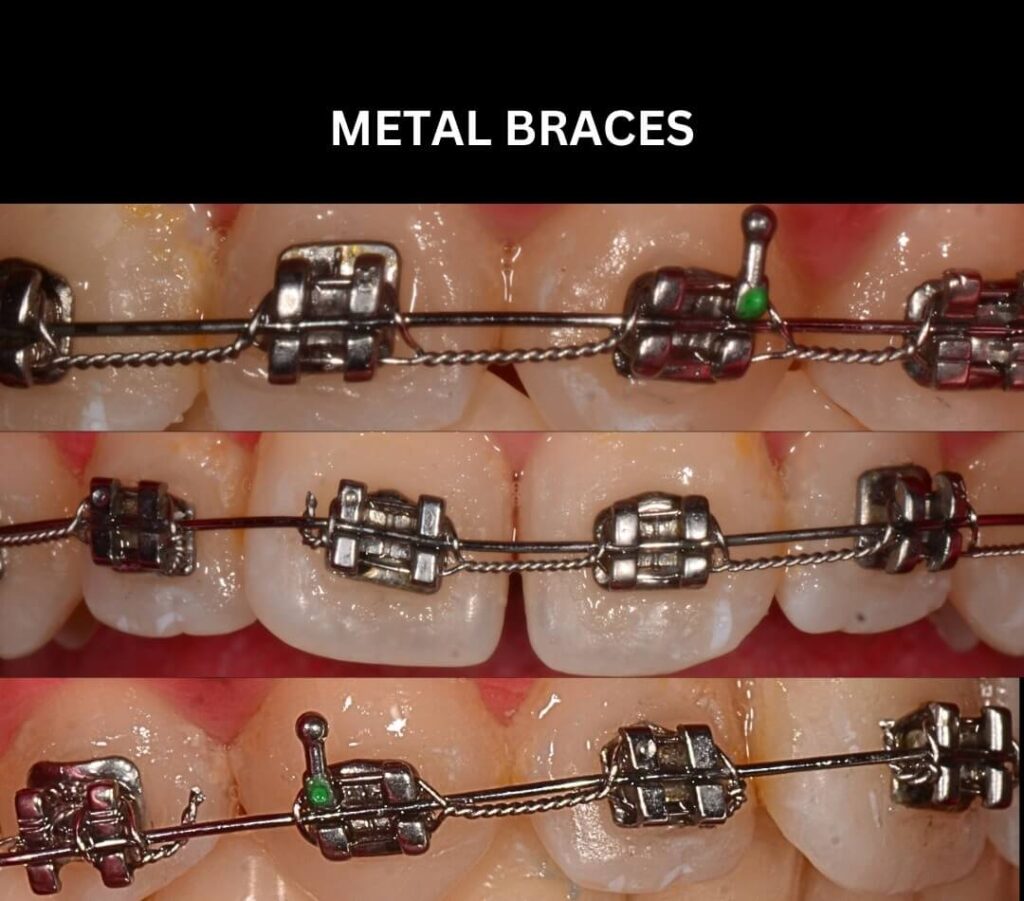
Metal braces are the most common and traditional type of fixed orthodontic appliance. Made from high-grade stainless steel, they are strong, durable, and highly effective in correcting a wide range of dental alignment issues.
Many kids and teens enjoy customizing them with coloured bands, adding a fun, personal touch to their treatment. While they’re easy to notice, they’re also one of the most affordable options.
2. Ceramic Braces:
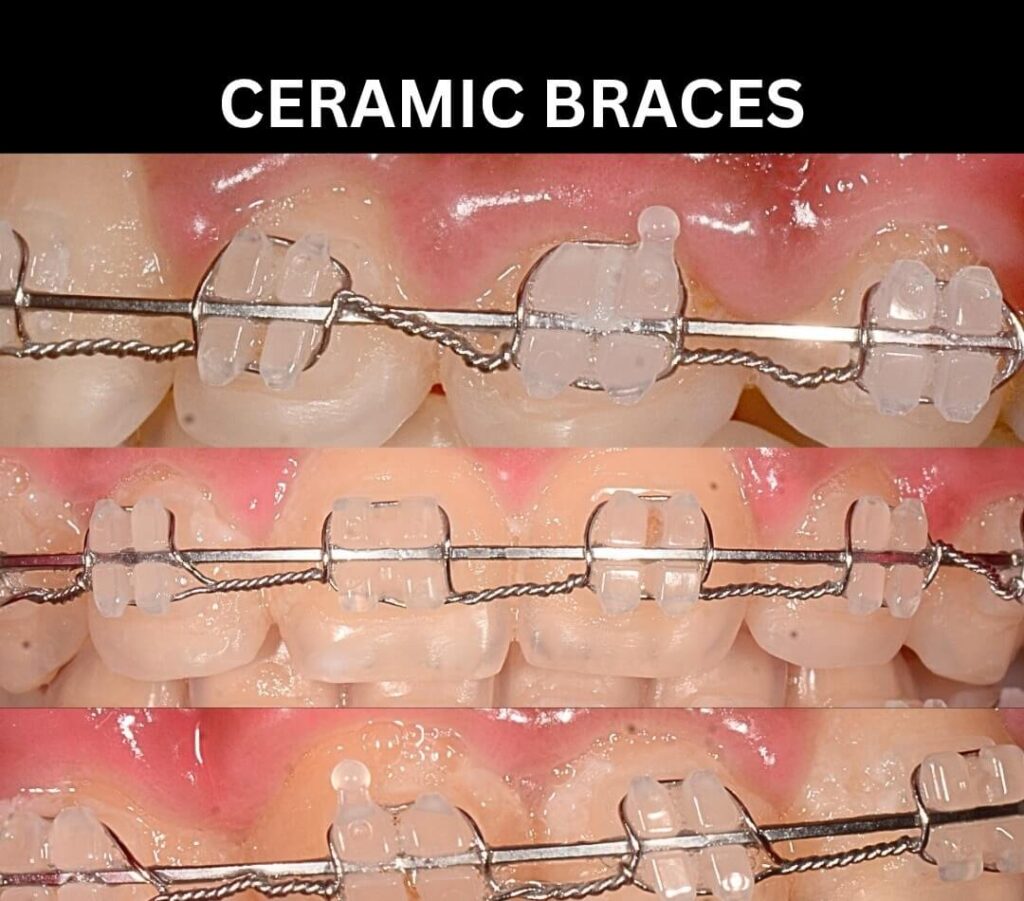
These are made with clear or tooth-colored materials. This makes them less visible. They’re a popular choice for teenagers and adults who prefer a more natural look or concerned about aesthetics.
3. Self-Ligating Braces:
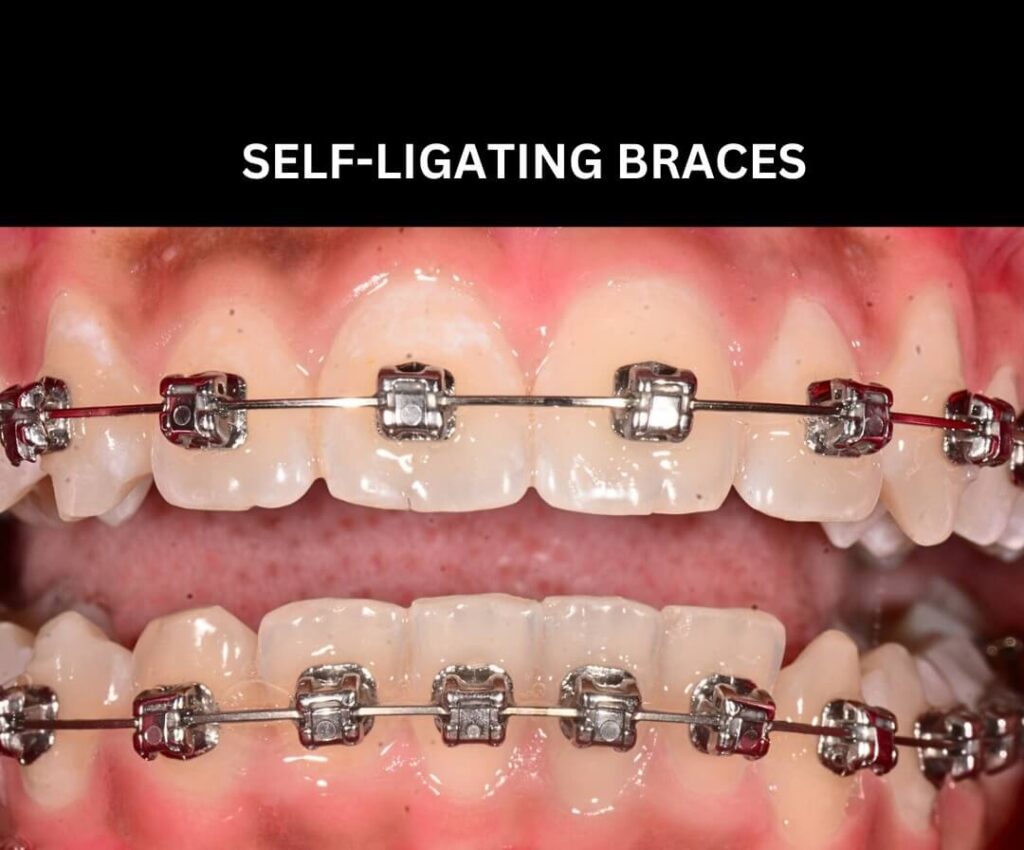
These are commonly known as Damon braces. Unlike traditional braces, they don’t require additional tie wires or colored elastics to hold the arch wire in place.
They’re designed to move teeth more efficiently, which can sometimes lead to faster treatment. However, the results depend on the individual case. We regularly use them for both children and adults, depending on the needs of the patient.
Must Read: Braces vs. Invisalign
What are Metal Braces?
They use small metal brackets stuck to each tooth via a thin arch wire that gently pulls the teeth into place over time. It requires frequent adjustment every few weeks so that the wire can remain active, which will allow the teeth to be properly aligned well over a period of time.
| Pros | Cons |
| Affordable | Initial discomfort as it may cause pressure or soreness at first |
| Strong and durable | Harder to clean because food can get accumulated, so maintenance of oral hygiene is important |
| Works for all ages even with kids, teens and adults | Harder to clean because food can get accumulated so maintenance of oral hygiene is important |
| Treats complex cases like severe teeth crowding, bite problems and tooth gaps | Initial discomfort as it may cause pressure or soreness at first |
| Customisable because even kids can pick fun colored bands |
Also Read: Dental Implants or Dentures
What are Ceramic Braces?
The brackets are made from a smooth, clear or tooth-colored ceramic material. This helps them blend in with your teeth. None can notice them easily, so many teens and adults prefer them because they look more natural and aesthetic.
| Pros | Cons |
| Blend in with your teeth, so they’re much less noticeable | They may come at a slightly higher investment compared to traditional metal braces, reflecting their added comfort and discreet appearance. |
| Still very effective at fixing crooked teeth and bite problems | Can stain if you drink too much coffee, tea, or don’t brush properly |
| A good option for people who do not feel confident with visible braces | Slightly more delicate, so you need to be a bit more careful |
| Aesthetic Option |
What Do Ceramic Braces Look Like?
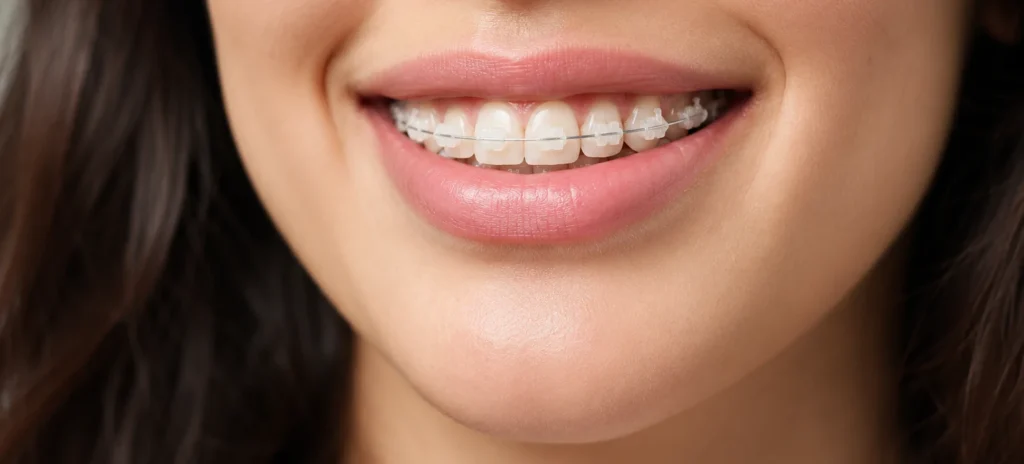
Ceramic braces use tooth-coloured or clear brackets, so from a few feet away, they’re easy to miss altogether. There’s no silver “train-track” look, just a thin archwire running across brackets that blend closely with your natural enamel shade.
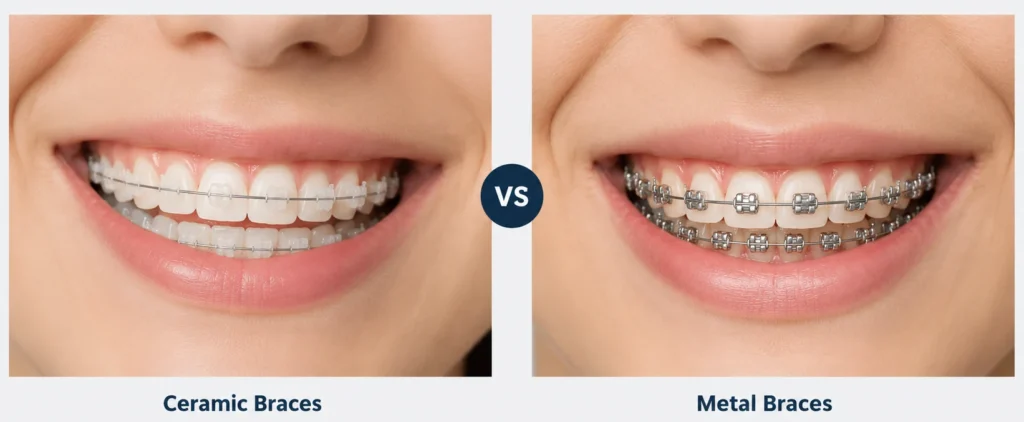
Many patients want to see them before committing, since the biggest reason people choose ceramic over metal is exactly this how discreet they look in photos, video calls, and day-to-day conversations. The wire itself is still metal, but with tooth-coloured or clear ligatures, even that becomes far less noticeable.
Detailed Comparison of Braces:
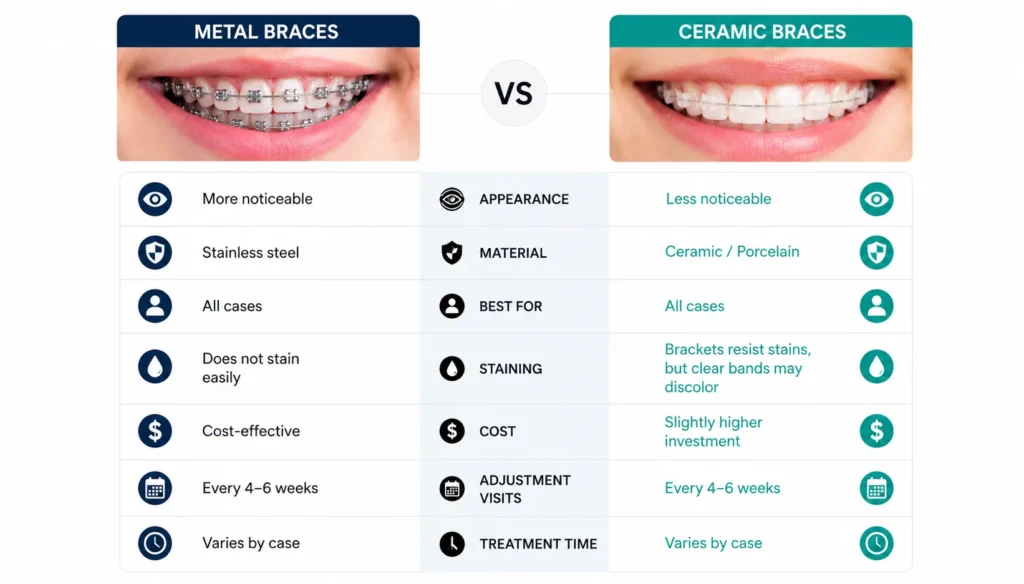
The two most popular are metal and ceramic braces. Both options effectively align teeth over 18–30 months, depending on the case. Here’s a simple breakup of ceramic vs metal braces pros and cons and other such comparisons:
Comparison of Self-Ligating vs Metal vs Ceramic
Self-ligating (Damon) braces aren’t a separate material; they’re a different bracket mechanism that skips the elastic ties. They’re available in both metal and ceramic versions, so the real decision often comes down to two separate questions: metal vs ceramic (looks), and traditional vs self-ligating (mechanism).
| Metal Braces | Ceramic Braces | Self-Ligating | |
|---|---|---|---|
| Visibility | Most noticeable | Blends with teeth | Depends on metal/ceramic choice |
| Comfort | Standard | Standard | Slightly smoother — no elastic ties to trap food |
| Adjustment visits | Every 4–6 weeks | Every 4–6 weeks | Often fewer visits needed |
| Cost | Most affordable | Moderate | Highest of the three |
| Best for | Budget-conscious, complex cases | Aesthetics-focused patients | Patients who want fewer appointments |
For a full breakdown of how self-ligating brackets work, see our Types of Braces guide.
Cost Comparison in India
| Braces Type | Typical Cost Range |
|---|---|
| Metal Braces | ₹25,000 – ₹80,000 |
| Ceramic Braces | ₹45,000 – ₹1,00,000 |
| Self-Ligating Braces | ₹70,000 – ₹1,50,000 |
| Invisalign / Clear Aligners | ₹1,25,000 onwards — see our Invisalign cost breakdown |
Actual cost depends on case complexity, treatment duration, and number of aligners or adjustments needed. Book a consultation with Dr Arun Nayak for an accurate quote for your case.
Treatment Duration: What to Expect
| Braces Type | Typical Duration |
|---|---|
| Metal Braces | 18–30 months |
| Ceramic Braces | 18–30 months, occasionally 1–2 months longer in complex cases as ceramic brackets are slightly more fragile |
| Self-Ligating | Often 2–4 months faster due to reduced friction on the wire |
Duration always depends more on the complexity of your case than the material of your braces — a mild crowding case in metal braces can finish faster than a complex bite correction in ceramic.
Which Braces Are Better for You?
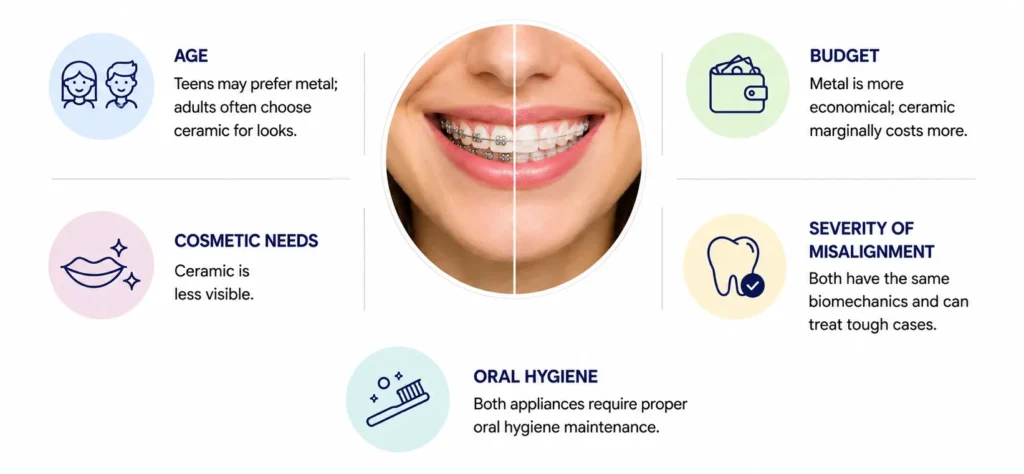
The right braces depend on several things:
- Age – Teens may prefer metal; adults often choose ceramic for looks
- Budget – Metal is more economical; ceramic marginally costs more
- Cosmetic needs – Ceramic is less visible
- Severity of misalignment – Metal & Ceramic braces have the same biomechanics, and both can be used to treat tough cases
- Oral hygiene – Both Appliances require proper oral hygiene maintenance
Choosing the Right Braces:
Every smile is different. Always consult an orthodontist – they’ll guide you based on your teeth, goals and health. Each option helps improve your dental alignment over time. The right one depends on your budget, comfort and how long your treatment duration may be. At Fort Dental we are here to guide you to the best choice for your dental health and your smile.
FAQs
Yes, ceramic braces are just as effective as metal braces in treating most alignment and bite issues. However, they may require more care.
Both types generally take 18 to 30 months depending on the severity of misalignment.
Both types require good oral hygiene. Ceramic braces need extra attention to avoid staining on the clear elastics, while metal braces are more forgiving but still require regular cleaning.
While they are safe, ceramic braces are more commonly used by teens and adults due to cosmetic reasons and the need for extra care. Kids often prefer metal braces for durability and custom band colours.
Treatment time is usually similar for both. However, because ceramic brackets are slightly more fragile, in some complex cases, your orthodontist may prefer metal braces for faster movement
Ceramic braces typically cost ₹15,000–₹30,000 more than metal braces in Mumbai, largely due to the material and its more discreet finish.
The brackets themselves resist staining well, but the clear elastic ties can pick up colour from tea, coffee, or turmeric-heavy food if hygiene isn’t kept up — our oral hygiene guide for braces covers how to prevent this.

BDS, MDS – Orthodontics & Dentofacial Orthopaedics
Chief Orthodontist, Fort Dental Clinic, Mumbai
Dr. Arun Nayak is a leading orthodontist in Mumbai with 20+ years of experience in braces, aligners, and advanced bite correction. As the founder of Fort Dental Clinic, he is known for delivering personalized, technology-driven orthodontic care with a focus on precision and patient comfort.