
When you start orthodontic treatment, your dentist may discuss many brace options. Self-ligating braces are one of them.
At that time, you may wonder,
What is the best option for me? How do self-ligating braces work? How are self-ligating braces different from traditional braces?
There are different types of braces available today, and each uses a slightly different mechanism to guide teeth into their correct positions.
How Traditional Braces Hold the Archwire
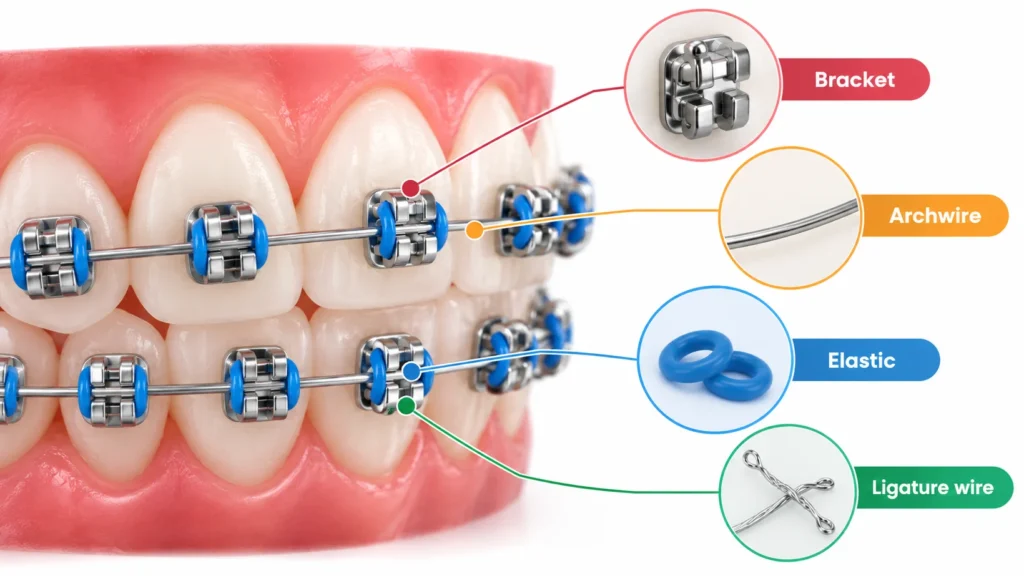
To understand the self-ligating braces mechanism, first you need an idea of how traditional braces hold the archwire.
Traditional braces have three main components:
- Bracket
- Archwire
- Elastic
- Ligature wire
During your orthodontist appointment, you may notice your dentist put small metal/ceramic brackets on your front teeth. These components guide your teeth, so they move into the correct position.
An archwire is a long, thin wire that can pass through these small brackets. This applies gentle pressure to move your teeth gradually.
The American Association of Orthodontists also explains how brackets and archwires work together to apply pressure and gradually move teeth into their desired positions.
The last component is elastic/ligature wire; that holds the archwire to the brackets.
Your dentist may replace the elastic and adjust or change the archwire every 4 to 6 weeks to continue guiding your teeth movement.
This gradual movement of teeth is part of orthodontic treatment, which focuses on correcting tooth alignment and improving the way the upper and lower teeth meet.
What Are Self-Ligating Braces and How Do They Work?
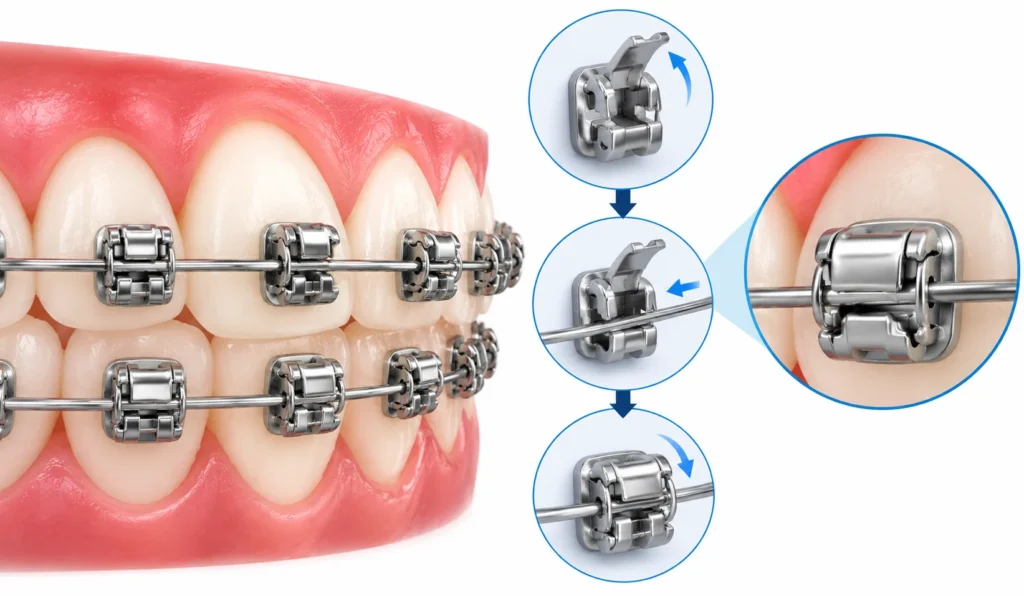
Self-ligating braces are a fixed type of braces that help your teeth move without any elastics.
They work the same way as we discussed above.
But their brackets do not have elastics, unlike traditional braces. Instead, these brackets have a built-in clip that keeps the archwire in place.
Imagine these clips as a small door. Your dentist opens this door to place the wire inside the bracket. And then closes it to hold the wire securely. These wires apply gentle pressure to your teeth, so they can move gradually.
During the visit, your dentist can adjust these wires when needed.
Types of Self-Ligating Braces
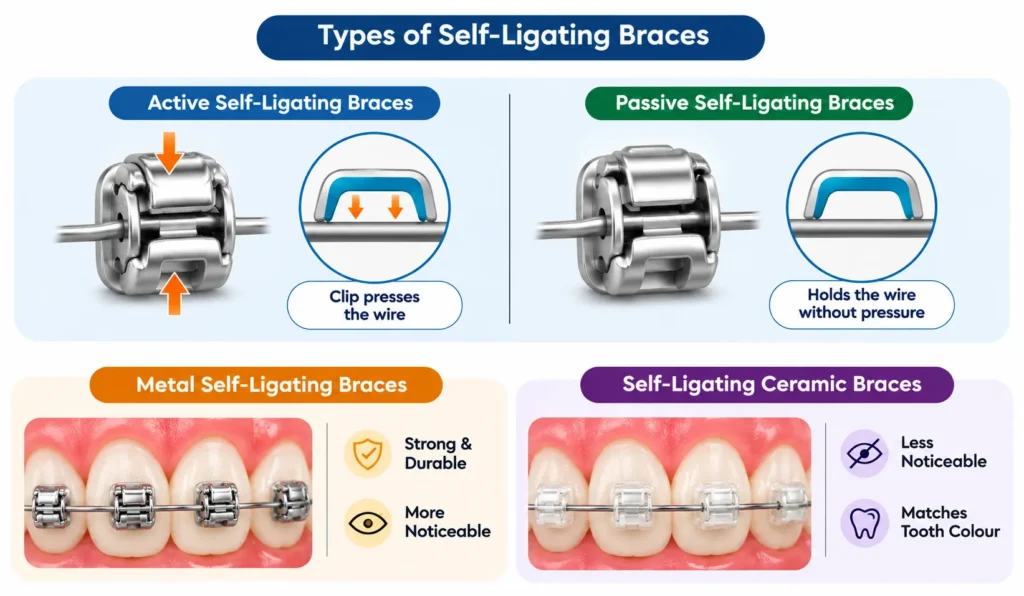
Self-ligating braces are available based on the mechanism of the clip and bracket material.
Active vs Passive Self-Ligating Braces
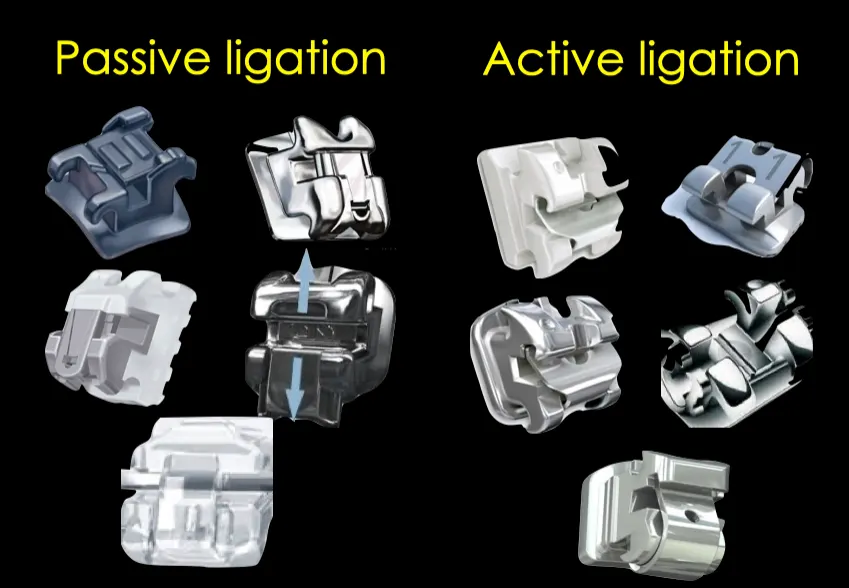
Active self-ligating braces use a clip that presses against the archwire. On the other hand, passive self-ligating braces have a sliding clip that holds the wire without pressing it. Damon system is an example of passive self-ligating braces.
Metal Self-Ligating Braces
The bracket is made of stainless steel. These metal self-ligating braces are strong and durable. But they are easily noticeable in your mouth due to their metal appearance.
Self-Ligating Ceramic Braces
Ceramic material is used in self-ligating ceramic braces. These are the same colour as teeth and less noticeable than metal brackets. The differences in appearance, visibility and material are also important when comparing metal vs ceramic braces.
Difference Between Self-Ligating and Traditional Braces
The table below shows the difference between self-ligating vs traditional braces:
| Feature | Self-Ligating Braces | Traditional Braces |
| How they hold the wire | They have a small built-in clip or sliding door to hold the wire. | There are small rubber bands/ligature wire that hold the wire inside the bracket. |
| Friction | Design of clip in bracket may reduce friction. | Friction between the wire and bracket due to the rubber band. |
| Dental visits | You have to go for regular dental visits. Nearly same as traditional braces | You may require regular visits to change or adjust the wire. For example, every 4 to 6 weeks. |
| Cleaning | You can easily clean your teeth because of the absence of elastic bands. | You may have difficulty brushing because food particles are trapped around the elastic. |
| Cost | On a higher end than traditional braces | Affordable |
What Should You Know About Self-Ligating Braces?
Here we explain some common concerns of patients to help you make the right decision in your orthodontic journey.
1. Do Self-Ligating Braces Work Faster?
It is not true that self-ligating braces work faster than traditional braces. Also, research does not claim that they shorten your treatment time.
Self-Ligating Braces Treatment Time
The treatment time for self-ligating braces depends on:
- How much your crowding
- Whether you require bite correction
- How much tooth movement is required
- How you follow your orthodontic visits
The overall orthodontic treatment journey involves several stages, from the initial assessment and treatment planning to regular adjustments and retention.
A 2026 study involved 96 patients and compared self-ligating braces with traditional braces.
- Average treatment time for self-ligating braces was 2 years and 25 days
- The average treatment time for traditional braces was 2 years and 10 days
Here, these data show us there is no significant difference between the two groups.
2. Do Self-Ligating Braces Need to Be Tightened?
No, tightening is not required like traditional braces. But your doctor may schedule visits to adjust or change the wire and check progress.
3. Are Self-Ligating Braces Less Painful?
A 2023 clinical study published in The Angle Orthodontist included 20 patients who were wearing self-ligating braces and traditional braces. This study claimed that patients with self-ligating braces have the same pain as those with traditional braces after 24 hr of wire adjustment.
4. Are Self-Ligating Braces Easier to Clean?
Yes, they are easy to clean because they have no elastic. But plaque may develop around your bracket and gum line.
Regardless of the bracket type, following proper oral hygiene practices during braces treatment helps remove food debris and reduce plaque accumulation around the brackets and gum line. It is important to follow your orthodontist’s advice on oral hygiene.
Self-Ligating Braces Pros and Cons
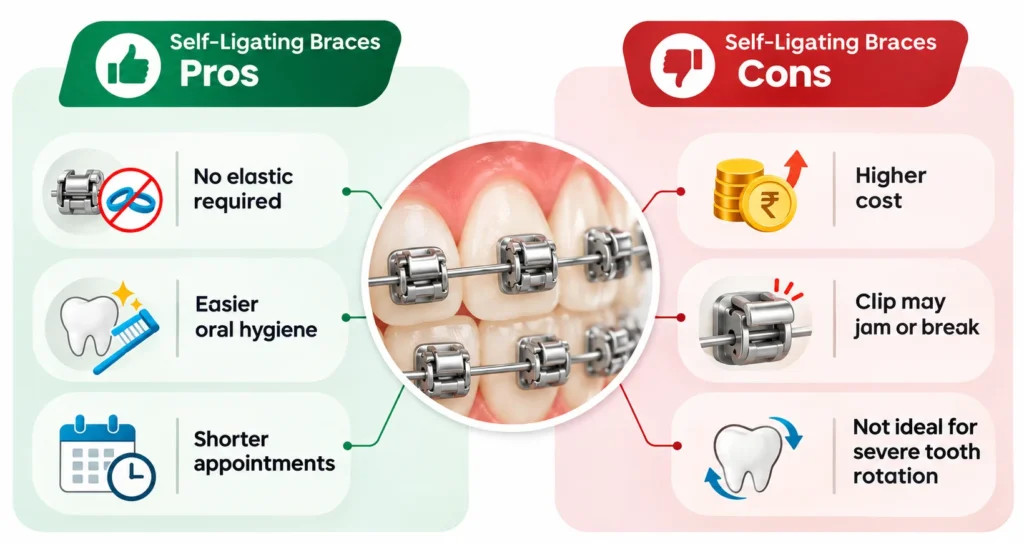
Here we explain the benefits and limitations of self-ligating braces:
Advantages of Self-Ligating Braces
- Does not require an elastic to hold the wire
- You can easily maintain oral hygiene
- Appointments may take less time
Disadvantages of Self-Ligating Braces
- Their cost is higher than traditional braces
- Built-in clips may jam or break sometimes
- If you choose the ceramic option, the wire remains metal
- Not ideal for severe tooth rotation
Who Should Choose Self-Ligating Braces?
Self-ligating braces are ideal for:
They may be considered by people with crooked teeth, crowding or other alignment concerns, depending on the type and complexity of tooth movement required.
They are an excellent choice for individuals seeking a more comfortable orthodontic experience with fewer dental clinic visits and easier oral hygiene maintenance.
Which Braces Are Right for You?
Choosing braces is a personal decision and also depends on:
- Your severity of misaligned teeth
- Your budget for treatment
- Your aesthetic preference
- Your time availability
Apart from fixed braces, clear aligners are another option for correcting teeth alignment, and the differences between braces vs Invisalign mainly involve their design, appearance and how they are used.
Unlike fixed braces, Invisalign clear aligners are removable trays that gradually move teeth according to a planned sequence.
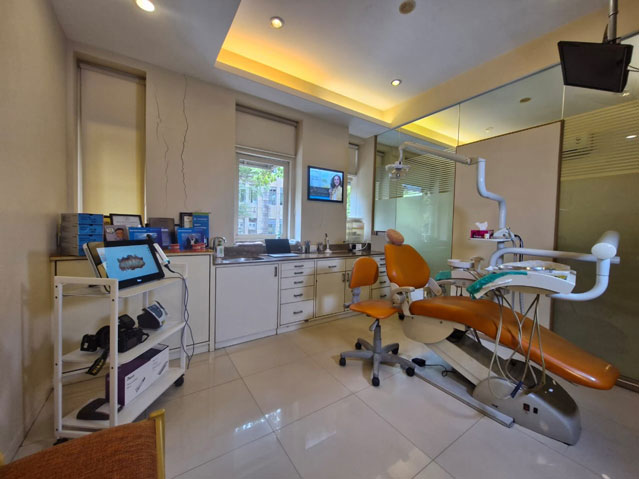
If you are in Mumbai and want orthodontic treatment, Fort Dental Clinic guides you towards the best options. Our experienced orthodontist, Dr Arun Nayak, listens to your doubts, answers your questions and helps you select the right options based on your dental needs.
Conclusion
Brace selection is the very first thing you need to do before aligning your teeth. Before you go ahead with the treatment, make sure you have a clear idea about the process, how to take care of the braces, and the changes that may occur post-treatment.
After the active treatment is complete, wearing a retainer after braces is an important part of maintaining the corrected tooth positions. With proper guidance, you can achieve a good treatment outcome.
FAQs
No, self-ligating braces do not consistently shorten overall orthodontic treatment time compared with traditional braces. Both options move teeth gradually using controlled pressure. Treatment duration depends on the severity of misalignment, bite problems, the required tooth movements, and adherence to your orthodontist’s instructions.
Self-ligating braces are not necessarily less painful than traditional braces. Both types can cause temporary soreness or pressure when first fitted and after adjustments. The level of discomfort varies between patients, and current research has not consistently demonstrated a meaningful difference in pain between the two systems.
They do not reduce the total number of visits required throughout treatment. Appointment frequency depends on your progress and individual treatment plan.
Yes. Adults can use self-ligating braces to correct many types of tooth misalignment and bite problems. The right treatment depends on gum health, bone support, the position of the teeth, and the complexity of the orthodontic problem rather than age alone.
Self-ligating braces do not directly cause permanent marks simply because of their bracket design. However, plaque accumulation around any type of braces can contribute to enamel decalcification, which may leave white spots. Good oral hygiene and appropriate fluoride use can help reduce this risk.
Switching may be possible in certain cases, but it is not routinely necessary. The decision depends on your current appliance, treatment progress, and the reason for changing systems. Your orthodontist can explain whether switching would offer a meaningful benefit or cause unnecessary expense or delays.

BDS, MDS – Orthodontics & Dentofacial Orthopaedics
Chief Orthodontist, Fort Dental Clinic, Mumbai
Dr. Arun Nayak is a leading orthodontist in Mumbai with 20+ years of experience in braces, aligners, and advanced bite correction. As the founder of Fort Dental Clinic, he is known for delivering personalized, technology-driven orthodontic care with a focus on precision and patient comfort.