
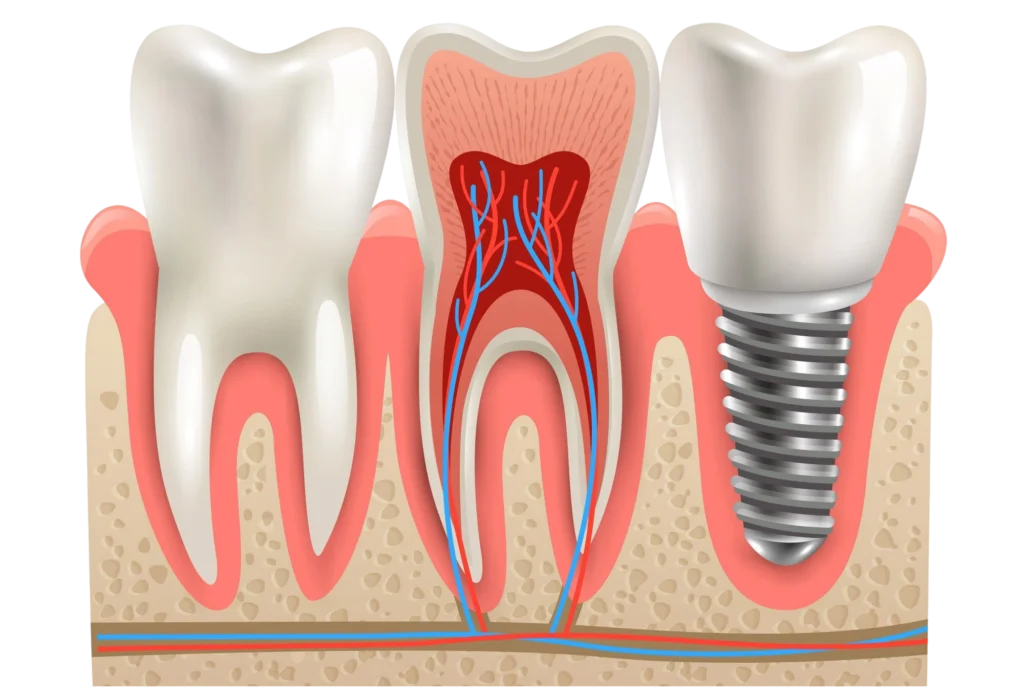
Dental implants are widely used for replacing lost teeth. For people comparing tooth-replacement options, Dental Implants vs Dentures can help explain how the two approaches differ. They can make a patients daily routine easier so they can eat, chew and smile comfortably and confidently.
For patients with multiple missing teeth, All-on-4 Dental Implants is another implant-based approach that uses four implants to support a full-arch restoration.
Dental implant treatment involves placing the implant, allowing time for healing and osseointegration, and then attaching the artificial tooth. Because implants are ultimately restored with an artificial tooth, Who Is a Prosthodontist and When Should You See One? explains the role of this dental specialist in restorative care
The implant procedure itself involves several stages, as explained in Osstem Dental Implants Treatment. For best long-lasting results, all phases should be completed properly.
However, what happens when the patient has diabetes and any other heart condition?
Is a dental implant safe for them?
In many cases, yes, but dental implants for diabetics and heart patients can be considered once their conditions are properly managed.
So, let’s understand when the treatment is safe, what risks may arise during the procedure, and how we can help reduce them.
Are Dental Implants Safe for Diabetic Patients?
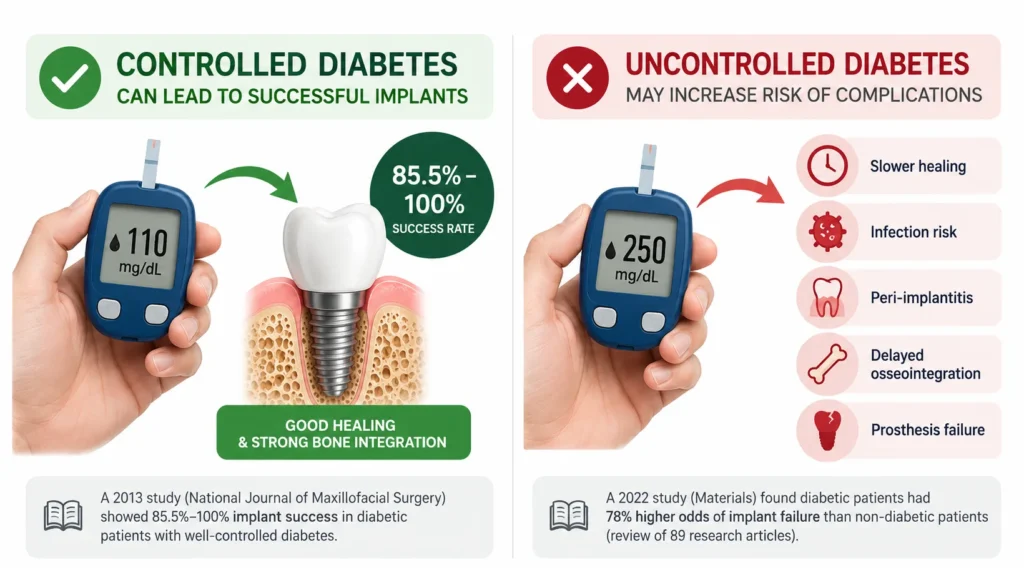
Can diabetics get dental implants? Yes, many patients with diabetes can get dental implants. Diabetes itself does not mean the patient cannot have an implant, but it may depend on how well their condition is controlled.
What is Safe: Controlled Diabetes and Implant Success
When we place an implant in the jawbone, it is important for the body to help in the natural healing process. This means bone integrates with the implant; this is called osseointegration.
Well-controlled diabetes plays an important role in achieving successful osseointegration and wound healing after dental implants in diabetic patients.
A 2013 study published in n the National Journal of Maxillofacial Surgery showed that dental implants are successful in 85.5%-100% of cases among diabetic patients with well-controlled diabetes.
What is Risky: Uncontrolled Diabetes and Implant Failure
When the blood sugar stays high, there maybe some risks and complications that may arise with implants such as:
- Slow down your healing process
- Infection at the implant site
- Peri-implantitis
- Delayed osseointegration
- Prosthesis failure
A 2022 study published in Materials, a review of 89 research articles, has found that diabetic patients had 78% higher odds of dental implant failure than non-diabetic patients.
But it does not mean that every patient with diabetes may necessarily have the implant fail. The outcome varies in every patient and depends on the condition of oral tissues and general health.
Are Dental Implants Safe for Cardiac Patients?
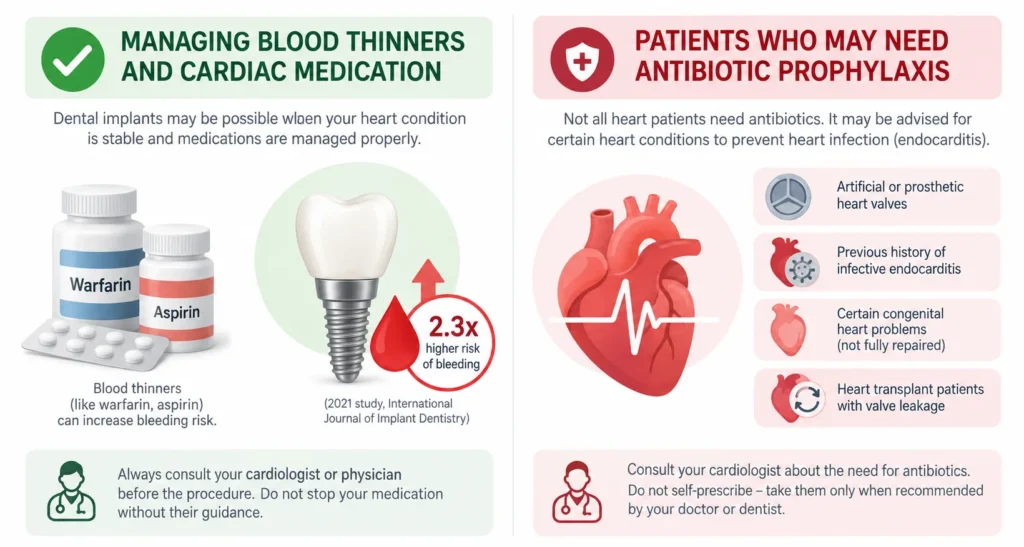
Having a heart condition does not mean the patient needs to avoid dental implants. Dental implants for heart patients may still be possible when conditions such as high blood pressure, previous angioplasty, bypass surgery, heart valve problems or pacemakers are stable.
What’s Safe: Managing Blood Thinners and Cardiac Medication
Blood-thinning medicines reduce the blood’s ability to form clots. If patients are taking blood thinner medications such as warfarin, aspirin, or any other platelet inhibitors, this may result in increased bleeding during procedures or make it harder to control.
Bleeding from the gums can also have dental causes, and Bleeding Gums When Brushing explains some common reasons for this symptom.
A 2021 study published in the International Journal of Implant Dentistry has suggested that if patients do not stop taking their blood thinners during the procedure for dental implants, then the likelihood of bleeding is 2.3 times higher.
In such a case, we ask the patient to consult their cardiologist or primary care physician before starting the procedure. The patient should not stop their blood thinner or any other medication before surgery without their cardiologist’s guidance.
What’s Risky: Patients Who Need Antibiotic Prophylaxis
Not every heart patient needs antibiotics before dental implant surgery.
According to the ADA, antibiotic prophylaxis may be advised for people with certain heart conditions who are at higher risk of heart infection.
These include:
- Artificial or prosthetic heart valves or material used to repair a heart valve
- A previous history of infective endocarditis
- Certain congenital heart problems that are not fully repaired
- Heart transplant patients who have an abnormal heart valve causing leakage
If the patient has one of these heart conditions, we will ask them to consult their cardiologist regarding the need for antibiotics. The patient must not self prescribe themselves antibiotics. They must take them when their physician or dentist recommends them.
Precautions Before Getting Dental Implants With Diabetes or Heart Conditions
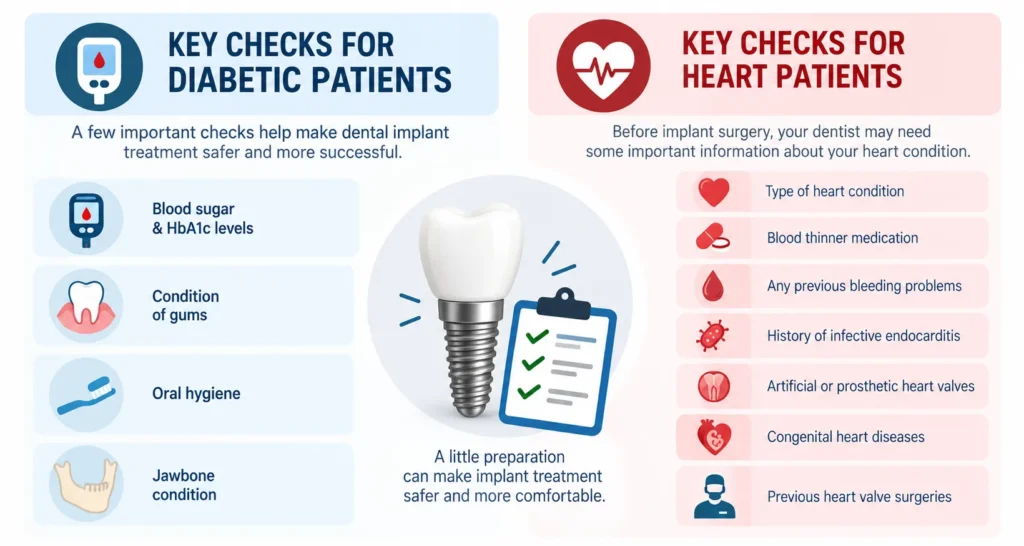
A little preparation can make implant treatment safer and more comfortable.
If the patient is diabetic, the following steps are required to understand their condition better before dental implants:
- Level of blood sugar and HbA1c
- The condition of their gums
- Their oral hygiene
- The condition of their jawbone
Healthy gums are an important part of implant planning, and existing gum problems may need to be addressed through Periodontics & Gum Treatments first.
For a heart patient, before starting their implant surgery, some information may be required, such as:
- What heart condition the have
- Which blood thinner they are taking
- Any bleeding problems they might have had before
- Their prior history of infective endocarditis
- The presence of artificial or prosthetic heart valves
- Congenital heart diseases
- Previous heart valve surgeries
Who Should Avoid Dental Implants?
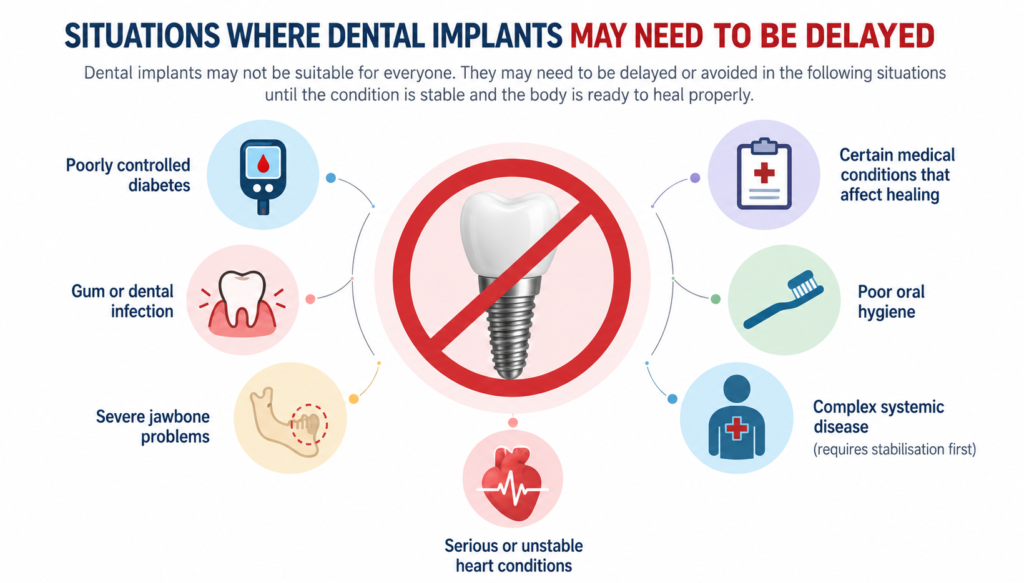
Dental implants may need to be delayed or avoided in some situations until their condition is stable and their body is ready to heal properly.
These are some contraindications for dental implants that a dentist may consider if the patient has:
- Poorly controlled diabetes
- Any gum or dental infection
- Severe jawbone problems without suitable treatment
- Serious or unstable heart conditions
- Certain medical conditions that affect healing
- Poor oral hygiene issues
- Complex systemic disease that requires stabilisation first
If gum disease or infection is present, understanding its signs, causes and treatment can help before proceeding with implant treatment.
When gum problems require treatment before an implant, Scaling and Root Planing may be used to remove plaque and tartar from around the teeth and gums.
Recovery and Healing Tips for Diabetic and Cardiac Patients
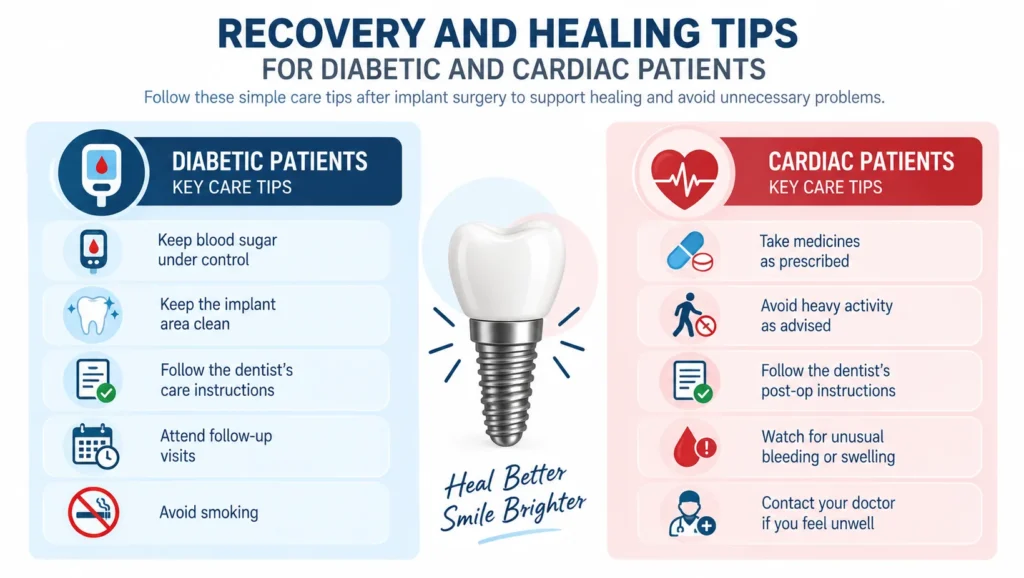
Follow these simple care tips after implant surgery to support healing and avoid unnecessary problems:
| Diabetic Patients | Cardiac Patients |
| Keep blood sugar under control | Take medicines as prescribed |
| Keep the implant area clean | Avoid heavy activity as advised |
| Follow the dentist’s care instructions | Follow the dentist’s post-op instructions |
| Attend follow-up visits | Watch for unusual bleeding or swelling |
| Avoid smoking | Contact your doctor if you feel unwell |
How Fort Dental Clinic Manages Implant Safety for Diabetic and Cardiac Patients in Mumbai

At Fort Dental Clinic in Mumbai, Dr Arun Nayak and team understand that each patient requires a unique treatment approach. Before making plans for the implant procedure, we may review the patient’s medical history, medications taken, and any health issues that may affect the treatment.
As necessary, we can coordinate with your cardiologist, endocrinologist or physician for medical advice or clearance. Before developing a treatment plan, we examine your oral health status, jawbone and previous medical scans. If there is a need for infection control, medication, or follow-up treatment, we may consider these aspects as well.
Conclusion
Dental implants can be a suitable option for many people with diabetes or heart conditions. These conditions do not automatically rule out treatment. Good planning, proper medical care and regular follow-up can help reduce possible risks. If you are considering dental implants, speak with your dentist about your health history so your treatment can be planned safely for your needs.
FAQs
There is no single HbA1c level that guarantees dental implant safety for every patient. The dentist may review the patient’s recent HbA1c, blood glucose levels and overall health before treatment. If diabetes is poorly controlled, implant surgery may need to be delayed until the condition is better managed.
Some patients can have dental implants while taking blood-thinning medication, but the treatment requires careful planning because these medicines can increase bleeding risk. Patients should not stop warfarin, aspirin or other prescribed blood thinners on their own. Any change in medication should be made only after discussing it with the treating cardiologist or physician.
Permanent disqualification from dental implants is uncommon. However, conditions such as uncontrolled diabetes, active dental infection, severe untreated bone problems, serious unstable medical conditions and poor oral hygiene may make implants unsuitable temporarily. Treating or stabilizing these problems may allow implant treatment to be reconsidered.
Yes. Elevated blood sugar can interfere with normal wound healing and immune function. As a result, healing around the implant may take longer and the risk of infection may be higher when diabetes is not well controlled.
A history of bypass surgery does not automatically rule out dental implants. The patient’s current cardiac condition, recovery status, medications and overall medical stability should be reviewed before elective implant surgery. The dentist may consult the patient’s cardiologist when necessary.
If an implant is not suitable or needs to be delayed, alternatives may include dental bridges or removable dentures. The appropriate option depends on factors such as the number of missing teeth, the condition of the surrounding teeth and gums, jawbone health and the patient’s overall medical condition.

BDS, MDS – Orthodontics & Dentofacial Orthopaedics
Chief Orthodontist, Fort Dental Clinic, Mumbai
Dr. Arun Nayak is a leading orthodontist in Mumbai with 20+ years of experience in braces, aligners, and advanced bite correction. As the founder of Fort Dental Clinic, he is known for delivering personalized, technology-driven orthodontic care with a focus on precision and patient comfort.