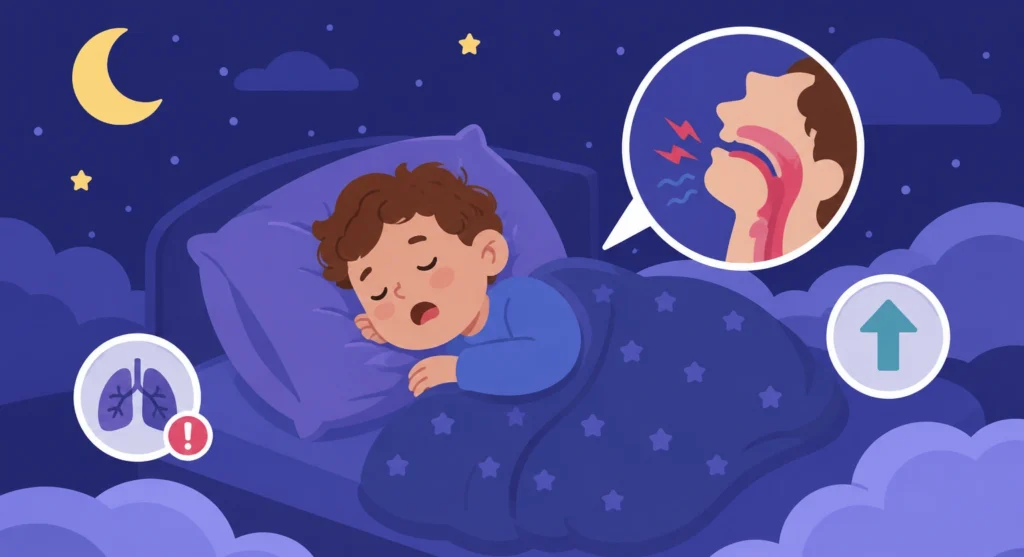
Many children make occasional noise while they sleep. This mostly happens when they have a cold or sleep in an unusual position. Many parents think snoring is always normal.
But what happens when your child snores every night?
In some children, frequent snoring is linked to sleep-disordered breathing. It interferes with your child’s normal breathing while asleep and can possibly affect their well-being and development.
These problems can frequently be diagnosed at an early stage. Today, airway orthodontics enables orthodontists to assess how jaw and airway growth affect your baby’s breathing.
In many cases, early orthodontic treatment can help identify developmental concerns before they affect airway function and facial growth.
This guide helps parents understand the connection between children’s snoring, sleep-disordered breathing, and orthodontic treatment.
What Is Sleep-Disordered Breathing in Children?
Sleep-Disorder Breathing (SDB) means a disturbance in the normal respiratory pattern and ventilation in your child during sleep.
It can cover a range of breathing problems, from simple snoring to obstructive sleep apnea (OSA). OSA is a serious breathing condition where the airway gets partly or fully blocked while the child is sleeping, affecting about 1% to 5% of children.
So, how do you know if your child’s snoring is something to worry about? Let’s look at the warning signs that you should not ignore.
Signs Your Child’s Snoring May Be More Than Just Snoring
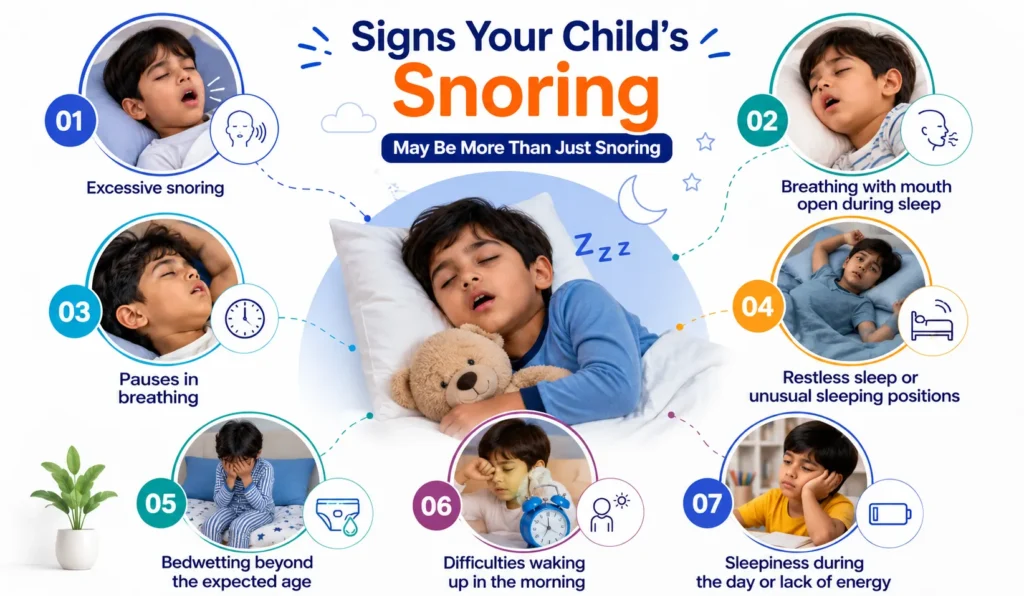
You should watch for the following signs that indicate your child’s breathing may be abnormal during sleep.
- Excessive snoring
- Breathing with the mouth open during sleep
- Pauses in breathing
- Restless sleep or unusual sleeping positions
- Bedwetting beyond the expected age
- Difficulties waking up in the morning
- Sleepiness during the day or lack of energy
Finding the causes of child snoring is the first step toward helping them sleep better.
Why Does My Child Snore?
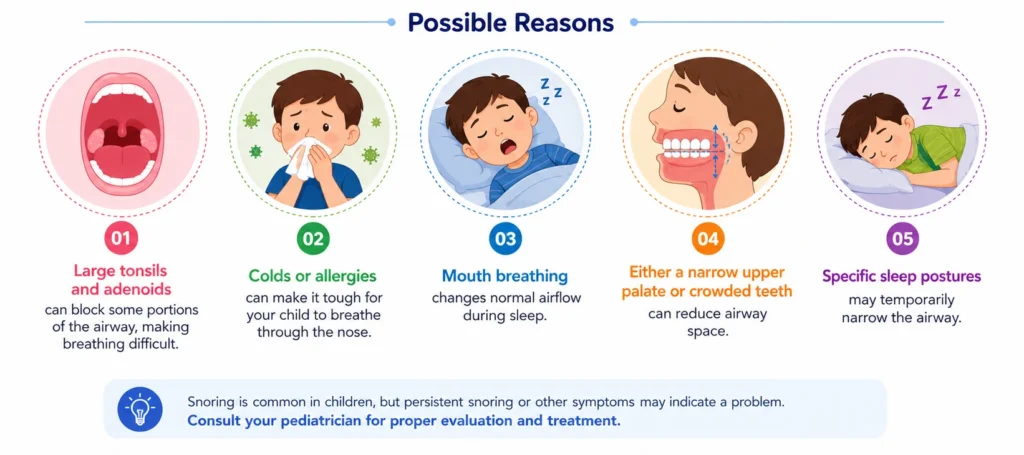
Snoring may develop in your child as a consequence of airway obstruction while sleeping. This obstruction may be related to the way your child’s airway, jaws, and facial structures develop.
The possible reasons for your child’s snoring are as follows:
- Large tonsils and adenoids can block some portions of the airway, making breathing difficult.
- Colds or allergies can make it tough for your child to breathe through the nose.
- Mouth breathing changes normal airflow during sleep.
- Either a narrow upper palate or crowded teeth can reduce airway space.
- Specific sleep postures may temporarily narrow the airway.
The Link Between Mouth Breathing and Airway Development
Normally, your child breathes through the nose most of the time. It supports your child’s jaw, airway, and facial structure so they grow in a healthy way.
When your child breathes through the mouth instead of the nose called mouth breathing. It is one of the most common oral habits in children
These habits may gradually affect facial and jaw development. Long-term mouth breathing leads to improper positioning of the tongue within the oral cavity.
Poor tongue posture is often associated with habits addressed through tongue thrust exercises and myofunctional therapy. This can contribute to a narrower upper jaw and reduced airway space.
Several published studies have explored the relationship between chronic mouth breathing, facial growth patterns, and airway development in children.
How Sleep-Disordered Breathing Can Affect Your Child Beyond Sleep
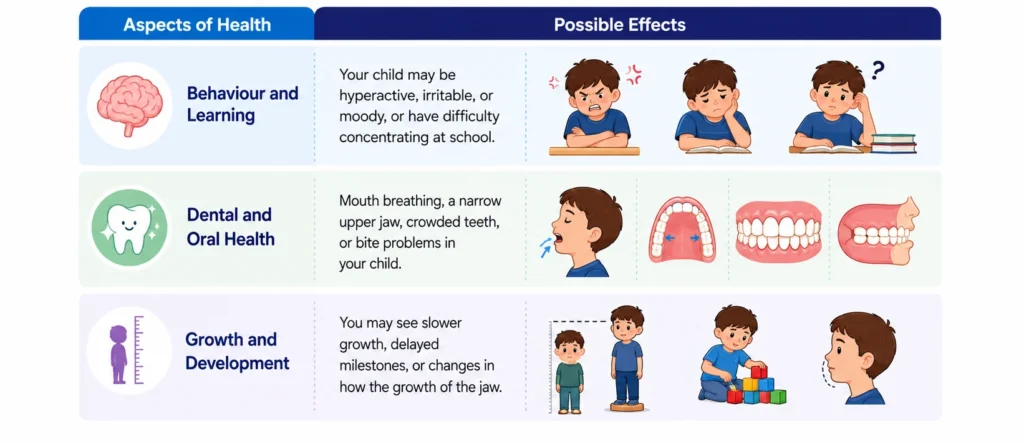
Sleep‑disordered breathing affects more than just your child’s sleep. Poor breathing during sleep can slowly affect different aspects of your child’s health and daily life.
| Aspects of Health | Possible Effects |
| Behaviour and Learning | Your child may be hyperactive, irritable, or moody, or have difficulty concentrating at school. |
| Dental and Oral Health | Mouth breathing, a narrow upper jaw, crowded teeth, or bite problems in your child. |
| Growth and Development | You may see slower growth, delayed milestones, or changes in how the growth of the jaw |
Research from the National Sleep Foundation highlights the importance of healthy sleep for learning, behaviour, and overall childhood development.
How an Orthodontist Evaluates the Pediatric Airway
To better understand what is affecting your child’s breathing, an orthodontist may evaluate your child’s airway and facial growth. This includes:
Medical History and Symptom Review
- How your child sleeps and breathes at night
- Snoring, mouth breathing, or restless sleep
- Daytime tiredness, poor focus, or changes in behaviour
Clinical Examination
- How your child’s jaw and face are growing
- How the teeth fit together (bite)
- Tongue position and whether the lips stay closed
- Signs of mouth breathing
- Enlarged tonsils or a narrow upper jaw
Sometimes, digital scans or X‑rays are used to see the airway and nearby structures more clearly.
Understanding the difference between an orthodontist and dentist can help parents choose the right professional for airway and growth-related concerns.
Can Orthodontic Treatment Help Improve Breathing?
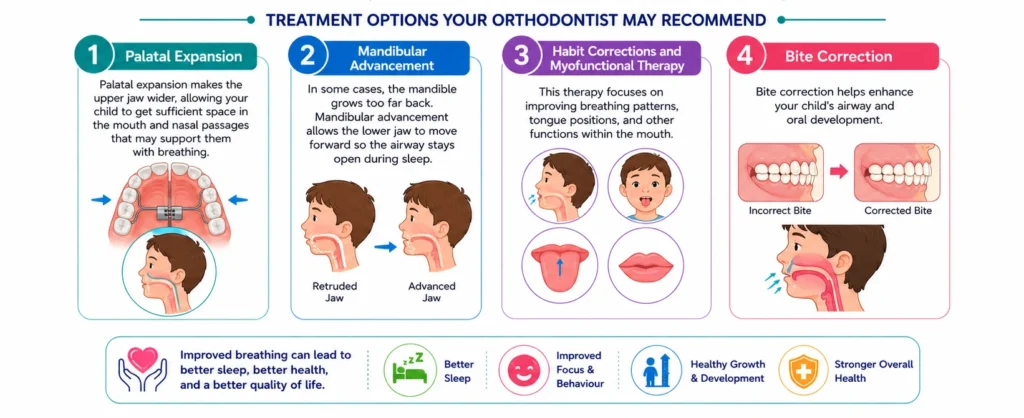
Many parents wonder: “Can orthodontics help sleep apnea in children?” In some cases, yes. Orthodontics and sleep apnea are linked through airway and jaw development. So, some children may benefit from orthodontic intervention to improve their breathing.
Based on your child’s airway and developmental needs, your orthodontist may recommend the following treatment options:
1. Palatal Expansion
Palatal expansion makes the upper jaw wider, allowing your child to get sufficient space in the mouth and nasal passages that may support them with breathing.
2. Mandibular Advancement
In some cases, the mandible grows too far back. Mandibular advancement allows the lower jaw to move forward so the airway stays open during sleep.
3. Habit Corrections and Myofunctional Therapy
This therapy focuses on improving breathing patterns, tongue positions, and other functions within the mouth.
4. Bite Correction
Bite correction helps enhance your child’s airway and oral development.
Why Choose Fort Dental Clinic for Sleep-Disordered Breathing?

All children deserve to breathe and sleep easily. At Fort Dental Clinic in Mumbai, we look beyond oral health to examine how airways and jaw development may impact your child’s overall health.
Led by Dr Arun Nayak, one of India’s most experienced orthodontists, our team is dedicated to helping your child breathe easier, sleep well, and grow confidently through customised treatment plans and a collaborative approach with other healthcare providers when required.
Final Thoughts: A Small Step Toward Healthier Breathing
Snoring is not always something children outgrow. Paying attention to the signs and seeking help early can make a real difference. With the right care, your child can enjoy healthier breathing, more restful sleep, and support for healthy growth and development.
FAQs
Yes, in some cases. Orthodontic treatment can help improve breathing by addressing issues such as a narrow upper jaw, crowded teeth, or improper jaw development that may contribute to airway restriction.
Braces and other orthodontic treatments may help improve breathing when airway problems are related to jaw alignment, bite issues, or a narrow dental arch. However, treatment recommendations depend on the child’s individual condition and airway assessment.
Yes. A narrow upper jaw can reduce the space available in the nasal passages and airway, potentially contributing to mouth breathing, snoring, and sleep-disordered breathing.
You should seek professional evaluation if your child snores frequently, experiences pauses in breathing, sleeps with their mouth open, struggles with daytime fatigue, has difficulty concentrating, or shows behavioral changes related to poor sleep.
Yes. Long-term mouth breathing may influence facial growth patterns, contribute to a narrow upper jaw, crowded teeth, bite problems, and changes in jaw development.
A comprehensive evaluation may involve an orthodontist, pediatrician, ENT specialist, or sleep physician. Working together, these professionals can identify the cause of the breathing problem and recommend the most appropriate treatment plan.

BDS, MDS – Orthodontics & Dentofacial Orthopaedics
Chief Orthodontist, Fort Dental Clinic, Mumbai
Dr. Arun Nayak is a leading orthodontist in Mumbai with 20+ years of experience in braces, aligners, and advanced bite correction. As the founder of Fort Dental Clinic, he is known for delivering personalized, technology-driven orthodontic care with a focus on precision and patient comfort.