
A broken or knocked-out tooth can leave you confused about what to do next. These are urgent dental emergencies.
In a dental emergency, your first few steps are very important. If you know how to handle the injury before you reach your dentist, you can protect your tooth and avoid making the problem worse.
Here in this guide, we explain what you should do, when you should seek dental care and how to prevent a dental emergency.
What Is Considered a Dental Emergency?
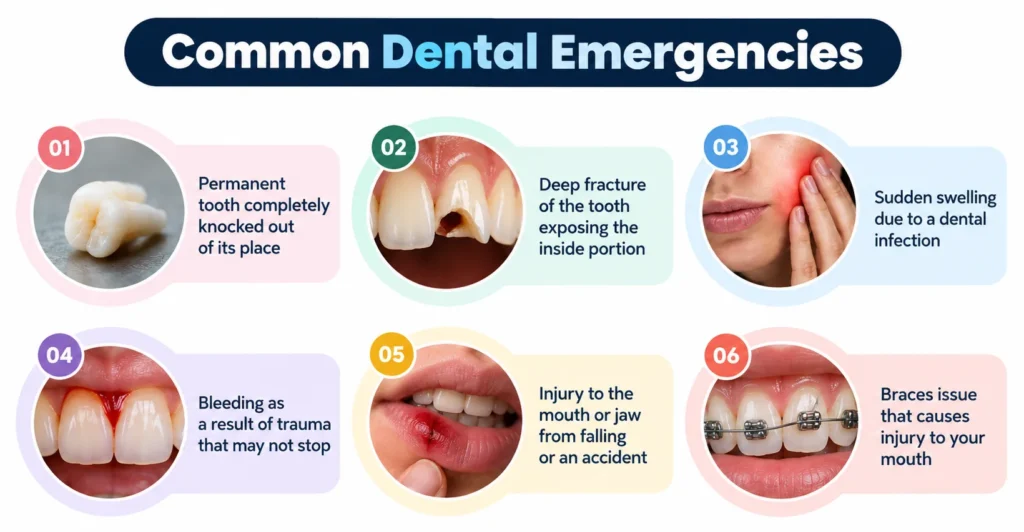
A dental emergency refers to a condition within the mouth that requires urgent dental attention.
Common dental emergencies are:
- Permanent tooth completely knocked out of its place
- Deep fracture of the tooth exposing the inside portion
- Sudden swelling due to a dental infection
- Bleeding as a result of trauma that may not stop
- Injury to the mouth or jaw from falling or an accident
- Braces issue that causes injury to your mouth
What to Do Immediately During a Dental Emergency
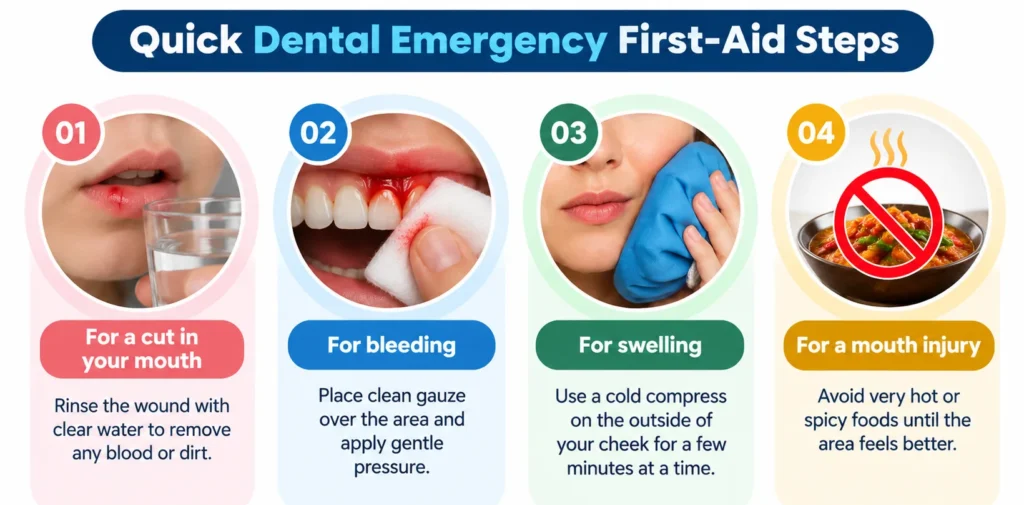
When a dental emergency happens, your first priority is to check whether there is any bleeding, swelling, or injury to the soft tissues of your mouth.
Quick Dental Emergency First-Aid Steps:
Here are simple steps you can take until you get professional care:
- For a cut in your mouth: Rinse the wound with clear water to remove any blood or dirt.
- For bleeding: Place clean gauze over the area and apply gentle pressure.
- For swelling: Use a cold compress on the outside of your cheek for a few minutes at a time.
- For a mouth injury: Avoid very hot or spicy foods until the area feels better.
Broken or Fractured Tooth: What Should You Do?
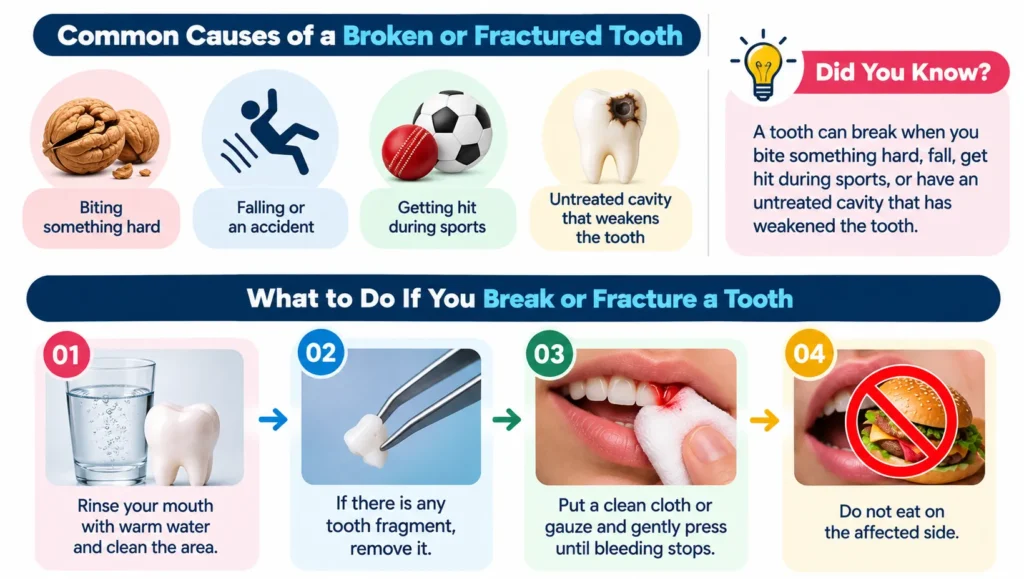
A tooth can break when you bite something hard, fall, get hit during sports, or have an untreated cavity that has weakened the tooth.
Did You Know?
What to Do If You Break or Fracture a Tooth
Here are some first aid steps for a broken or fractured tooth:
- First, rinse your mouth with warm water and clean the area
- If there is any tooth fragment, remove it
- Put a clean cloth or gauze and gently press until bleeding stops
- Do not eat on the affected side
Can a Broken Tooth Be Fixed?
Yes, in some cases. A small crack can be repaired, but deep cracks may require complex dental treatment.
Broken Tooth Treatment Options
Broken tooth treatment or tooth fracture treatment depends on the extent of the damage:
- For a small chip: It may require dental bonding or a tooth-coloured filling
- For a major crack: A crown is required
- If the nerve is affected: It may require root canal treatment
- If your tooth has very extensive damage: Then extraction is a better option
For a small chip or visible damage to a tooth, cosmetic dentistry may help restore its appearance, depending on the extent of the fracture.
Knocked-Out Tooth: What Should You Do?
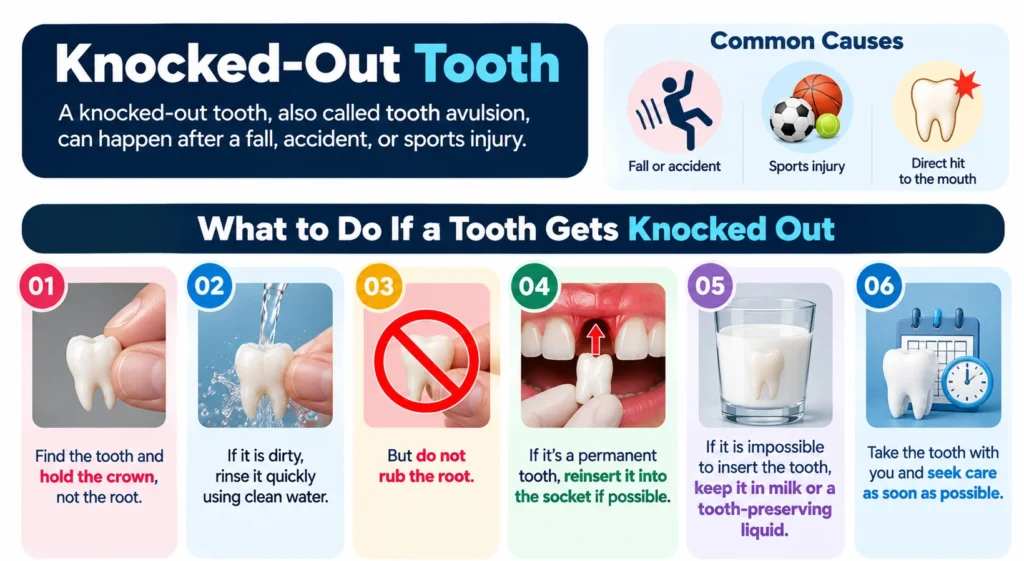
A knocked-out tooth, also called tooth avulsion, can happen after a fall, accident, or sports injury.
The International Association of Dental Traumatology (IADT) recommends that the sooner you receive dental care, ideally within 30-60 minutes, the better the chance of saving a permanent tooth.
What to Do If a Tooth Gets Knocked Out
Try to:
- Find the tooth and hold the crown, not the root.
- If it is dirty, rinse it quickly using clean water.
- But do not rub the root.
- If it’s a permanent tooth, reinsert it into the socket if possible.
- If it is impossible to insert the tooth, keep it in milk or a tooth-preserving liquid
- Take the tooth with you and seek care as soon as possible.
First Aid for a Knocked-Out Permanent Tooth
A knocked-out permanent tooth may sometimes be saved through timely tooth replantation. Do not try to reinsert a baby tooth, as this can harm the developing permanent tooth.
If a permanent tooth cannot be saved, a dentist can assess replacement options, which may include dental implants depending on the patient’s oral health and suitability. When a tooth cannot be preserved, the choice between dental implants and dentures depends on the patient’s needs, oral health and treatment suitability.
Sudden Tooth Pain: What to Do?
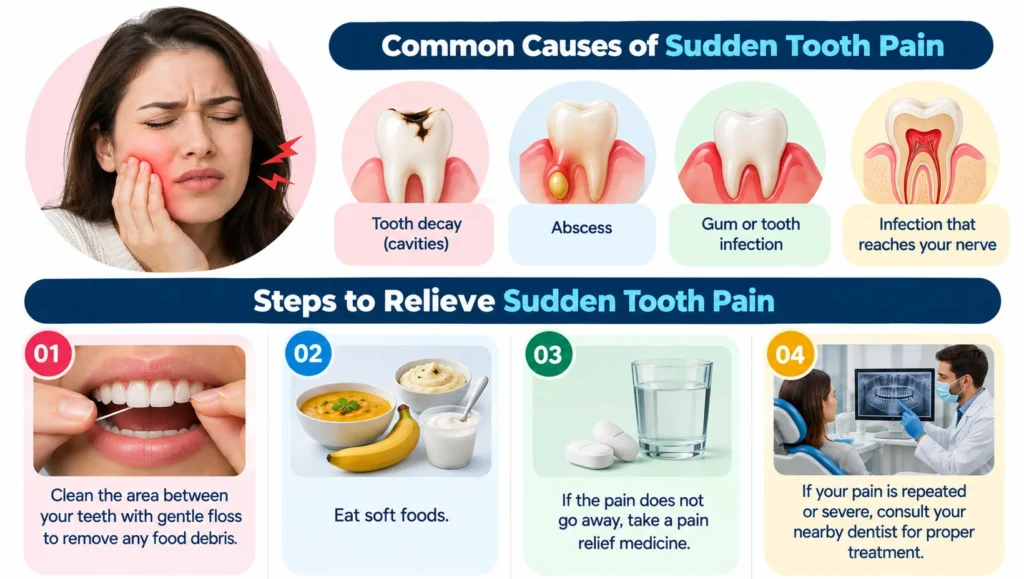
Sudden tooth pain can make eating and sleeping difficult. This can be caused by tooth decay, an abscess, a gum or tooth infection or an infection that reaches your nerve.
Pain at the back of the mouth may sometimes be related to an erupting or impacted wisdom tooth; wisdom tooth pain relief depends on identifying the underlying cause.
Simple steps to relieve tooth pain until you see your dentist:
- Clean the area between your teeth with gentle floss to remove any food debris.
- Eat soft foods.
- If the pain does not go away, take a pain relief medicine.
- If your pain is repeated or severe, consult your nearby dentist for proper treatment.
Orthodontic Emergency: What to Do If Braces Break
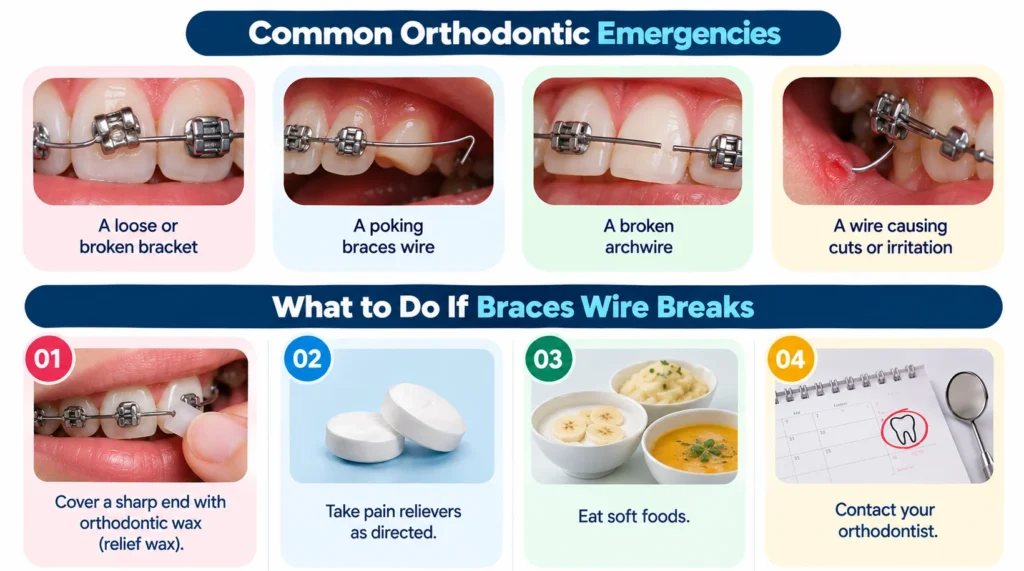
An orthodontic emergency does not always mean you need immediate treatment. However, a broken bracket or wire that is hurting your cheek, tongue, or gums should be checked by your orthodontist.
What Is an Orthodontic Emergency?
Common problems include:
- A loose or broken bracket
- A poking braces wire
- A broken archwire
- A wire causing cuts or irritation
Keeping teeth and brackets clean during orthodontic treatment helps reduce plaque buildup and the risk of cavities around braces. Read more about braces and oral hygiene to understand how to maintain oral health during orthodontic treatment.
What to Do If Braces Wire Breaks
If you are wondering what to do if a braces wire breaks, do not pull or cut it yourself. Cover a sharp end with orthodontic wax called relief wax, take pain relievers as directed, eat soft foods and contact your orthodontist.
The American Association of Orthodontists’ advice on orthodontic emergencies explains how to manage loose brackets and irritating wires until an orthodontist can assess the problem.
When Should You See an Emergency Dentist?
You should contact your dentist if you have:
- A tooth that has been knocked out or is loose
- A chipped, cracked or fractured tooth
- A tooth pain emergency with severe or persistent pain
- Persistent bleeding from the tooth
- An abscess or infection in the tooth accompanied by swelling
- Facial, mouth or jaw swelling
- Broken braces wire causing pain to the cheek, tongue or gums
Dental Emergency Treatment
When you reach your dentist, treatment usually starts with a quick examination.
Your dentist will:
- Examine the diseased tooth and nearby soft tissue.
- Perform an X-ray to check for any hidden problems.
- Control any bleeding, pain, or infection from the site.
- Decide on the type of treatment required- filling, crown, root canal, or any other repair.
How to Prevent Dental Emergencies
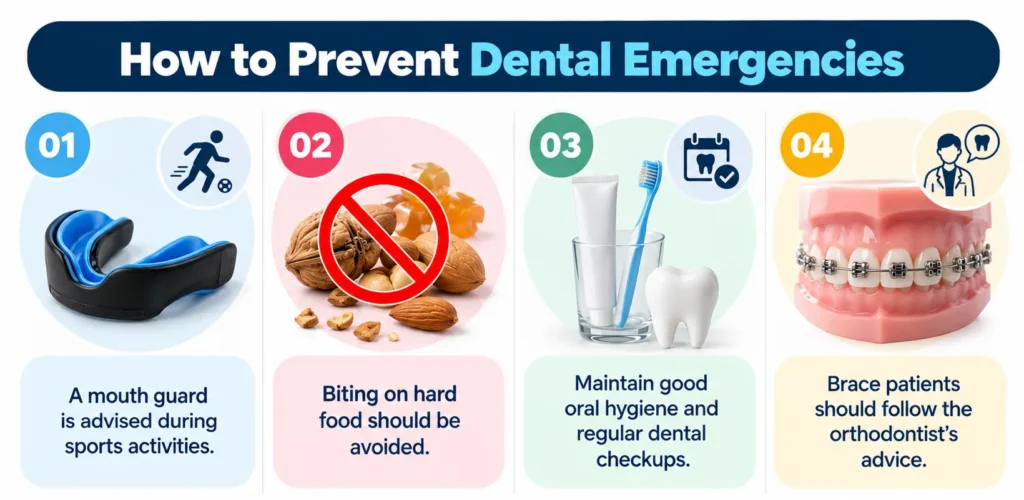
You can reduce your risk of a dental emergency with a few simple habits:
- A mouth guard is advised during sports activities.
- Biting on hard food should be avoided..
- Oral hygiene and dental checkups should be maintained regularly.
- Brace patients should follow the orthodontist’s advice.
Patients who play sports while undergoing orthodontic treatment should discuss suitable protective equipment with their dentist or orthodontist. Learn more about Invisalign and sports for guidance on sports participation during aligner treatment.
Final Thoughts: Trusted Care for Your Dental Emergency
When something goes wrong with your teeth, you may not know whether you should wait or get help. A professional examination can give you a clear answer.
At Fort Dental Clinic, Mumbai, Dr Arun Nayak & Dr Ahilya Lad takes the time to assess your concern and discuss suitable treatment options, so you know what to expect and how to move forward with your dental care.
FAQs
Gently rinse your mouth with warm salt water and carefully floss around the affected tooth if food may be trapped. Apply a cold compress to the outside of your cheek and avoid foods that trigger pain. If you use an over-the-counter pain reliever, follow its label and check with a healthcare professional if you are unsure whether it is safe for you. These measures provide temporary relief and do not treat the underlying cause.
Yes, a badly broken tooth can sometimes be saved, depending on the extent of the fracture and the condition of the root and surrounding tissues. A dentist may recommend bonding, a filling, a crown, or root canal treatment. If the damage extends too deeply or the tooth cannot be restored, extraction may be necessary. An examination and dental X-rays can help determine the appropriate treatment.
There is no universally safe waiting period for a broken tooth. A small chip without pain may be less urgent than a deep fracture, but both should be assessed by a dentist. Seek urgent care if you experience severe pain, bleeding, swelling, or signs of infection. Avoid chewing on the damaged tooth while waiting for treatment.
Sometimes. Depending on how much healthy tooth structure remains and whether the root and surrounding tissues are affected, treatment may include a filling, crown, or root canal treatment. If the damage is too extensive to restore, extraction may be necessary. A dentist can determine the best option after examining the tooth.
Apply gentle, steady pressure to the bleeding area with clean gauze. Avoid repeatedly removing the gauze to check the wound. If bleeding is heavy, does not stop with pressure, or follows a serious facial injury, seek urgent medical care. Uncontrolled bleeding requires emergency attention.

BDS, MDS – Orthodontics & Dentofacial Orthopaedics
Chief Orthodontist, Fort Dental Clinic, Mumbai
Dr. Arun Nayak is a leading orthodontist in Mumbai with 20+ years of experience in braces, aligners, and advanced bite correction. As the founder of Fort Dental Clinic, he is known for delivering personalized, technology-driven orthodontic care with a focus on precision and patient comfort.