

Have you noticed your child’s mouth staying open while they watch TV, play or sleep?
You may think it is a normal part of growing up, but sometimes these signs can be linked to enlarged adenoids or tonsils. When we check your child’s teeth, we also look at how their face and jaws are developing because these changes can be interlinked.
So, what is the connection between enlarged adenoids, facial growth and your child’s jaw?
What Is Adenoid Facies?
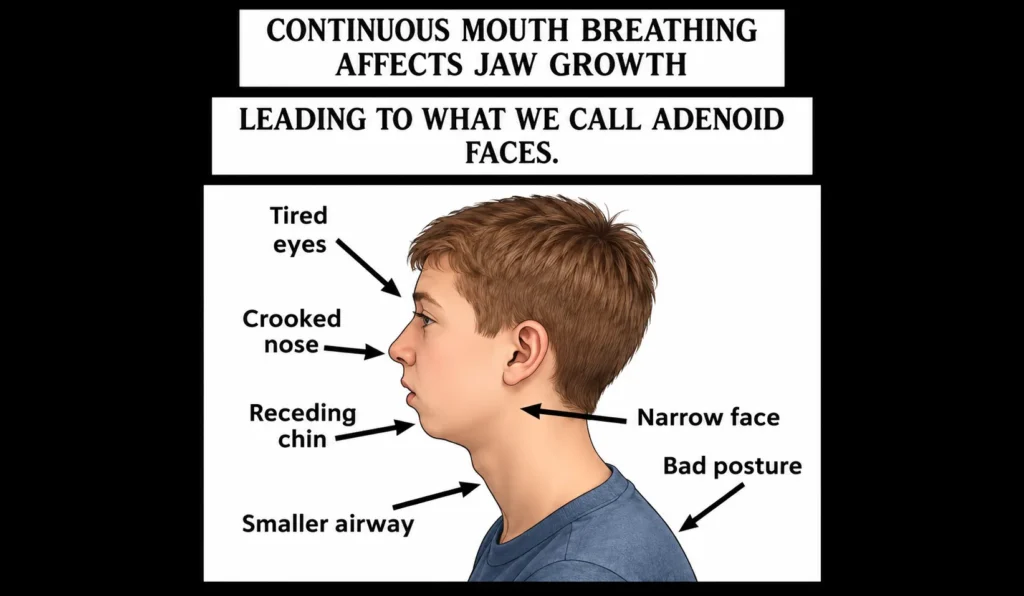
Adenoid facies describes certain facial changes that may develop in a child who has had a long period of untreated adenoid hypertrophy, or enlarged adenoids. It is also called long face syndrome.
But what are adenoids?
Adenoids are soft tissue structures located behind the nose and above the throat. They are part of the body’s immune system and help keep children healthy.
In some children, these tissues may enlarge and block the nasal airways. When this happens for a long time, it may contribute to changes in facial and jaw growth.
What Causes Adenoid Facies?
There are several reasons that can contribute to adenoid facies.
These include:
- Abnormal growth of adenoids: The enlargement of the adenoids can result in a decrease in the size of the nasal cavity, making breathing through the nose difficult.
- Abnormal growth of tonsils: The enlargement of the tonsils can cause a reduction in the availability of space, which results in breathing problems.
- Allergies: Allergies to dust, pollen and pets can result in swelling of the nasal cavity.
- Frequent infections: Continuous colds and other infections often result in blocking of the nasal cavity.
- Nasal abnormalities: A deviated septum and other structural abnormalities can block the nasal cavity.
Signs and Symptoms of Adenoid Facies
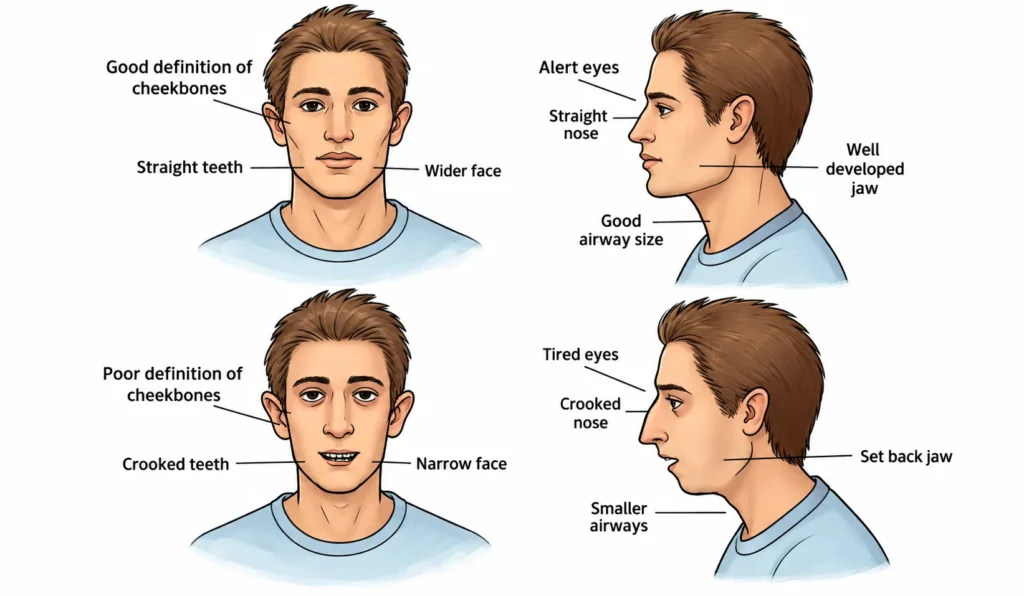
Adenoid hypertrophy symptoms can develop gradually. You may notice changes in your child’s facial appearance, teeth, breathing or sleep.
1. Facial and Dental Features
The following are adenoid facial and dental features that you may notice in your child:
- Open-mouth posture
- Longer-looking face
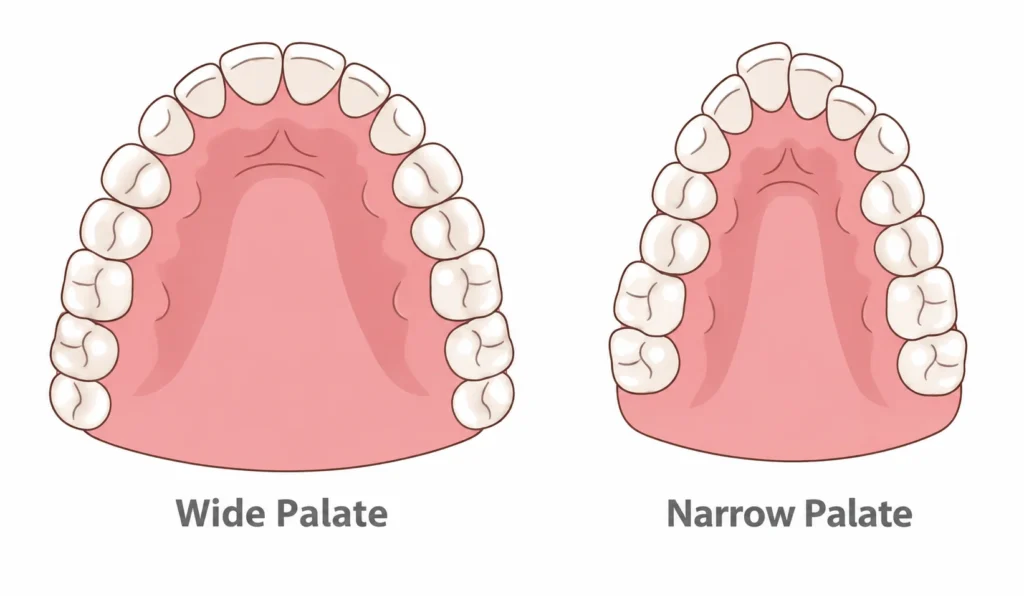
- Narrow upper jaw
- High-arched palate
- Crowded teeth
- Increased overjet
- Posterior crossbite
- Open bite
2. Breathing and Sleep-Related Signs
The following symptoms may be more noticeable while your child is asleep, such as:
- Frequent mouth breathing
- Loud or regular snoring
- Blocked or stuffy nose
- Restless sleep
- Frequent waking
- Noisy breathing
- Pauses in breathing
- Daytime tiredness or poor concentration
How Mouth Breathing Affects Jaw Growth
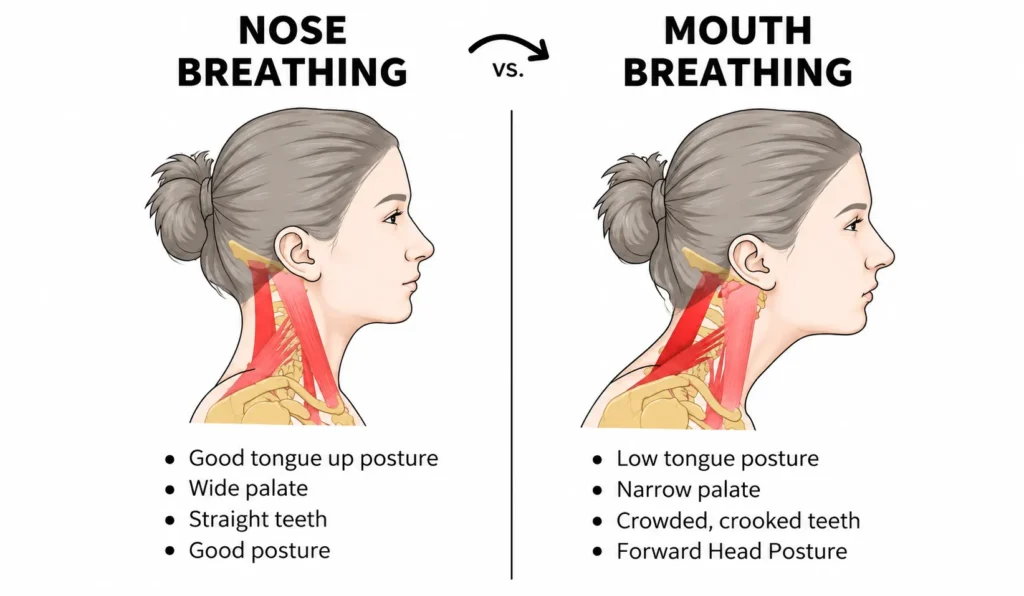
So, what happens when mouth breathing continues for a long time? Let’s look at it step by step:
1. Hard to Breathe Through the Nose
Enlarged adenoids, allergies or nasal blockage can make nose breathing difficult.
↓
2. Mouth Stays Open
Your child starts breathing through the mouth more often to get air comfortably.
↓
3. Tongue Sits Lower
The tongue may rest lower instead of against the roof of the mouth, while the lips stay apart. Changes in tongue position may also be related to tongue-thrusting patterns, which are discussed in Tongue Thrust Exercises.
↓
4. Jaw Grows Differently
Over time, this may affect the shape of the upper jaw and palate, making them narrower or higher.
↓
5. Teeth & Bite May Change
Your child may develop crowded teeth, an open bite, crossbite or increased overjet.
Is Adenoid Facies Reversible?
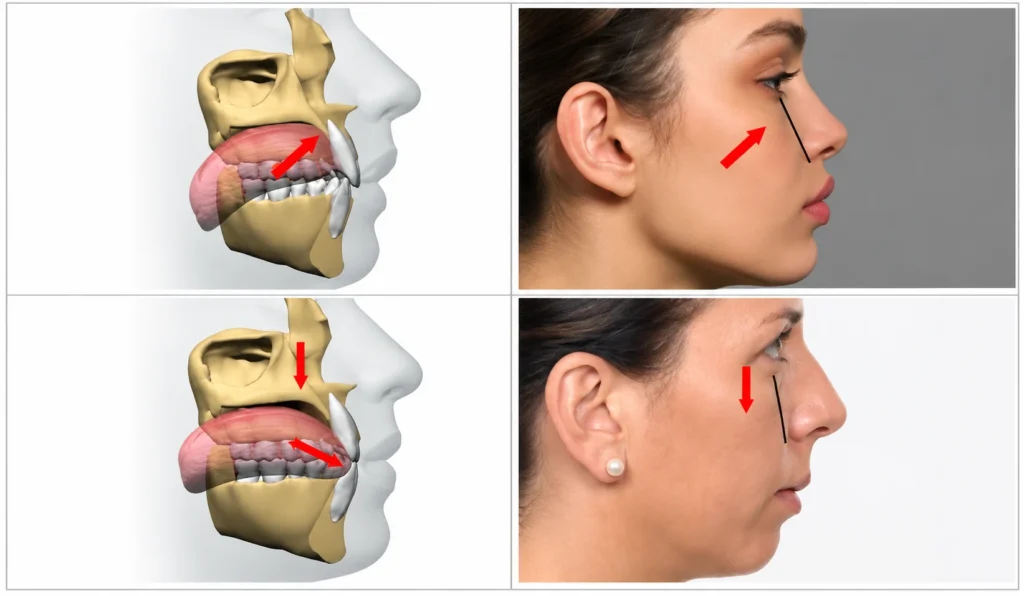
Yes, Adenoid facies can improve in some children, particularly if it is recognised early. The extent of improvement is determined by factors such as your child’s age, the stage of growth, and how long the child has had the condition.
Mild changes in facial appearance and oral habits may improve more easily, while well-established changes in the jaw and facial bones can be harder to correct. This is why noticing the signs early can make a difference in your child’s growing years.
Treatment Options for Adenoid Facies
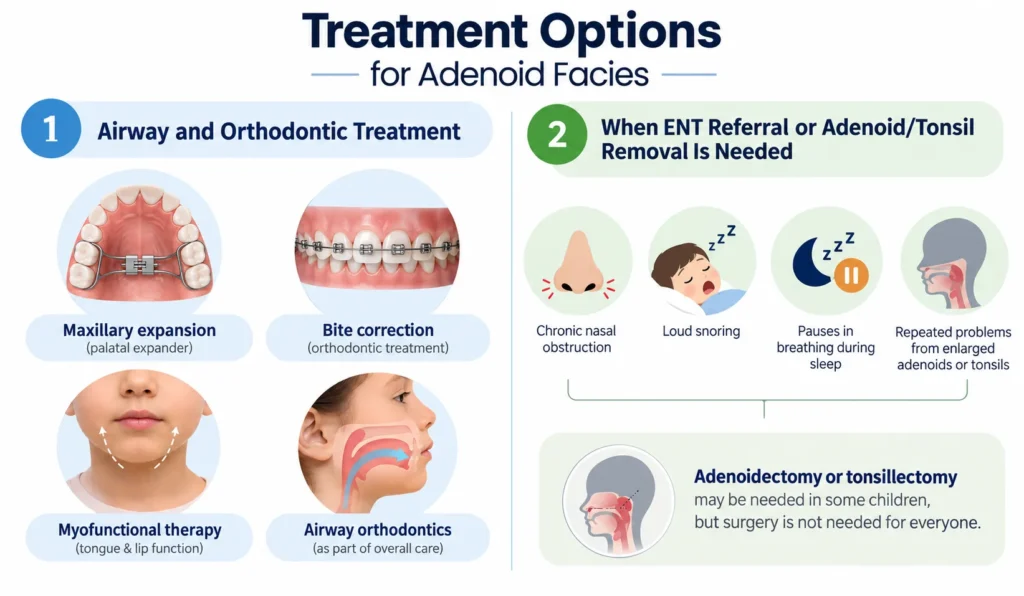
Treatment of adenoid facies focuses on addressing breathing problems and correcting changes in the jaw, teeth, or bite.
1. Airway and Orthodontic Treatment
Once your child’s breathing concerns are assessed, we can also check whether they have affected the jaw, palate or bite.
When jaw growth or bite alignment is also a concern, Jaw Misalignment in Children and Role of Orthodontist provides more detail on the signs and early orthodontic assessment.
Depending on what we find, treatment may include:
- Maxillary expansion: If the upper jaw is too narrow, a palatal expander may be recommended for children. There are two types of expanders: 1. Fixed Expander 2. Removable Expander(Invisalign Palatal Expander)
- Bite correction: Orthodontic treatment can help correct a dental crossbite, crowding and other bite problems.
- Myofunctional therapy: This may help improve your child’s tongue posture, lip function and oral habits when needed. If the oral habits persist for a longer duration, a habit breaker can be given for the same.
- Airway orthodontics: This can be part of your child’s overall care, but it does not replace treatment by an ENT specialist.
2. When ENT Referral or Adenoid/Tonsil Removal Is Needed
Your child needs an evaluation by an ENT if:
- Your child has chronic nasal obstruction or adenoid hypertrophy.
- Your child snores loudly.
- You notice sleep-disordered breathing or pauses in breathing during sleep.
- Your child has repeated problems related to enlarged adenoids or tonsils.
Adenoidectomy or tonsillectomy may be needed in some children, but surgery is not needed for everyone.
When to See an Orthodontist: Signs of Enlarged Adenoids in Your Child
You may consult your orthodontist or dentist if your child:
- Sleeps with an open mouth regularly at night time
- Breathes through the mouth rather than the nose
- Snores frequently or makes noisy sounds while sleeping
- Seems to struggle with a blocked nose for long periods
- Wakes up with a dry mouth
- Has difficulty keeping their lips together comfortably
- Has teeth that look crowded or are not meeting properly
- Shows changes in their smile or facial appearance as they grow
- If gums are inflamed, most common in mouthbreathers
These concerns are also part of the broader discussion around Children’s Oral Health: Early Orthodontic Treatment, particularly when dental and jaw changes are noticed during growth.
Final Thoughts: How Fort Dental Clinic Approaches Jaw Growth and Airway Concerns

Your child’s breathing, facial growth and dental development can be closely connected. If something seems different, a timely dental check can help identify the concern and guide you towards the right specialist or care when needed.
At Fort Dental Clinic in Mumbai, one of the best orthodontist in India, Dr Arun Nayak assesses your child’s facial growth, dental development, bite, palate width and jaw relationship. When needed, we recommend an ENT evaluation and coordinate care. Our airway orthodontics and orthodontic intervention are planned according to your child’s growth stage and individual needs.
FAQs
Adenoid facies may improve, particularly when the underlying breathing problem is identified while a child is still growing. The extent of improvement depends on the child’s age, growth stage, duration of the problem and whether structural changes have already developed. Treating the airway problem and addressing associated dental or jaw changes may both be needed.
Some features may improve as a child grows, especially if the underlying cause of chronic mouth breathing is addressed early. However, established changes in the jaw, palate or facial bones may not completely correct on their own. Early evaluation can help determine whether the child needs airway management, orthodontic treatment or both.
Long-term mouth breathing may be associated with changes in tongue and lip posture that can affect developing dental and facial structures. Children who mouth-breathe may have a higher likelihood of problems such as dental crowding, increased overjet, open bite or crossbite, although mouth breathing is not the only possible cause.
Myofunctional therapy may be useful for selected children who have issues involving tongue posture, lip function or oral habits. It does not remove enlarged adenoids or replace an ENT evaluation when there is significant airway obstruction. Treatment should be based on the child’s individual needs.
Early identification and management of persistent nasal obstruction, allergies, enlarged adenoids or other causes of mouth breathing may help reduce prolonged abnormal breathing patterns during facial growth. Regular observation of a child’s breathing, sleep and dental development can help identify concerns earlier.

BDS, MDS – Orthodontics & Dentofacial Orthopaedics
Chief Orthodontist, Fort Dental Clinic, Mumbai
Dr. Arun Nayak is a leading orthodontist in Mumbai with 20+ years of experience in braces, aligners, and advanced bite correction. As the founder of Fort Dental Clinic, he is known for delivering personalized, technology-driven orthodontic care with a focus on precision and patient comfort.